The intergenerational association of preterm birth: A systematic review and meta-analysis
Systematic review and meta-analysisHarm found
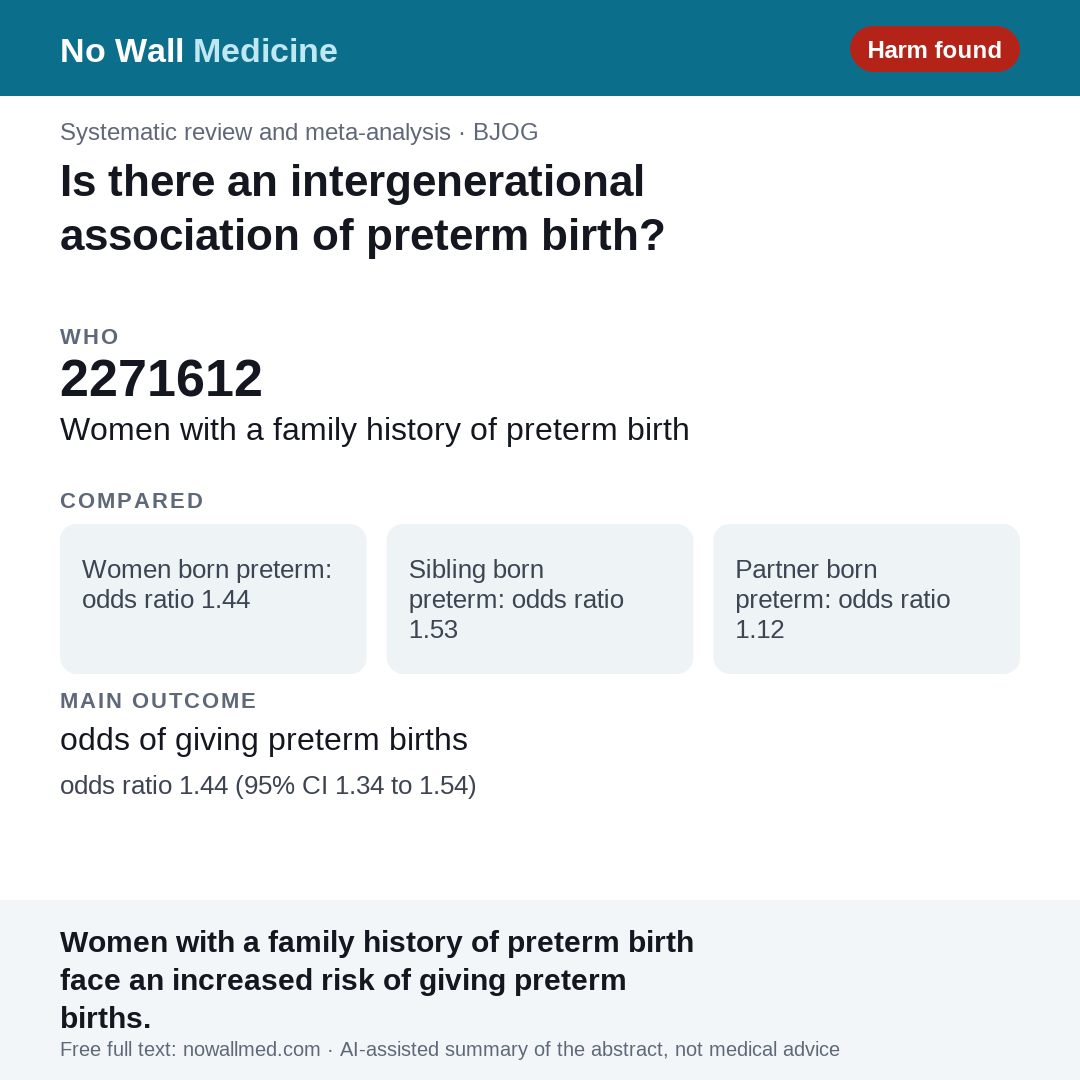
Is there an intergenerational association of preterm birth?
Who
2271612
Women with a family history of preterm birth
Compared
Women born preterm: odds ratio 1.44
Sibling born preterm: odds ratio 1.53
Partner born preterm: odds ratio 1.12
Main outcome
odds of giving preterm births
Result: odds ratio 1.44 (95% CI 1.34 to 1.54)
Bottom line: Women with a family history of preterm birth face an increased risk of giving preterm births.
BJOG · 2024-08-07Download image
Clinical question: Is there an intergenerational association of preterm birth?
Abstract
Background
Around half of preterm births lack identifiable causes, indicating the need for further investigation to understand preterm birth risk factors. Existing studies on the intergenerational association of preterm birth showed inconsistency in effect size and direction. Objective
This systematic review and meta-analysis aimed to review existing studies and provide comprehensive evidence on the intergenerational association of preterm births. Search strategy
We searched MEDLINE, Embase and Maternity and Infant Care databases, from the inception of each database to 04 April 2024. Selection criteria
Eligibility criteria included studies that reported on women who had given birth and had recorded information about a family history of preterm birth in one or both of the child's biological parents. Data collection and analysis
Data were extracted by two independent reviewers. A random-effects model was used to compute pooled estimates using odds ratios. Main results
Sixteen eligible studies with a total of 2 271 612 mothers were included. The findings indicated a 1.44 (OR = 1.44, 95% CI: 1.34, 1.54) fold increase in odds of giving preterm births among women who were born preterm. Additionally, having a sibling born preterm (OR = 1.53, 95% CI: 1.24, 1.87) and having a partner born preterm (OR = 1.12, 95% CI: 1.01, 1.25) were associated with increased likelihood of giving preterm births among women. Conclusion
The study revealed that women with a family history of preterm birth face an increased risk of giving preterm births. Screening pregnant women for a family history of preterm birth is essential, with those having a positive family history requiring closer follow-up.
Topics
Cite this article
Seid A, Cumpston MS, Ahmed KY, Bizuayehu HM, Thapa S, Tegegne TK. The intergenerational association of preterm birth: A systematic review and meta-analysis. BJOG. 2024. doi:10.1111/1471-0528.17924
Spotted a mistake? Suggest a correction
Top studies every Monday
The week’s key trials and guidelines in your specialties, plus any topics you follow. By email, free.
Get the weekly digest