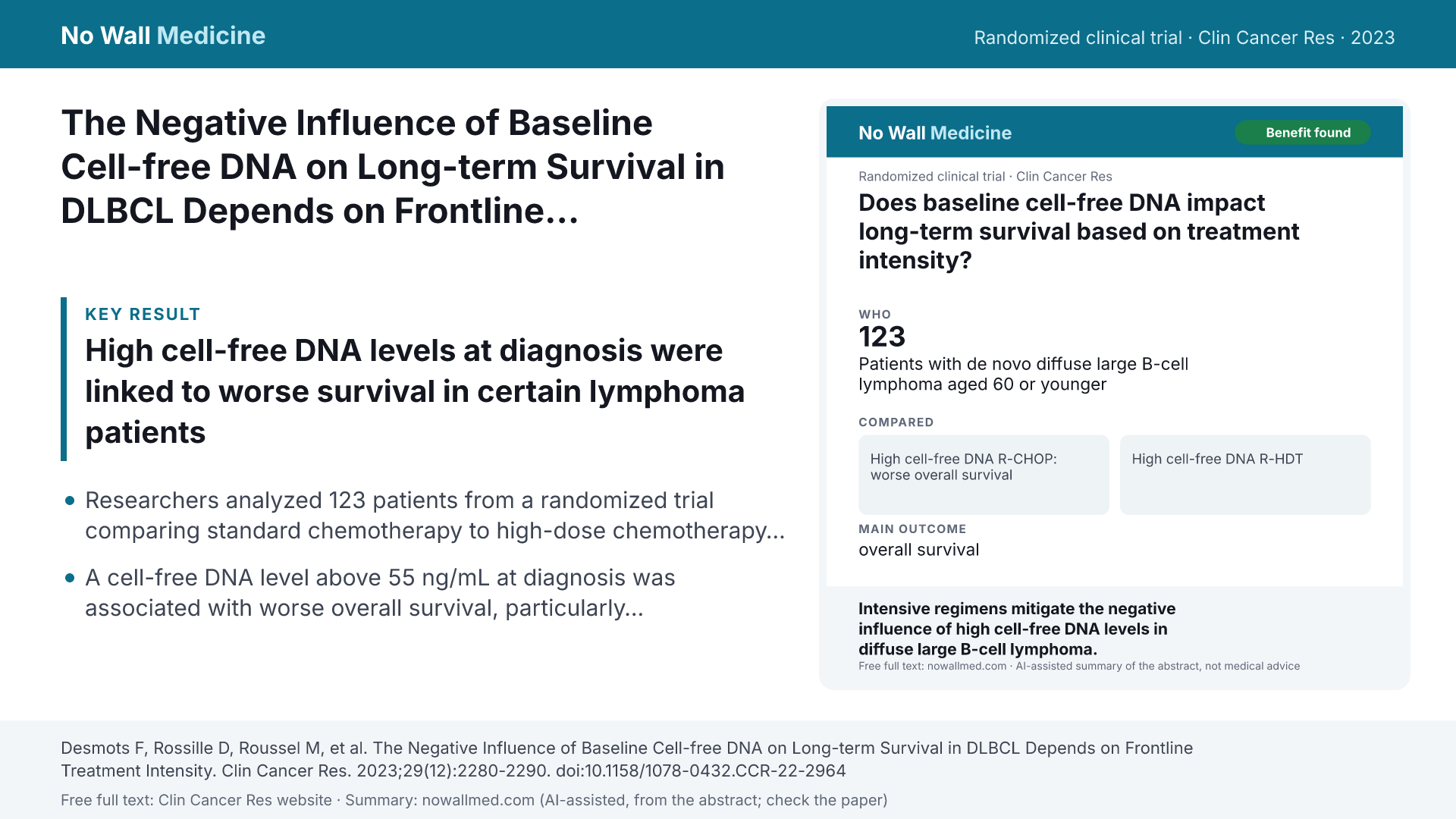
The Negative Influence of Baseline Cell-free DNA on Long-term Survival in DLBCL Depends on Frontline Treatment Intensity
Key result: High cell-free DNA levels at diagnosis were linked to worse survival in certain lymphoma patients
Randomized clinical trialBenefit found
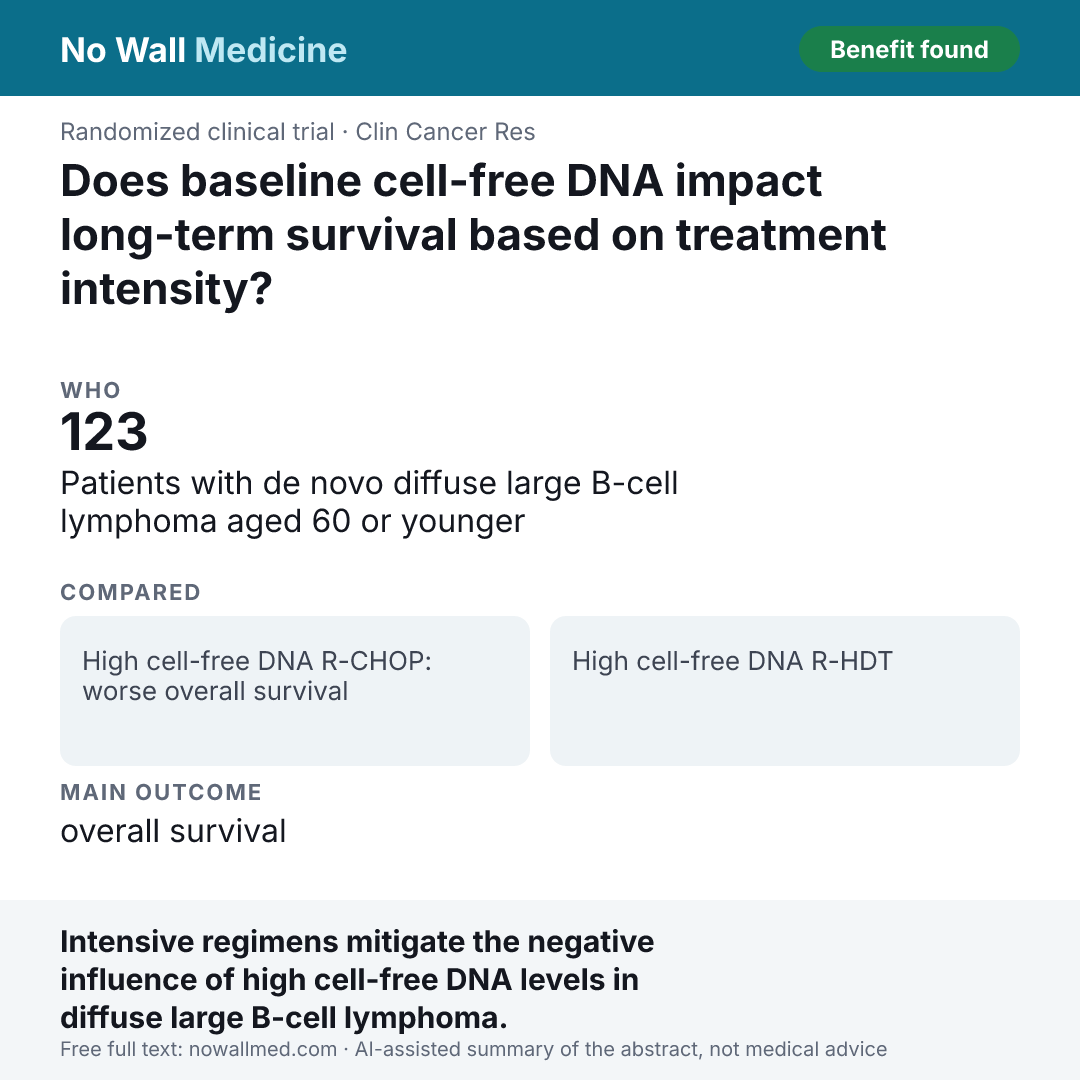
Does baseline cell-free DNA impact long-term survival based on treatment intensity?
Who
123
Patients with de novo diffuse large B-cell lymphoma aged 60 or younger
Compared
High cell-free DNA R-CHOP: worse overall survival
High cell-free DNA R-HDT
Main outcome
overall survival
Result: hazard ratio 3.99 (95% confidence interval, 1.98-10.74)
Bottom line: Intensive regimens mitigate the negative influence of high cell-free DNA levels in diffuse large B-cell lymphoma.
Clin Cancer Res · 2023-04-05 · Save PNG
Key points
- Researchers analyzed 123 patients from a randomized trial comparing standard chemotherapy to high-dose chemotherapy plus stem cell transplantation for diffuse large B-cell lymphoma.
- A cell-free DNA level above 55 ng/mL at diagnosis was associated with worse overall survival, particularly in patients receiving the standard R-CHOP chemotherapy regimen.
- In the R-CHOP group, patients with high cell-free DNA had a hazard ratio for death of 3.99 (95% confidence interval, 1.98-10.74).
Discussion prompts
- Would these patients look like yours? Who was left out?
- Is the main outcome one that matters to patients?
- Is the difference large enough to change what you do?
Cite: Desmots F, Rossille D, Roussel M, et al. The Negative Influence of Baseline Cell-free DNA on Long-term Survival in DLBCL Depends on Frontline Treatment Intensity. Clin Cancer Res. 2023;29(12):2280-2290. doi:10.1158/1078-0432.CCR-22-2964
Free full text: Clin Cancer Res website · Summary and visual abstract: nowallmed.com/a/the-negative-influence-of-baseline-cell-free-dna-on-long-term-1b4l2kd/ (AI-assisted from the abstract; check the paper before relying on it).