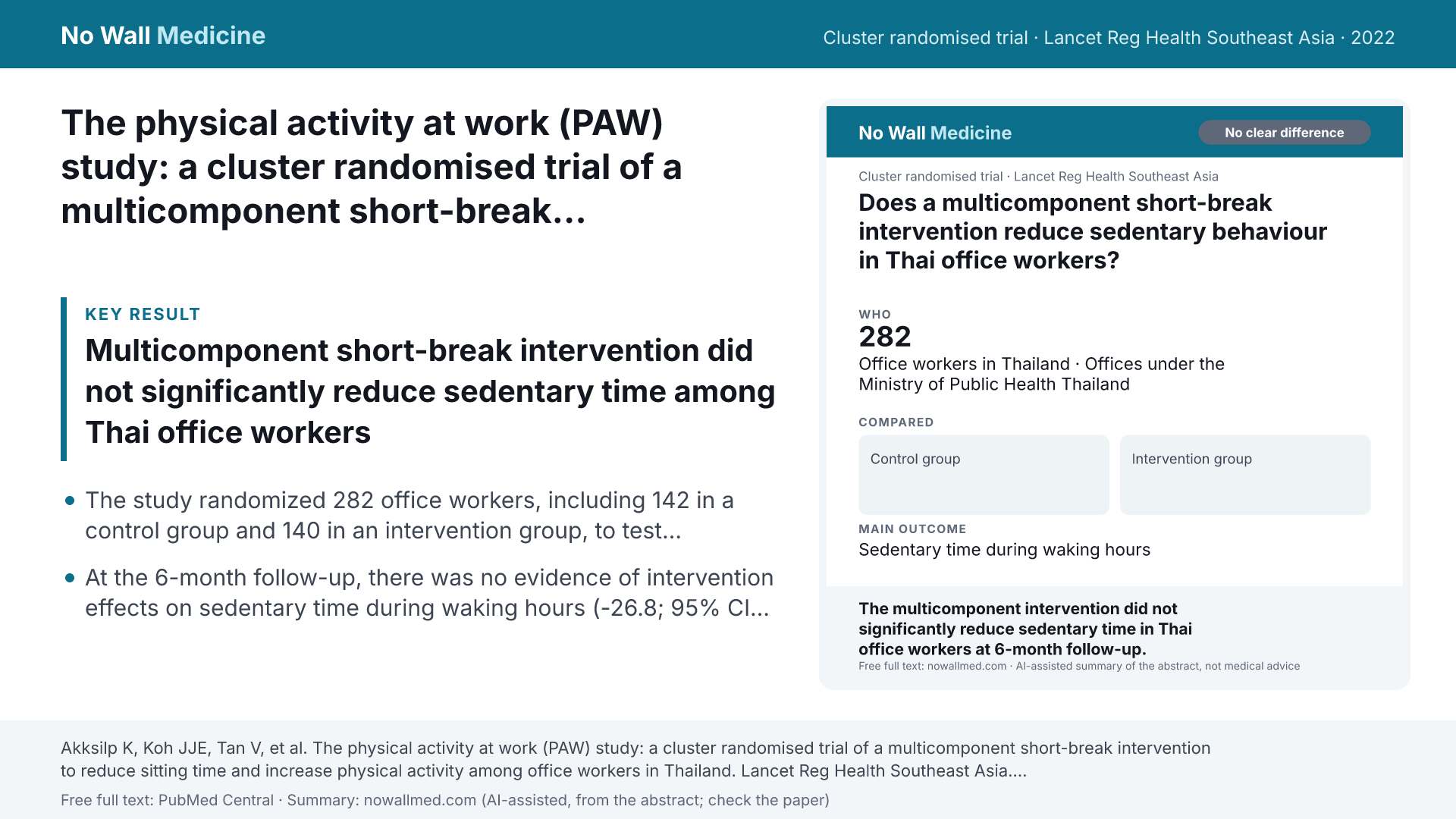
The physical activity at work (PAW) study: a cluster randomised trial of a multicomponent short-break intervention to reduce sitting time and increase physical activity among office workers in Thailand
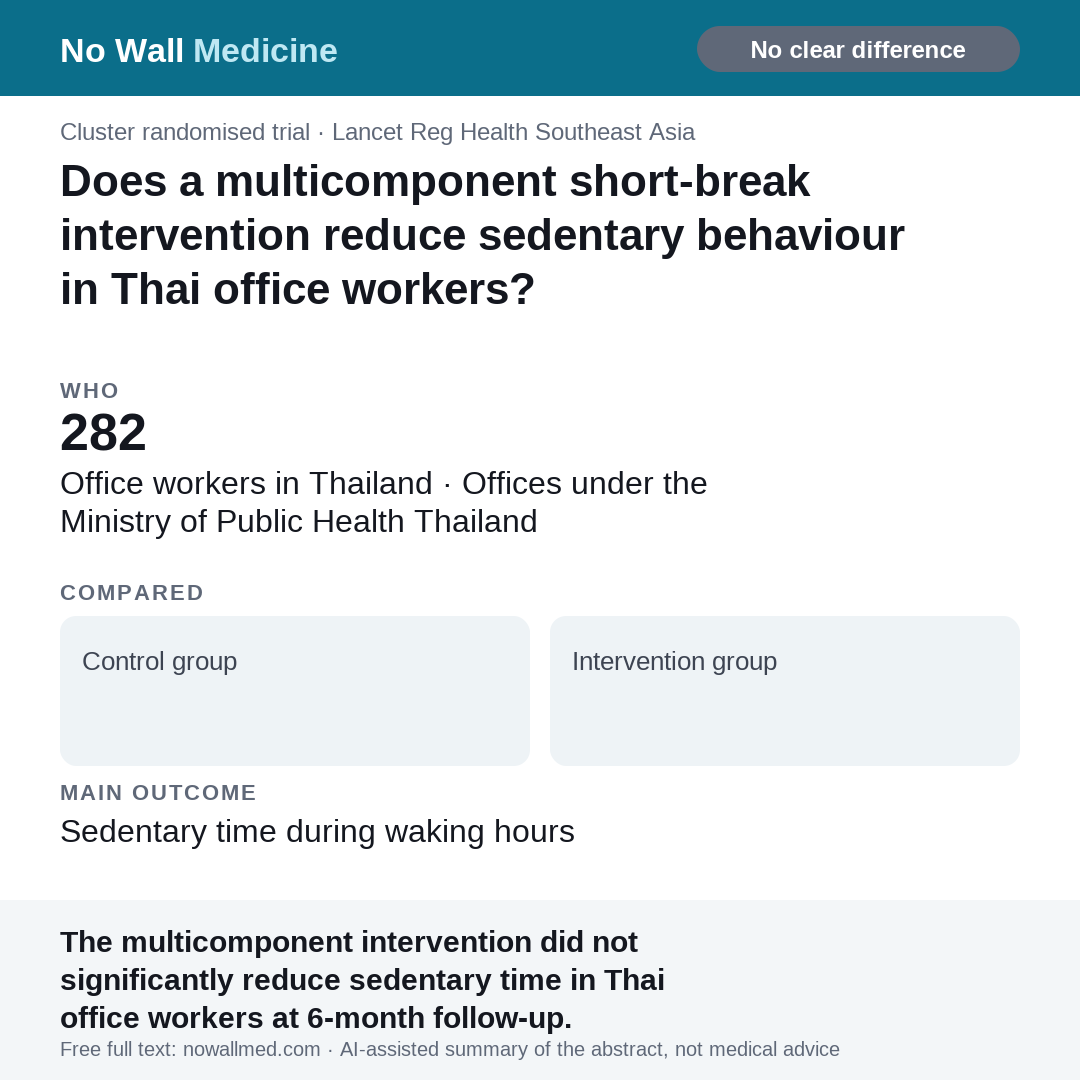
Key result: Multicomponent short-break intervention did not significantly reduce sedentary time among Thai office workers
Key points
- The study randomized 282 office workers, including 142 in a control group and 140 in an intervention group, to test a program using pedometers, incentives, and group breaks.
- At the 6-month follow-up, there was no evidence of intervention effects on sedentary time during waking hours (-26.8; 95% CI = -69.2 to 15.7 min) or physical activity levels.
- Adjusted analysis showed no evidence of a difference between groups for moderate-to-vigorous physical activity (5.45; 95% CI = -0.15 to 11.1 min) or step count (718; 95% CI = -45 to 1481 steps).
Why it matters: It was unknown if a multicomponent intervention involving individual, social, environmental, and organizational components could reduce sedentary behavior in Thai office workers.
Discussion prompts
- Would these patients look like yours? Who was left out?
- Is the main outcome one that matters to patients?
- Is the difference large enough to change what you do?
Cite: Akksilp K, Koh JJE, Tan V, Tong EH, Budtarad N, Xueying G. The physical activity at work (PAW) study: a cluster randomised trial of a multicomponent short-break intervention to reduce sitting time and increase physical activity among office workers in Thailand. Lancet Reg Health Southeast Asia. 2022. doi:10.1016/j.lansea.2022.100086
Free full text: PubMed Central · Summary and visual abstract: nowallmed.com/a/the-physical-activity-at-work-paw-study-a-cluster-randomised-trial-of-cfxh6e/ (AI-assisted from the abstract; check the paper before relying on it).