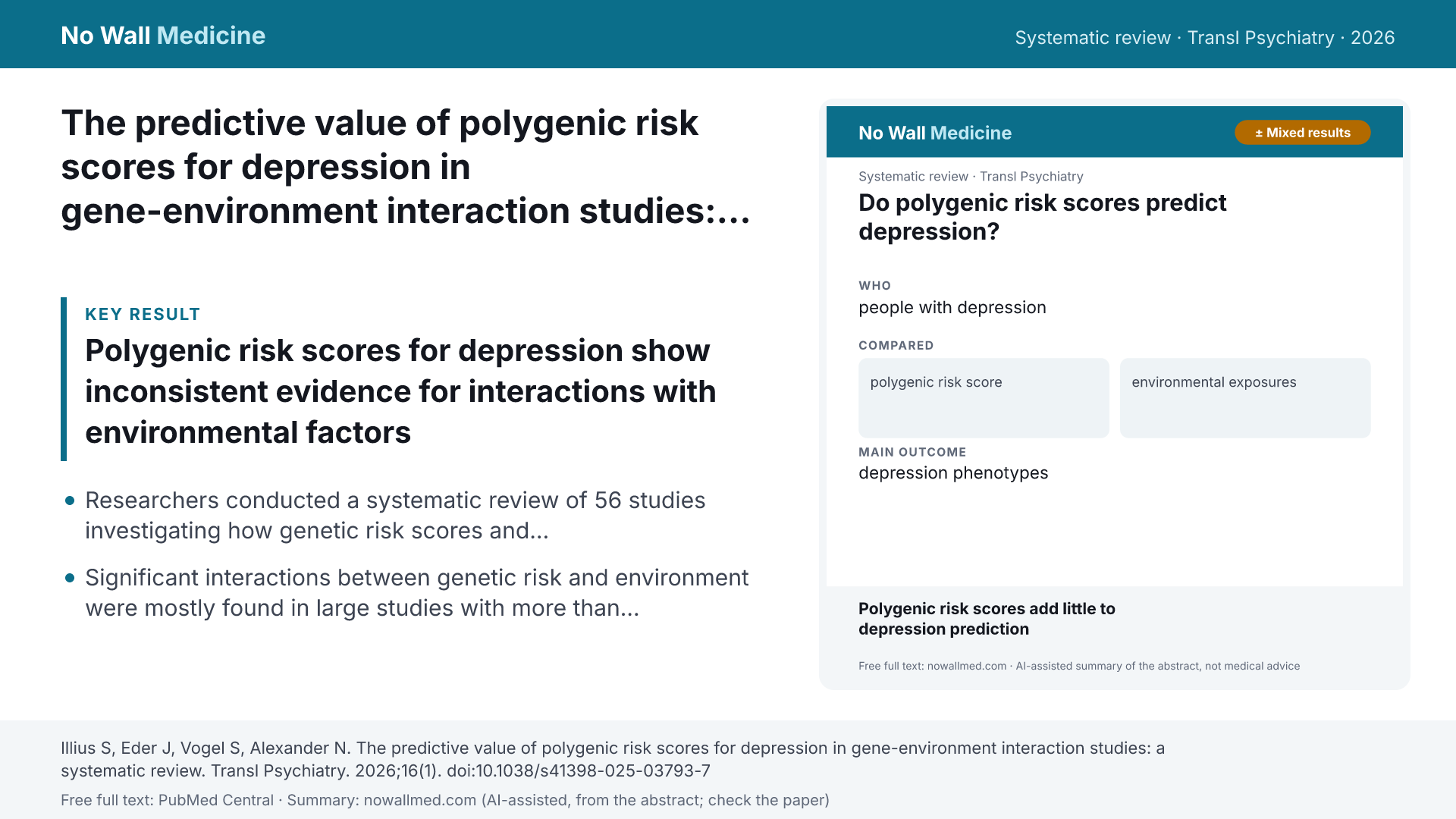
Polygenic risk scores for depression show inconsistent evidence for interactions with environmental factors
The predictive value of polygenic risk scores for depression in gene-environment interaction studies: a systematic review
Systematic reviewMixed results
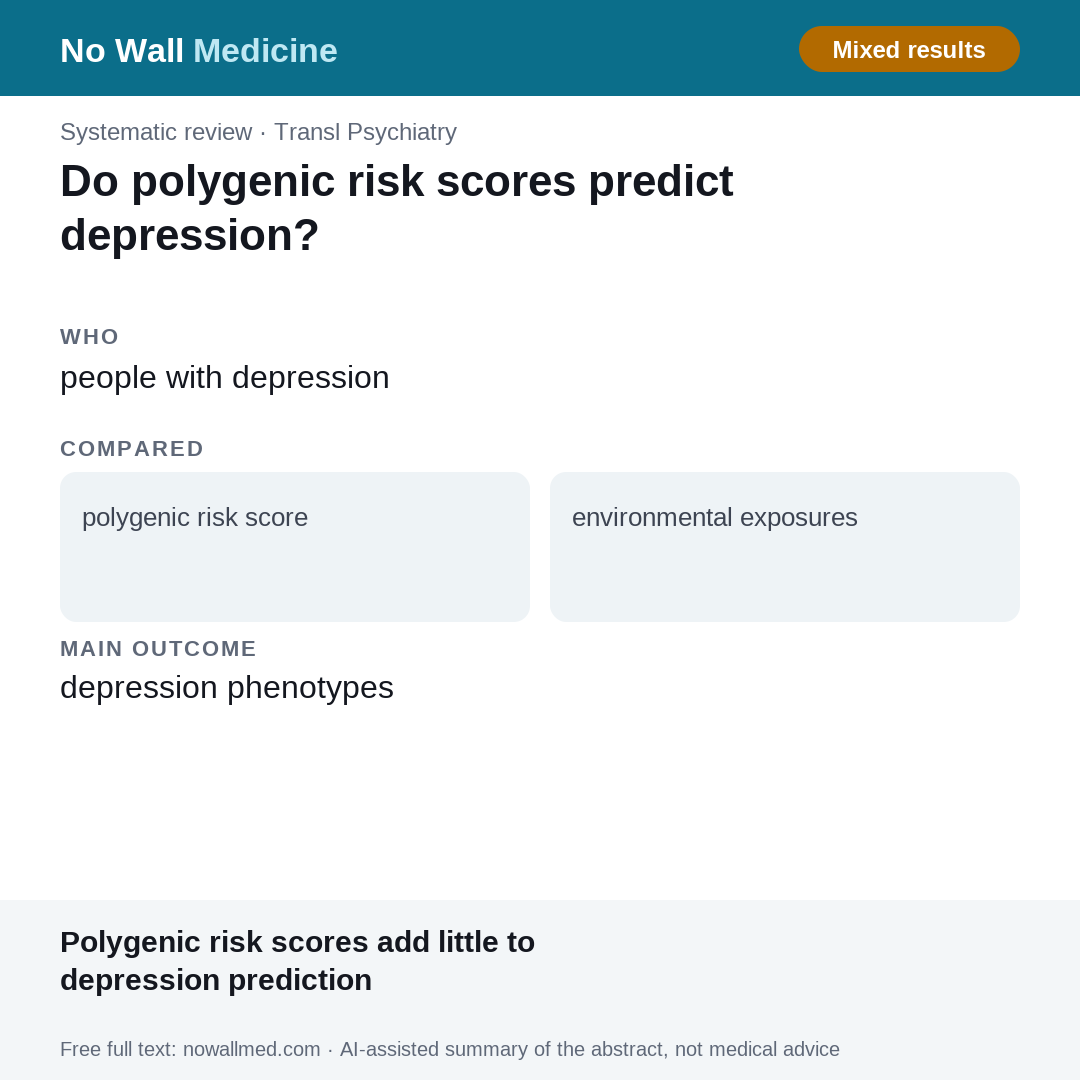
Do polygenic risk scores predict depression?
Who
people with depression
Compared
polygenic risk score
environmental exposures
Main outcome
depression phenotypes
Bottom line: Polygenic risk scores add little to depression prediction
Limitation: require large samples
Transl Psychiatry · 2026-02-25Download image
Clinical question: Do polygenic risk scores predict depression?
Why it matters: Researchers wanted to understand how genetic liability and environmental exposures interact to contribute to the development of depression.
Key points
- Researchers conducted a systematic review of 56 studies investigating how genetic risk scores and environmental exposures like trauma or lifestyle interact to affect depression.
- Significant interactions between genetic risk and environment were mostly found in large studies with more than 40000 participants, particularly regarding recent environmental exposures.
- Genetic risk scores appeared to add only a small amount of explained variance to depression models and often correlated with how individuals experience environmental exposures.
Headline and key points written with AI from the paper’s abstract, with every number checked against it. Read the paper before relying on them.
Was this summary helpful?
Subject terms
Cite this article
Illius S, Eder J, Vogel S, Alexander N. The predictive value of polygenic risk scores for depression in gene-environment interaction studies: a systematic review. Transl Psychiatry. 2026. doi:10.1038/s41398-025-03793-7
Spotted a mistake? Suggest a correction