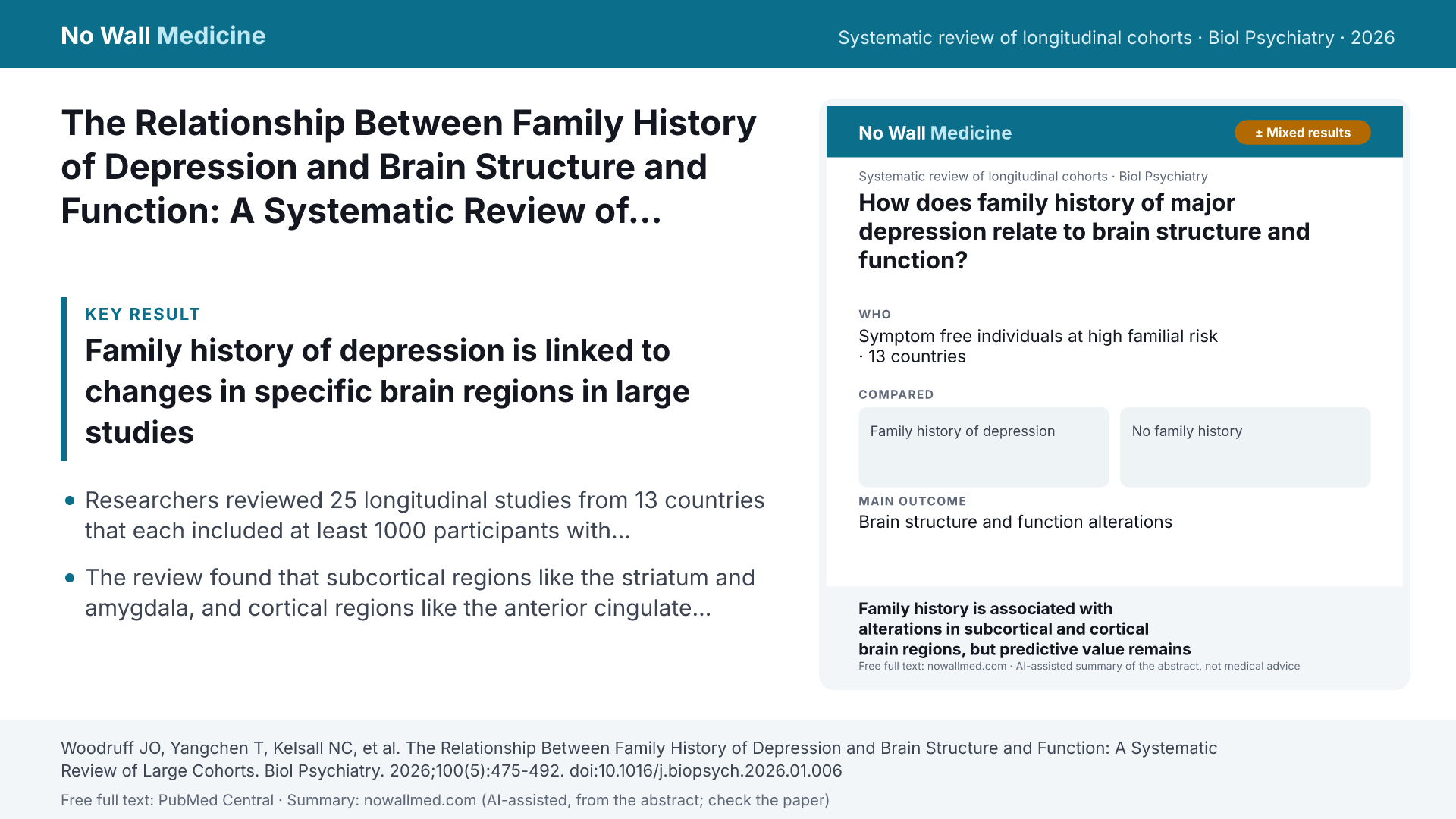
The Relationship Between Family History of Depression and Brain Structure and Function: A Systematic Review of Large Cohorts
Key result: Family history of depression is linked to changes in specific brain regions in large studies
Key points
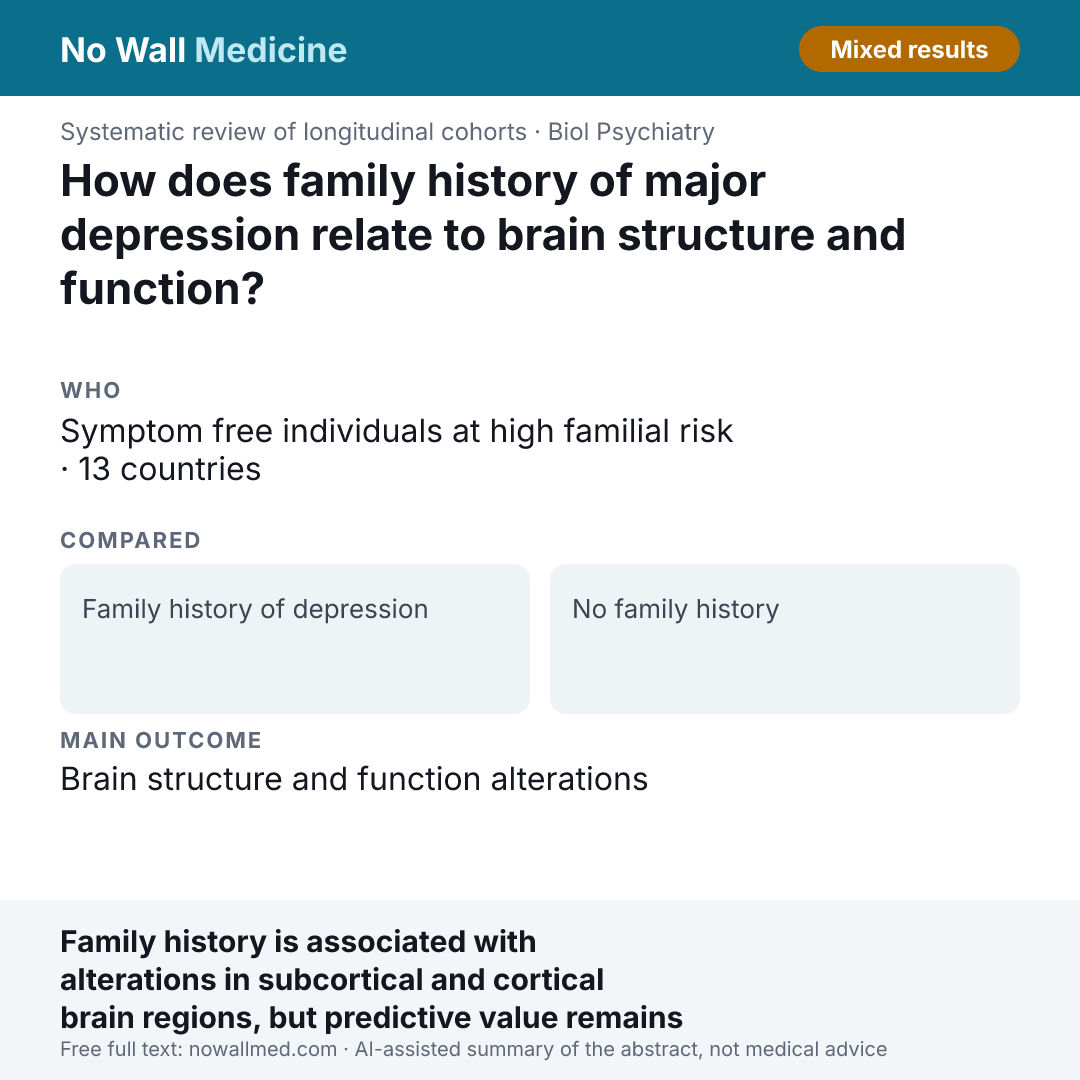
- Researchers reviewed 25 longitudinal studies from 13 countries that each included at least 1000 participants with brain imaging and family history data.
- The review found that subcortical regions like the striatum and amygdala, and cortical regions like the anterior cingulate and prefrontal cortex, most frequently showed alterations.
- The studies examined how family history of major depression relates to brain structure and function in people who do not yet have symptoms.
Why it matters: It is difficult to distinguish between brain mechanisms that predispose people to depression and those that develop after having the disorder.
Limitation the authors note: Current evidence for whether these specific brain region alterations predict future mental health disorders is limited.
Discussion prompts
- Would these patients look like yours? Who was left out?
- Is the main outcome one that matters to patients?
- Is the difference large enough to change what you do?
Cite: Woodruff JO, Yangchen T, Kelsall NC, et al. The Relationship Between Family History of Depression and Brain Structure and Function: A Systematic Review of Large Cohorts. Biol Psychiatry. 2026;100(5):475-492. doi:10.1016/j.biopsych.2026.01.006
Free full text: PubMed Central · Summary and visual abstract: nowallmed.com/a/the-relationship-between-family-history-of-depression-and-brain-1o45cod/ (AI-assisted from the abstract; check the paper before relying on it).