The thalamus and its subnuclei-a gateway to obsessive-compulsive disorder
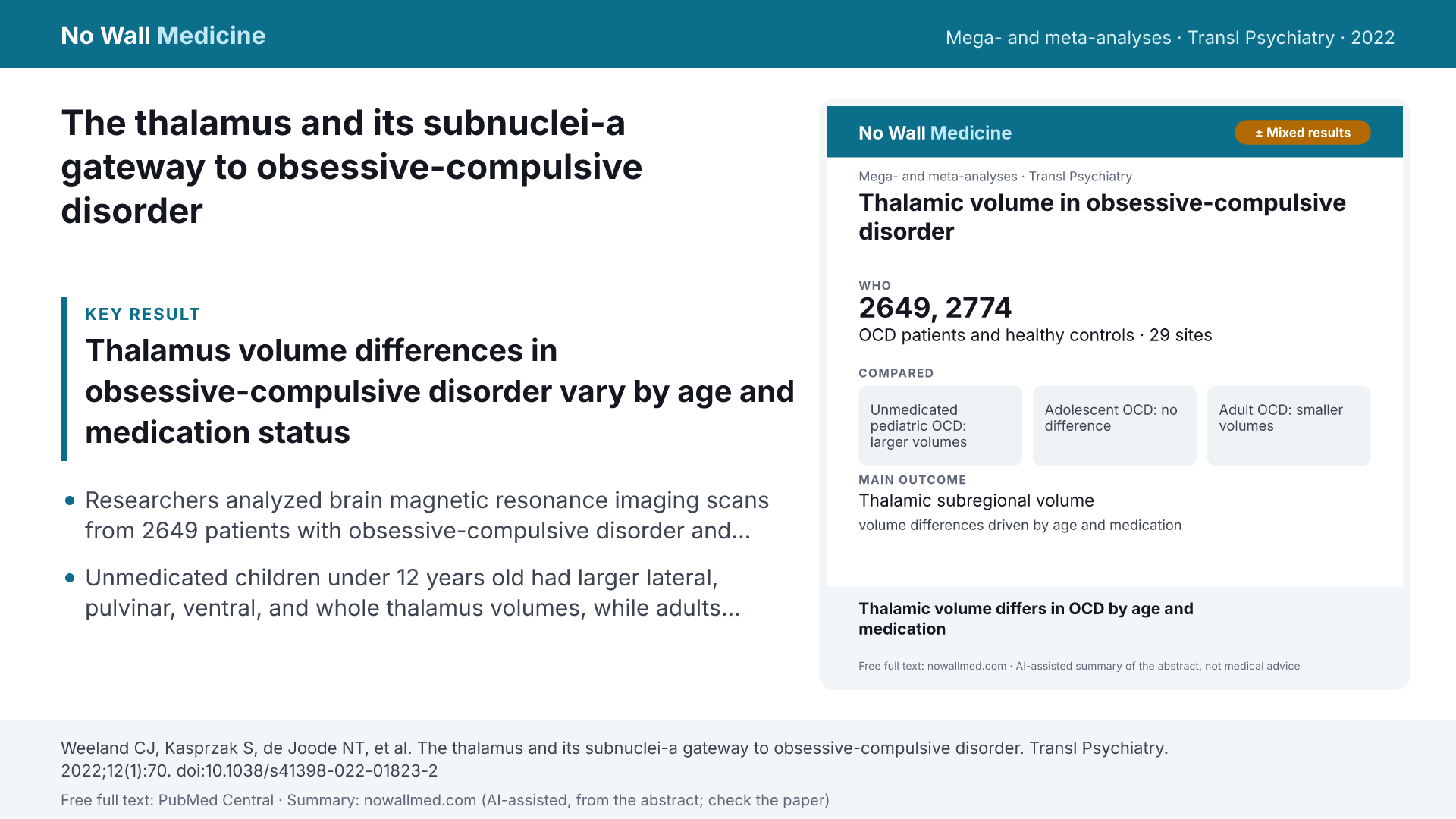
Key result: Thalamus volume differences in obsessive-compulsive disorder vary by age and medication status
Mega- and meta-analysesMixed results
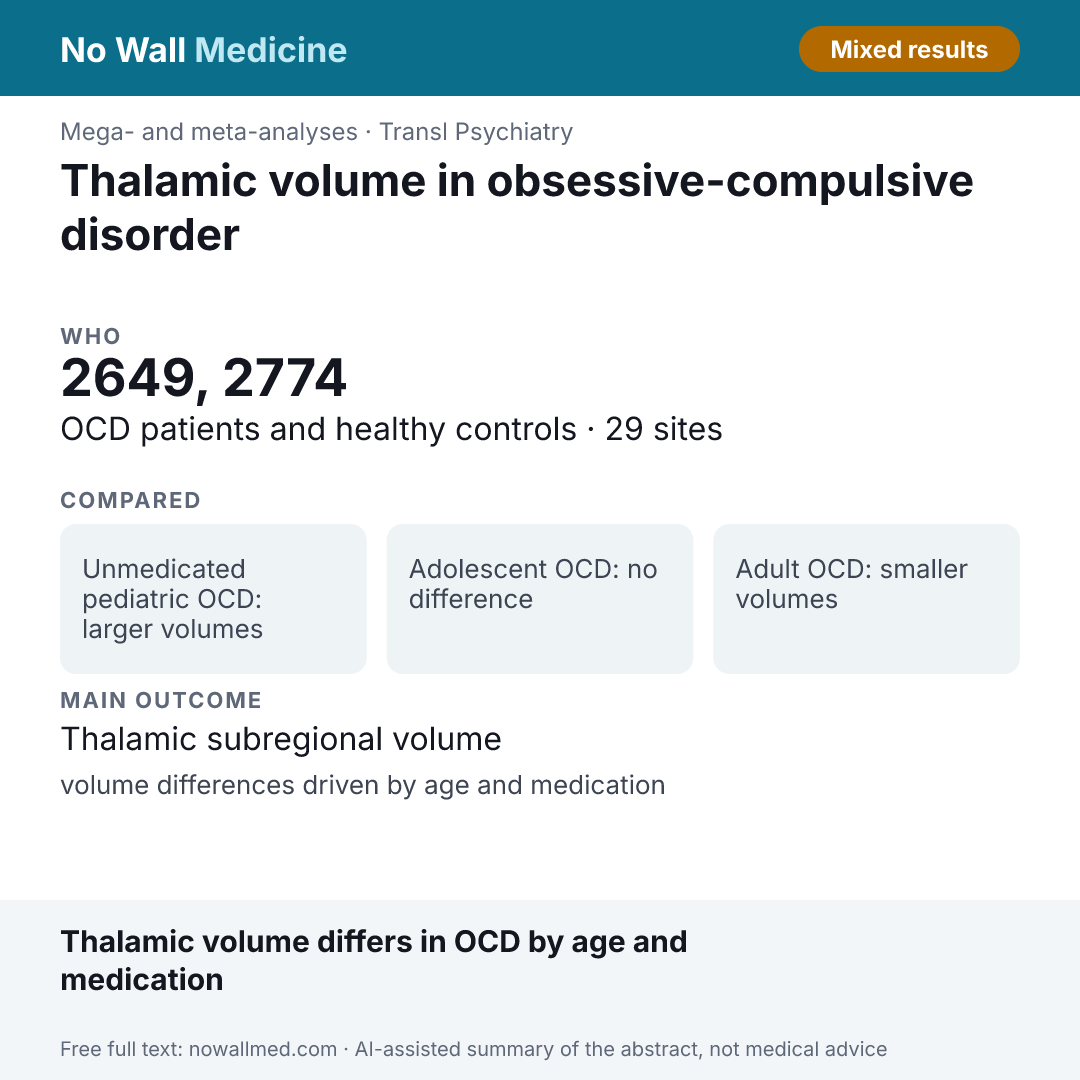
Thalamic volume in obsessive-compulsive disorder
Who
2649, 2774
OCD patients and healthy controls · 29 sites
Compared
Unmedicated pediatric OCD: larger volumes
Adolescent OCD: no difference
Adult OCD: smaller volumes
Main outcome
Thalamic subregional volume
Result: volume differences driven by age and medication
Bottom line: Thalamic volume differs in OCD by age and medication
Transl Psychiatry · 2022-02-21 · Save PNG
Key points
- Researchers analyzed brain magnetic resonance imaging scans from 2649 patients with obsessive-compulsive disorder and 2774 healthy controls across 29 sites.
- Unmedicated children under 12 years old had larger lateral, pulvinar, ventral, and whole thalamus volumes, while adults had smaller volumes across all subregions.
- In adults, smaller thalamic volumes were associated with medication use and higher symptom severity.
Discussion prompts
- Would these patients look like yours? Who was left out?
- Is the main outcome one that matters to patients?
- Is the difference large enough to change what you do?
Cite: Weeland CJ, Kasprzak S, de Joode NT, et al. The thalamus and its subnuclei-a gateway to obsessive-compulsive disorder. Transl Psychiatry. 2022;12(1):70. doi:10.1038/s41398-022-01823-2
Free full text: PubMed Central · Summary and visual abstract: nowallmed.com/a/the-thalamus-and-its-subnuclei-a-gateway-to-obsessive-compulsive-11xylce/ (AI-assisted from the abstract; check the paper before relying on it).