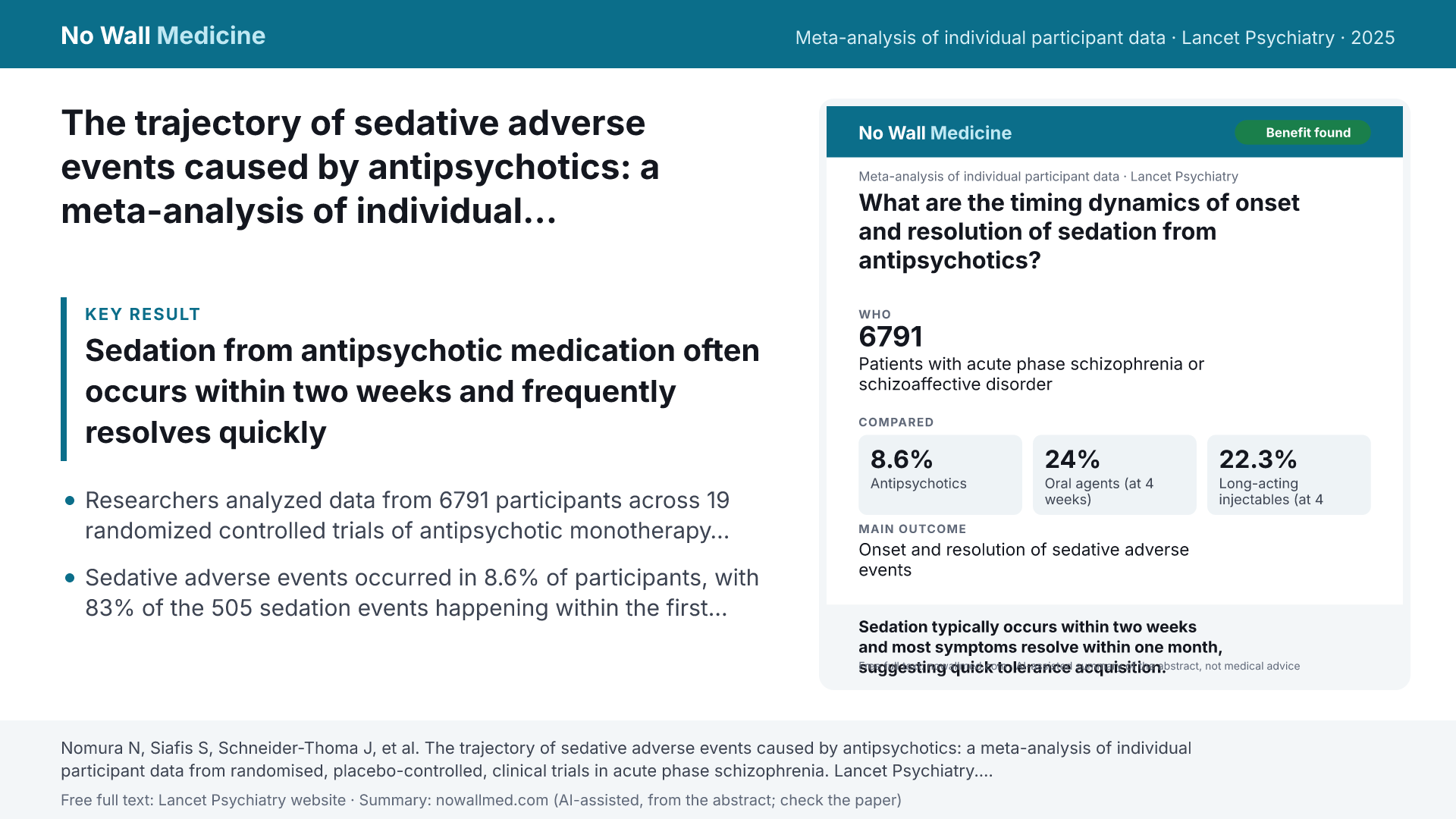
Sedation from antipsychotic medication often occurs within two weeks and frequently resolves quickly
The trajectory of sedative adverse events caused by antipsychotics: a meta-analysis of individual participant data from randomised, placebo-controlled, clinical trials in acute phase schizophrenia
Meta-analysis of individual participant dataBenefit found
What are the timing dynamics of onset and resolution of sedation from antipsychotics?
Who
6791
Patients with acute phase schizophrenia or schizoaffective disorder
Compared
8.6%Antipsychotics
24%Oral agents (at 4 weeks) (95% CI 19.7-29.3)
22.3%Long-acting injectables (at 4 weeks) (15.3-32.3)
Main outcome
Onset and resolution of sedative adverse events
Bottom line: Sedation typically occurs within two weeks and most symptoms resolve within one month, suggesting quick tolerance acquisition.
Funded by: German Federal Ministry of Education and Research
Lancet Psychiatry · 2025-03-21 · Save PNG
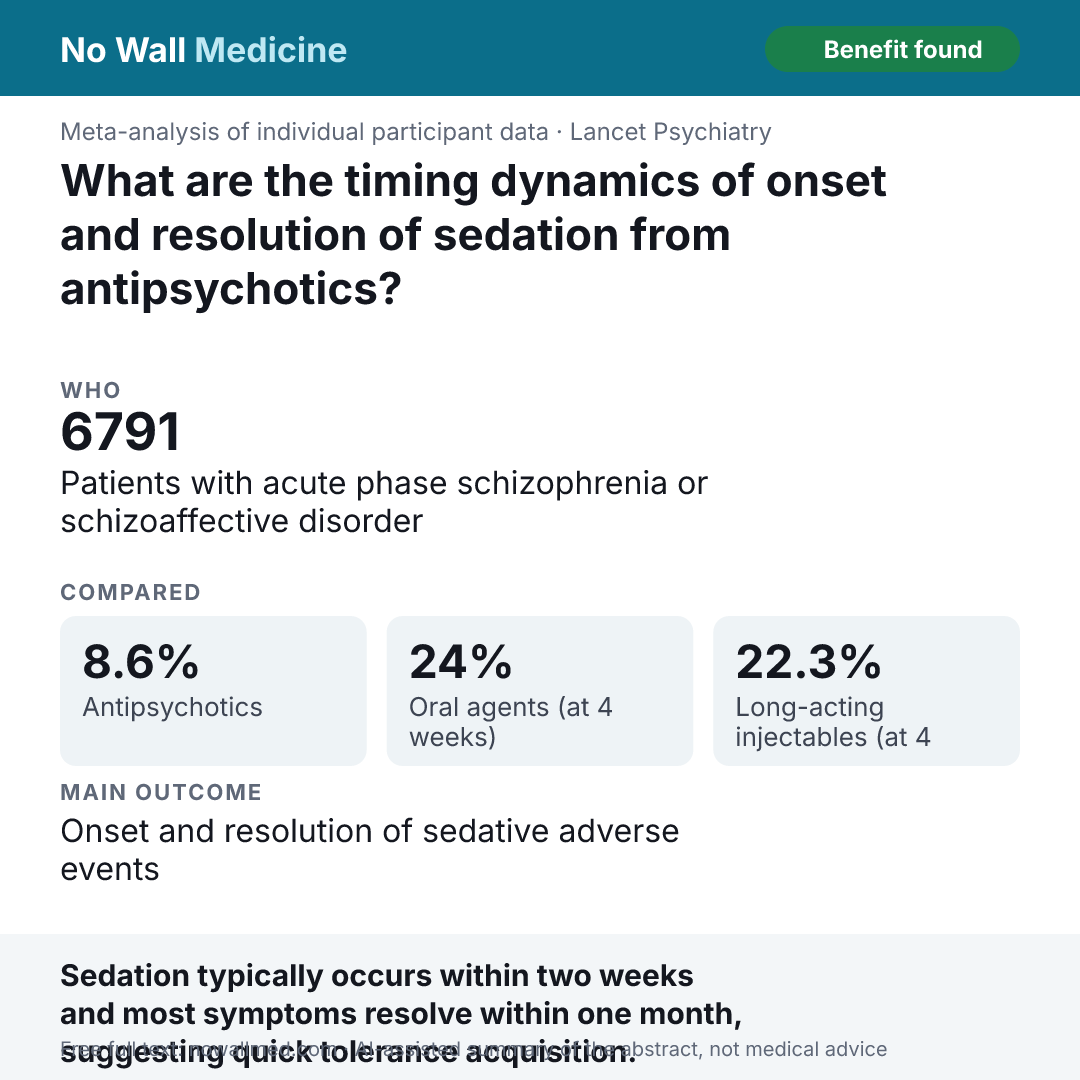
Clinical question: What are the timing dynamics of onset and resolution of sedation from antipsychotics?
Key points
- Researchers analyzed data from 6791 participants across 19 randomized controlled trials of antipsychotic monotherapy for schizophrenia and schizoaffective disorder.
- Sedative adverse events occurred in 8.6% of participants, with 83% of the 505 sedation events happening within the first 2 weeks of treatment.
- While 50% of sedation symptoms resolved within 1 week, 24% of those on oral agents and 22.3% of those on long-acting injectables still had sedation after 4 weeks.
Headline and key points written with AI from the paper’s abstract, with every number checked against it. Read the paper before relying on them.
Was this summary helpful?
Subject terms
Headline, design, result, key points, caveat and citation as plain text.
Cite this article
Nomura N, Siafis S, Schneider-Thoma J, et al. The trajectory of sedative adverse events caused by antipsychotics: a meta-analysis of individual participant data from randomised, placebo-controlled, clinical trials in acute phase schizophrenia. Lancet Psychiatry. 2025;12(4):266-275. doi:10.1016/S2215-0366(25)00025-2
Spotted a mistake? Suggest a correction