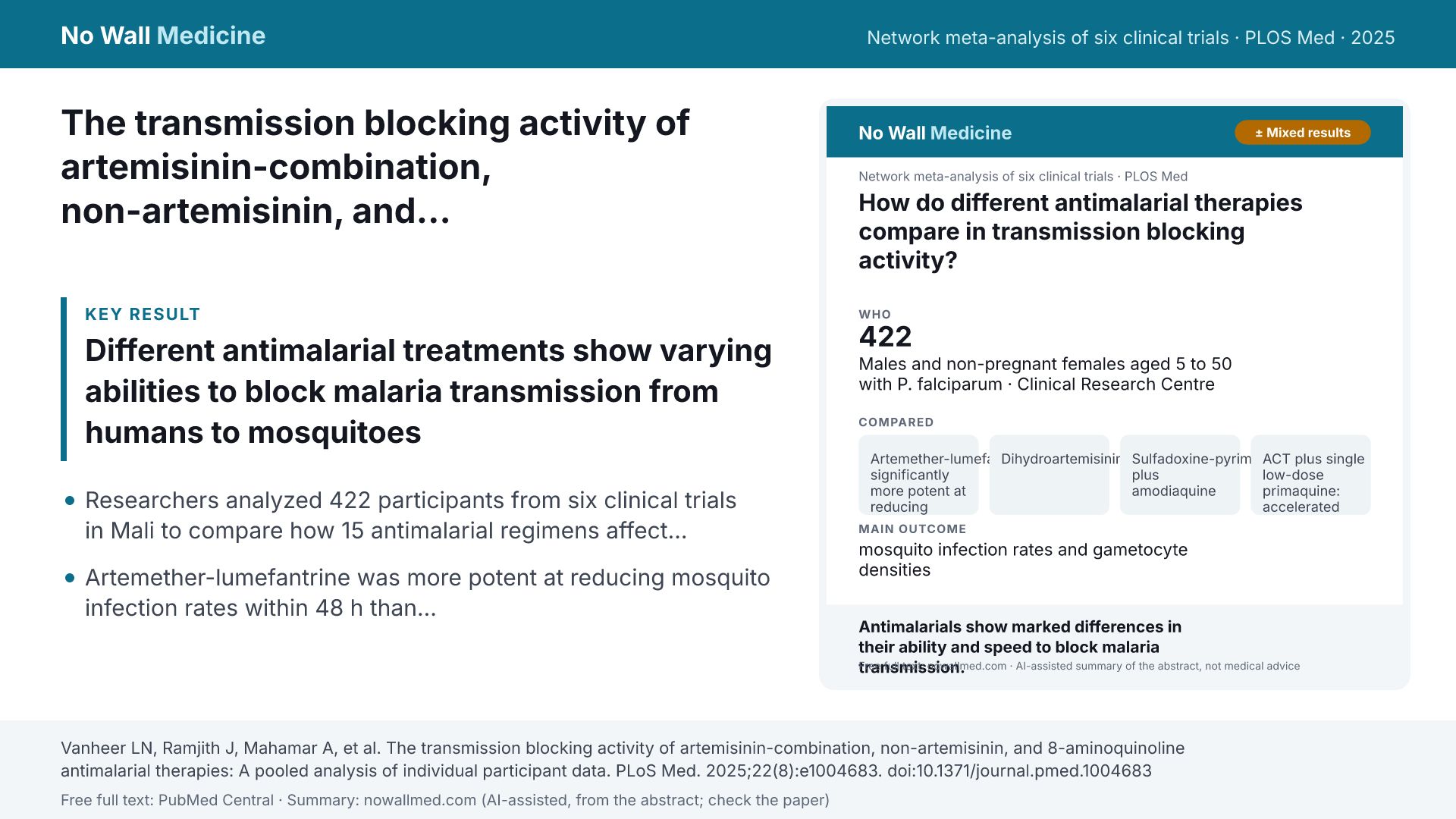
Different antimalarial treatments show varying abilities to block malaria transmission from humans to mosquitoes
The transmission blocking activity of artemisinin-combination, non-artemisinin, and 8-aminoquinoline antimalarial therapies: A pooled analysis of individual participant data
PediatricsAdult and pediatric
Network meta-analysis of six clinical trialsMixed results
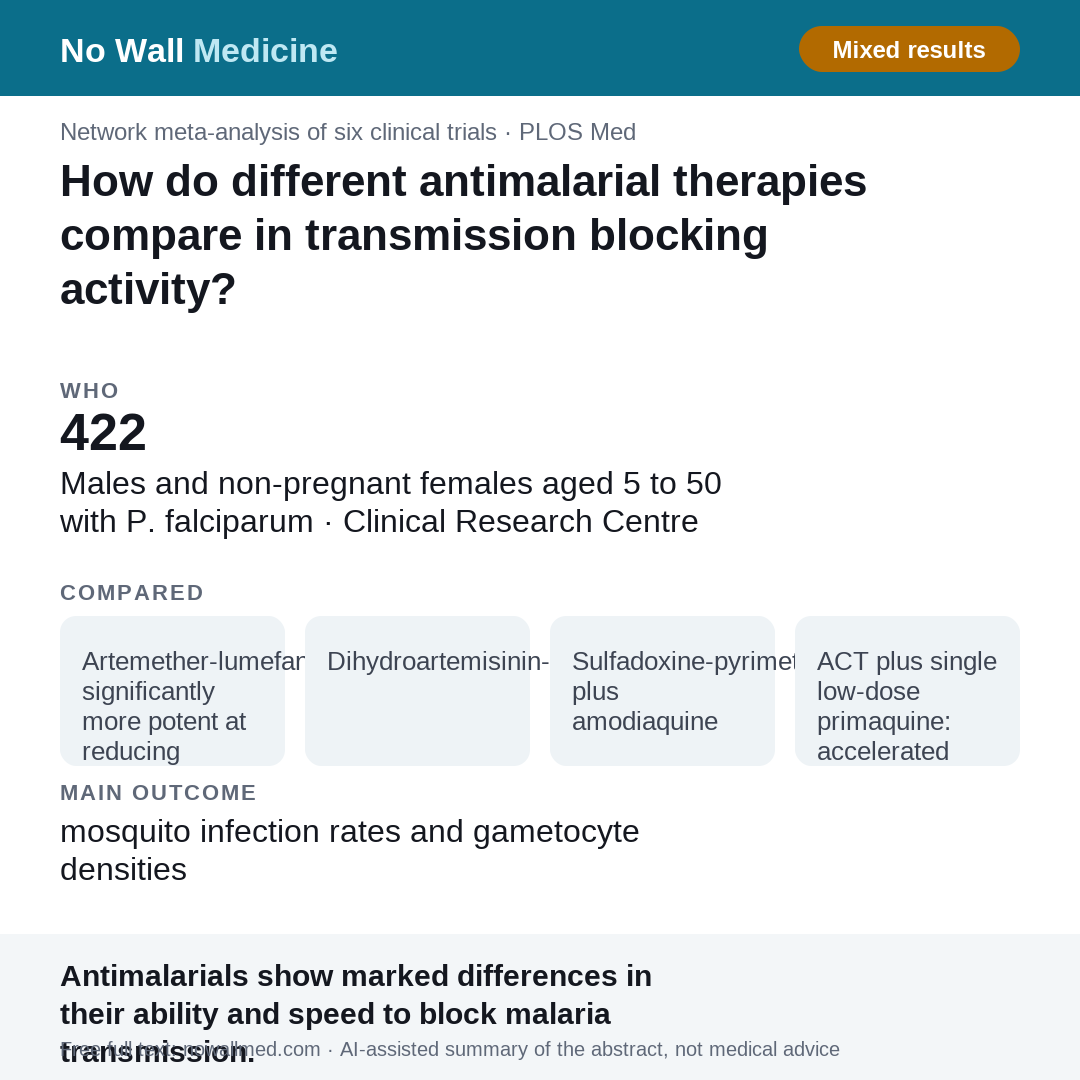
How do different antimalarial therapies compare in transmission blocking activity?
Who
422
Males and non-pregnant females aged 5 to 50 with P. falciparum · Clinical Research Centre in Mali
Compared
Artemether-lumefantrine: significantly more potent at reducing mosquito infection rates within 48 h
Dihydroartemisinin-piperaquine
Sulfadoxine-pyrimethamine plus amodiaquine
ACT plus single low-dose primaquine: accelerated gametocyte clearance and greater reduction in mosquito infection rate
Main outcome
mosquito infection rates and gametocyte densities
Bottom line: Antimalarials show marked differences in their ability and speed to block malaria transmission.
Limitation: Inclusion of highly infectious individuals and small sample sizes in some treatment groups.
PLOS Med · 2025-08-14Download image
Clinical question: How do different antimalarial therapies compare in transmission blocking activity?
Why it matters: Antimalarial medications differ in how effectively they clear the transmission stages of Plasmodium falciparum and prevent mosquito infection.
Key points
- Researchers analyzed 422 participants from six clinical trials in Mali to compare how 15 antimalarial regimens affect malaria parasite stages and mosquito infection.
- Artemether-lumefantrine was more potent at reducing mosquito infection rates within 48 h than dihydroartemisinin-piperaquine (p = 0.0164) and sulfadoxine-pyrimethamine plus amodiaquine (p = 0.0451).
- Adding single low-dose primaquine accelerated parasite clearance for any artemisinin-combination therapy and led to a greater reduction in mosquito infection rates within 48 h.
Limitation the authors note: The study included highly infectious individuals and had small sample sizes in some treatment groups, which resulted in wide confidence intervals.
Headline and key points written with AI from the paper’s abstract, with every number checked against it. Read the paper before relying on them.
Was this summary helpful?
Subject terms
Cite this article
Vanheer LN, Ramjith J, Mahamar A, Smit MJ, Lanke K, Roh ME. The transmission blocking activity of artemisinin-combination, non-artemisinin, and 8-aminoquinoline antimalarial therapies: A pooled analysis of individual participant data. PLOS Med. 2025. doi:10.1371/journal.pmed.1004683
Spotted a mistake? Suggest a correction