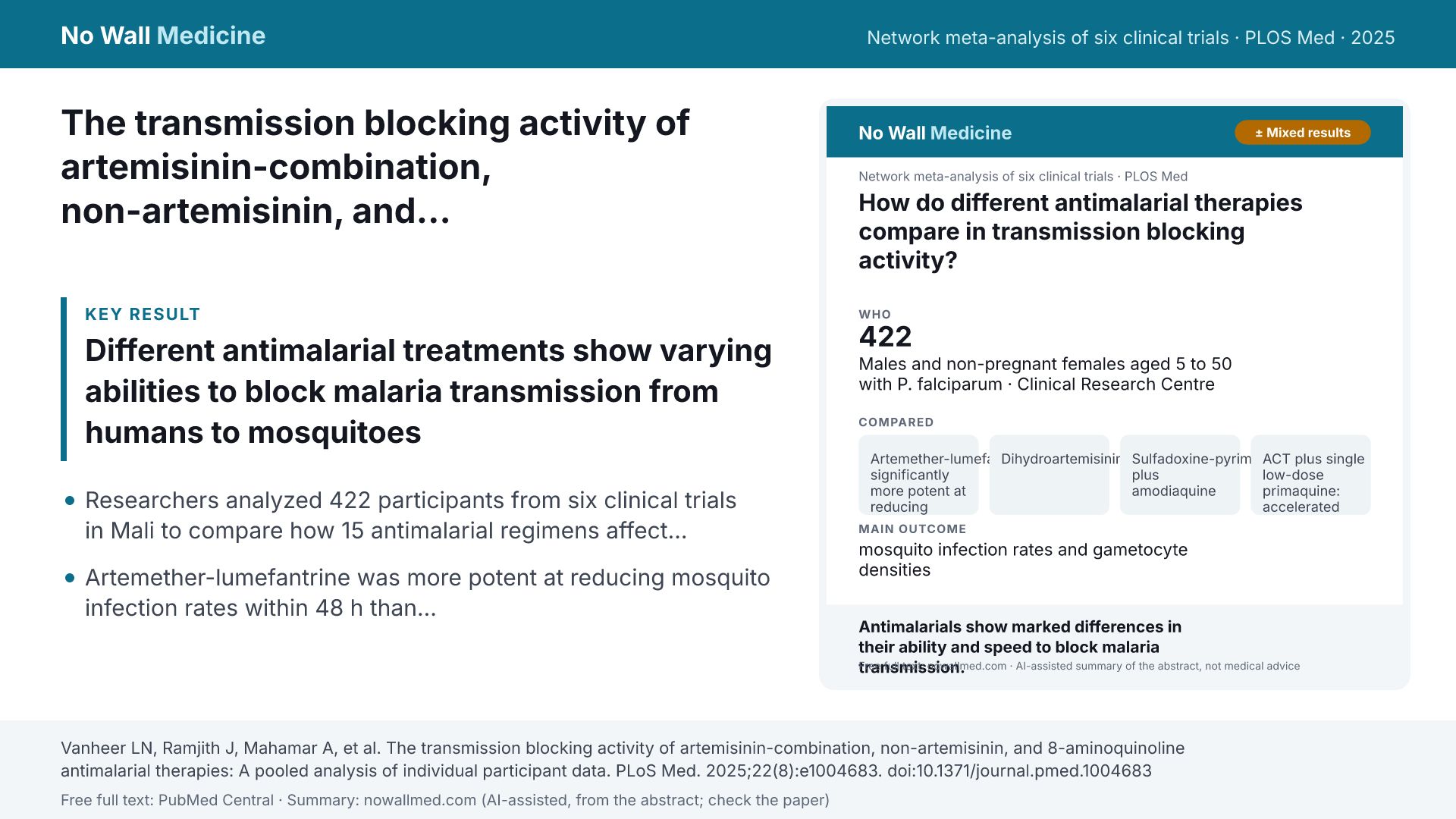
The transmission blocking activity of artemisinin-combination, non-artemisinin, and 8-aminoquinoline antimalarial therapies: A pooled analysis of individual participant data
Key result: Different antimalarial treatments show varying abilities to block malaria transmission from humans to mosquitoes
Key points
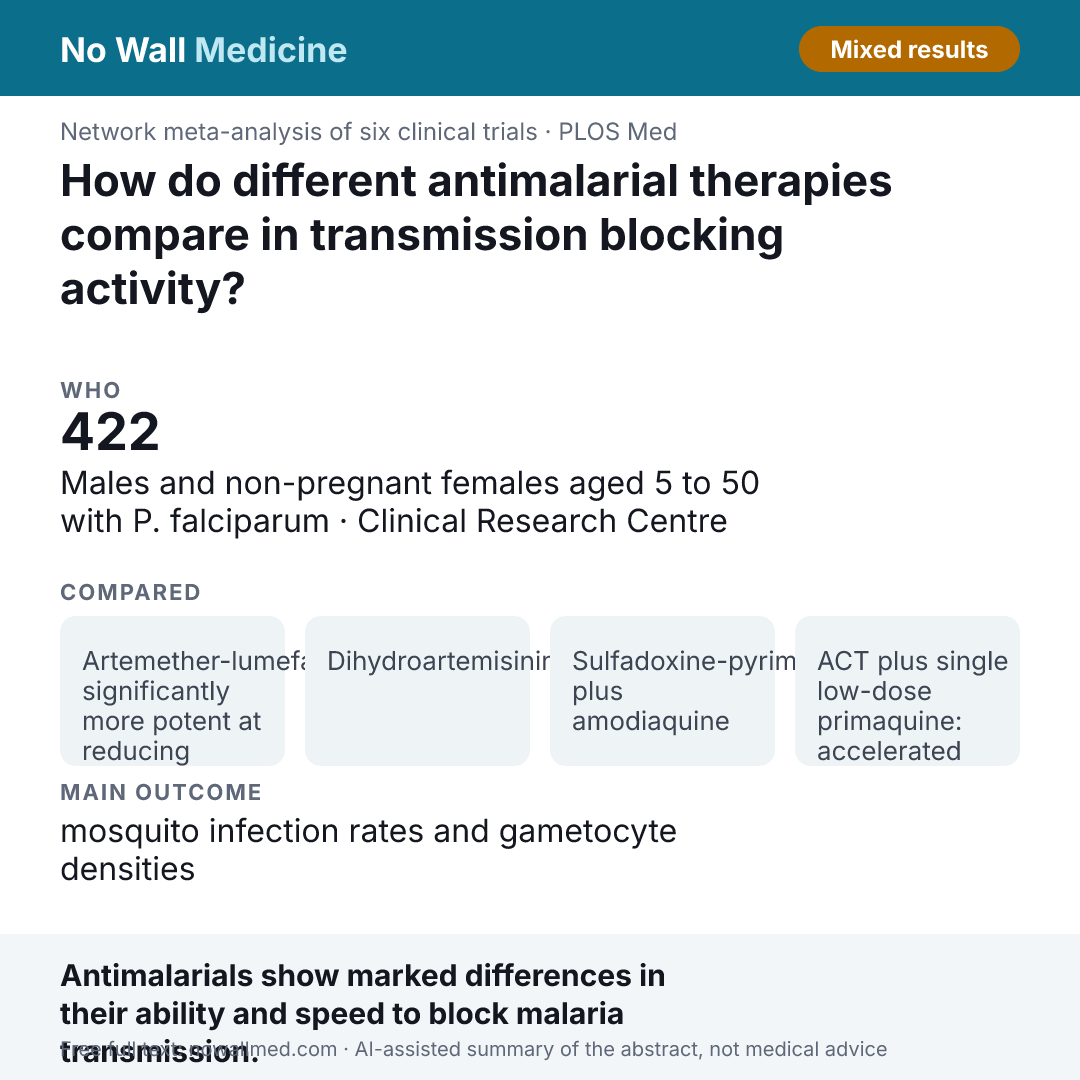
- Researchers analyzed 422 participants from six clinical trials in Mali to compare how 15 antimalarial regimens affect malaria parasite stages and mosquito infection.
- Artemether-lumefantrine was more potent at reducing mosquito infection rates within 48 h than dihydroartemisinin-piperaquine (p = 0.0164) and sulfadoxine-pyrimethamine plus amodiaquine (p = 0.0451).
- Adding single low-dose primaquine accelerated parasite clearance for any artemisinin-combination therapy and led to a greater reduction in mosquito infection rates within 48 h.
Why it matters: Antimalarial medications differ in how effectively they clear the transmission stages of Plasmodium falciparum and prevent mosquito infection.
Limitation the authors note: The study included highly infectious individuals and had small sample sizes in some treatment groups, which resulted in wide confidence intervals.
Discussion prompts
- Would these patients look like yours? Who was left out?
- Is the main outcome one that matters to patients?
- Is the difference large enough to change what you do?
Cite: Vanheer LN, Ramjith J, Mahamar A, et al. The transmission blocking activity of artemisinin-combination, non-artemisinin, and 8-aminoquinoline antimalarial therapies: A pooled analysis of individual participant data. PLoS Med. 2025;22(8):e1004683. doi:10.1371/journal.pmed.1004683
Free full text: PubMed Central · Summary and visual abstract: nowallmed.com/a/the-transmission-blocking-activity-of-artemisinin-combination-non-15phjo0/ (AI-assisted from the abstract; check the paper before relying on it).