Intermittent pneumatic compression reduces blood clot and bleeding risks after orthopaedic surgery
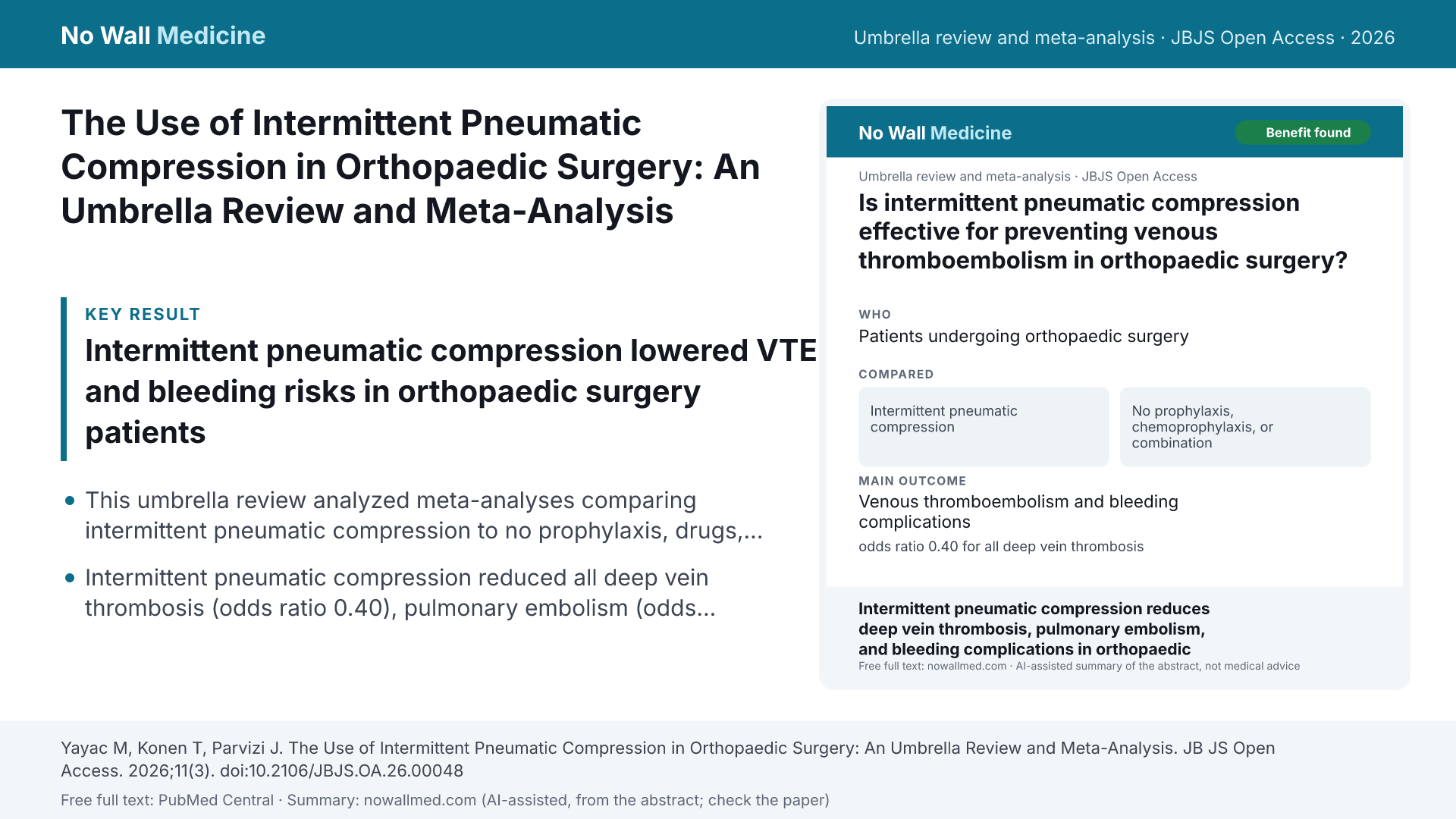
The Use of Intermittent Pneumatic Compression in Orthopaedic Surgery: An Umbrella Review and Meta-Analysis
Umbrella review and meta-analysisBenefit found
Is intermittent pneumatic compression effective for preventing venous thromboembolism in orthopaedic surgery?
Who
Patients undergoing orthopaedic surgery
Compared
Intermittent pneumatic compression
No prophylaxis, chemoprophylaxis, or combination
Main outcome
Venous thromboembolism and bleeding complications
Result: odds ratio 0.40 for all deep vein thrombosis
Bottom line: Intermittent pneumatic compression reduces deep vein thrombosis, pulmonary embolism, and bleeding complications in orthopaedic surgery patients.
Limitation: Heterogeneity in existing evidence and methodological limitations.
JBJS Open Access · 2026-07-13Download image
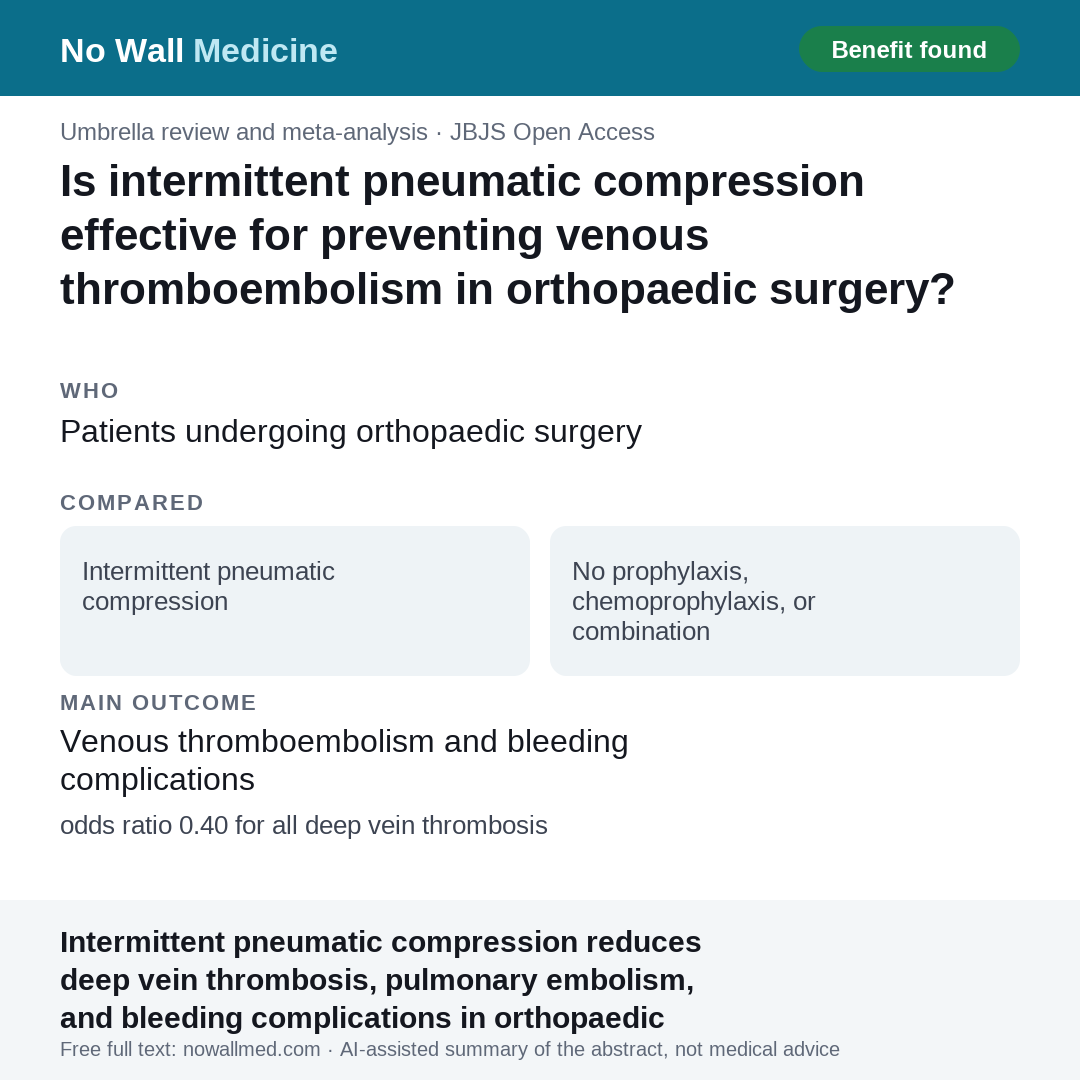
Clinical question: Is intermittent pneumatic compression effective for preventing venous thromboembolism in orthopaedic surgery?
Why it matters: Evidence regarding the effectiveness of intermittent pneumatic compression devices for preventing blood clots after orthopaedic surgery has remained varied across different studies.
Key points
- Researchers conducted an umbrella review and meta-analysis of existing studies comparing intermittent pneumatic compression, which uses inflatable sleeves to move blood, to other prevention methods.
- The use of these devices significantly reduced the risk of all deep vein thrombosis (odds ratio 0.40), proximal deep vein thrombosis (odds ratio 0.58), distal deep vein thrombosis (odds ratio 0.45), and pulmonary embolism (odds ratio 0.45).
- Intermittent pneumatic compression also reduced bleeding complications (odds ratio 0.57) but showed no effect on mortality.
Limitation the authors note: The authors noted heterogeneity in existing evidence and methodological limitations that require more standardized, high-quality randomized trials.
Headline and key points written with AI from the paper’s abstract, with every number checked against it. Read the paper before relying on them.
Was this summary helpful?
Cite this article
Yayac M, Konen T, Parvizi J. The Use of Intermittent Pneumatic Compression in Orthopaedic Surgery: An Umbrella Review and Meta-Analysis. JBJS Open Access. 2026. doi:10.2106/JBJS.OA.26.00048
Spotted a mistake? Suggest a correction