The Use of Intermittent Pneumatic Compression in Orthopaedic Surgery: An Umbrella Review and Meta-Analysis
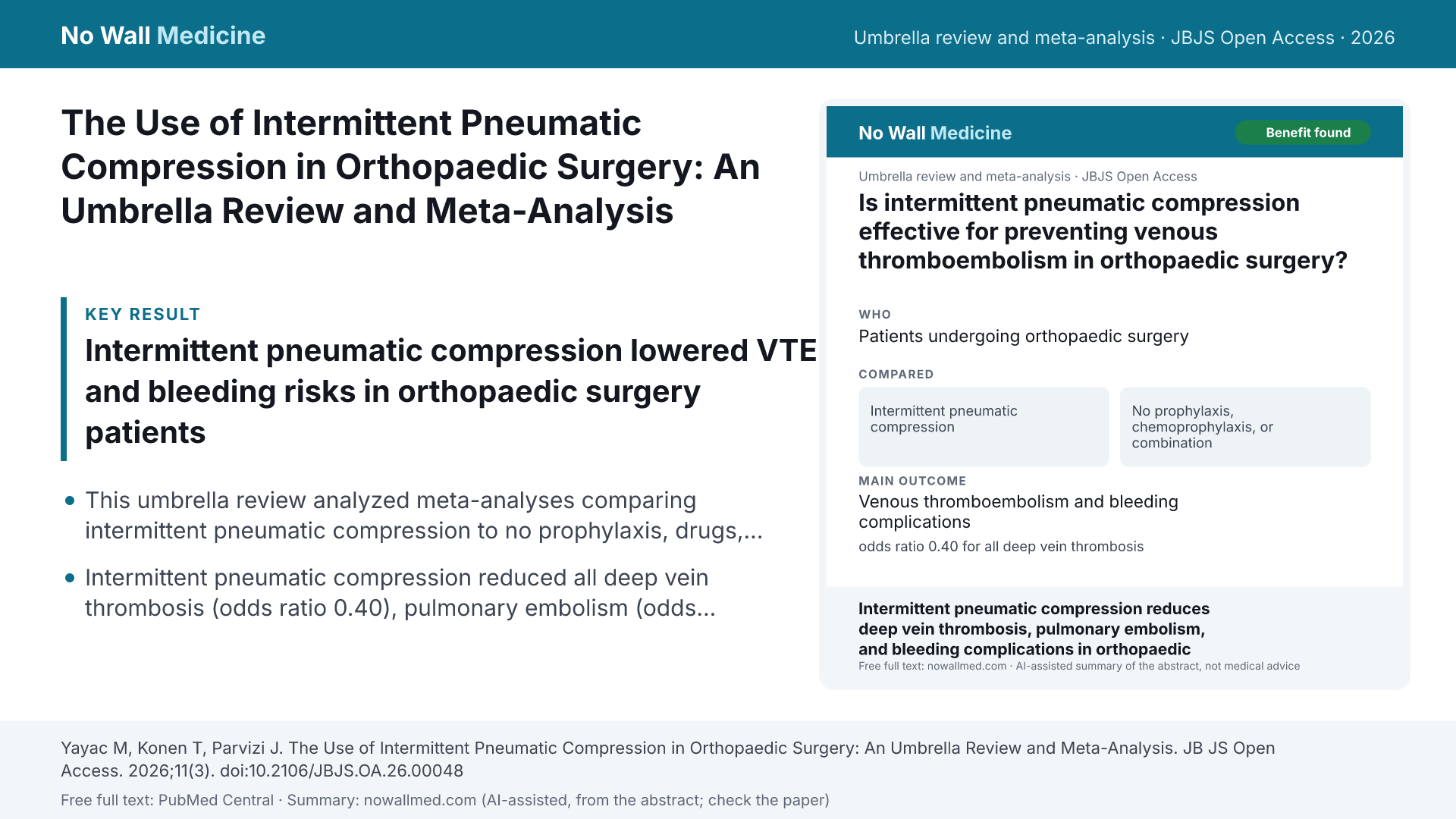
Key result: Intermittent pneumatic compression lowered VTE and bleeding risks in orthopaedic surgery patients
Key points
- This umbrella review analyzed meta-analyses comparing intermittent pneumatic compression to no prophylaxis, drugs, or combinations in orthopaedic surgery.
- Intermittent pneumatic compression reduced all deep vein thrombosis (odds ratio 0.40), pulmonary embolism (odds ratio 0.45), and bleeding (odds ratio 0.57).
- The intervention showed no effect on mortality and performed comparably or better than chemoprophylaxis, especially for bleeding risk.
Why it matters: Applies to patients undergoing orthopaedic procedures; supports continued use of intermittent pneumatic compression, particularly when bleeding risk is high or drugs are contraindicated.
Limitation the authors note: Heterogeneity in existing evidence and methodological limitations highlight the need for standardized, high-quality randomized trials.
Discussion prompts
- Would these patients look like yours? Who was left out?
- Is the main outcome one that matters to patients?
- Is the difference large enough to change what you do?
Cite: Yayac M, Konen T, Parvizi J. The Use of Intermittent Pneumatic Compression in Orthopaedic Surgery: An Umbrella Review and Meta-Analysis. JB JS Open Access. 2026;11(3). doi:10.2106/JBJS.OA.26.00048
Free full text: PubMed Central · Summary and visual abstract: nowallmed.com/a/the-use-of-intermittent-pneumatic-compression-in-orthopaedic-surgery-1bho1gb/ (AI-assisted from the abstract; check the paper before relying on it).