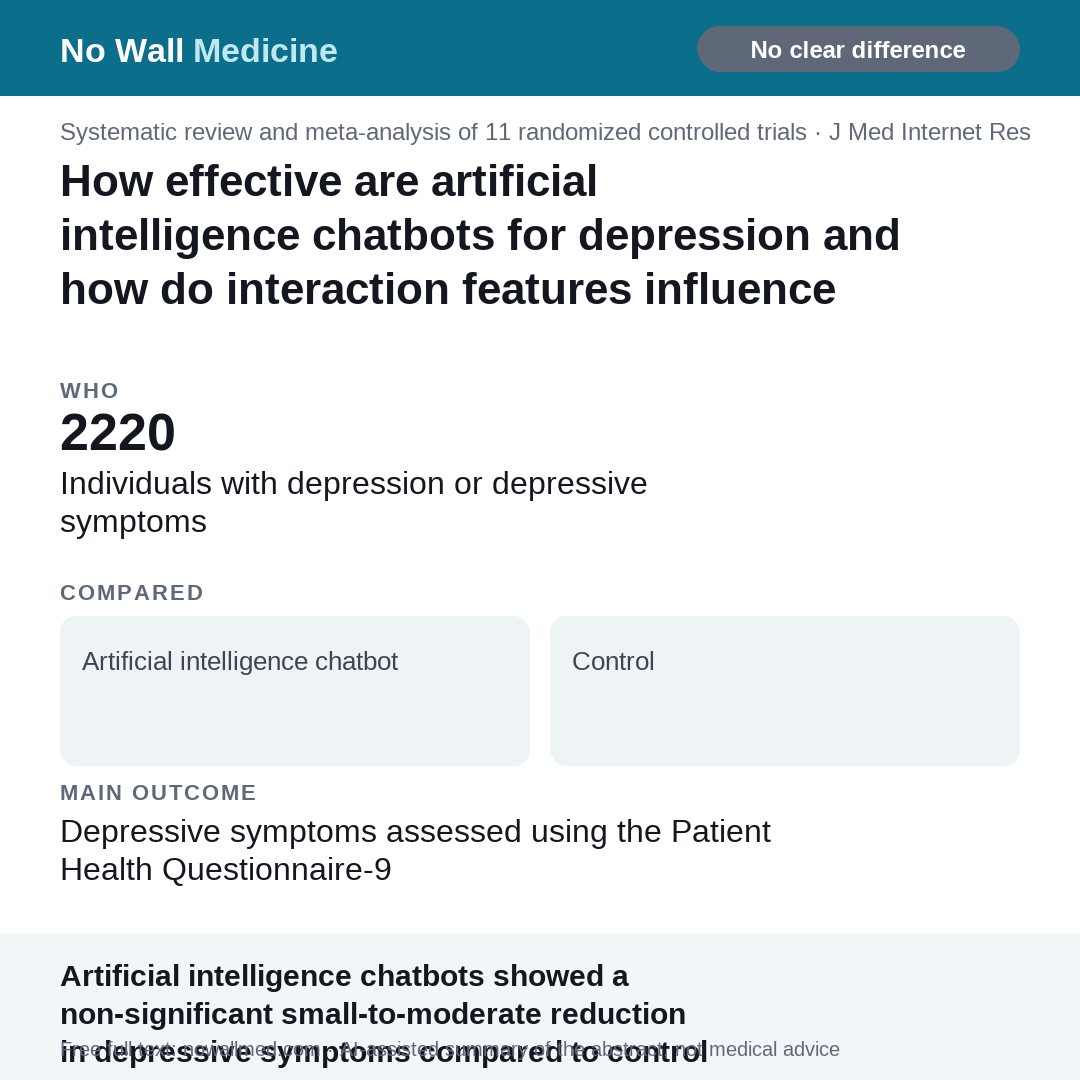
Artificial intelligence chatbots showed no statistically significant reduction in depression symptoms compared to control groups
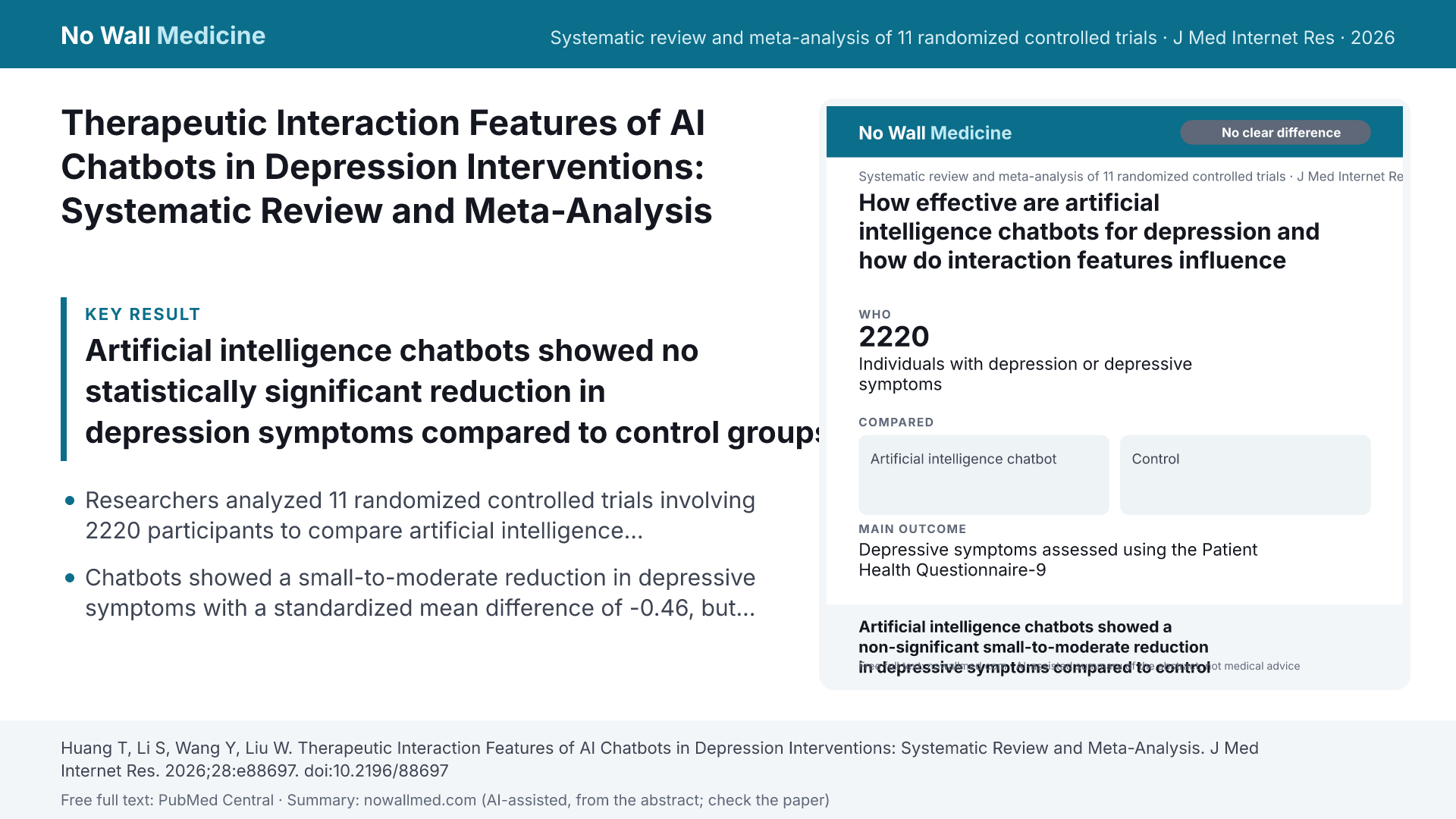
Therapeutic Interaction Features of AI Chatbots in Depression Interventions: Systematic Review and Meta-Analysis
Systematic review and meta-analysis of 11 randomized controlled trialsNo clear difference
How effective are artificial intelligence chatbots for depression and how do interaction features influence outcomes?
Who
2220
Individuals with depression or depressive symptoms
Compared
Artificial intelligence chatbot
Control
Main outcome
Depressive symptoms assessed using the Patient Health Questionnaire-9
Result: standardized mean difference -0.46 (95% CI -1.02 to 0.10)
Bottom line: Artificial intelligence chatbots showed a non-significant small-to-moderate reduction in depressive symptoms compared to control conditions.
Limitation: Small number of randomized controlled trials, heterogeneity, and potential publication bias.
J Med Internet Res · 2026-06-30Download image
Clinical question: How effective are artificial intelligence chatbots for depression and how do interaction features influence outcomes?
Why it matters: Limited evidence exists regarding how specific chatbot interaction features influence treatment adherence and clinical outcomes for people with depression.
Key points
- Researchers analyzed 11 randomized controlled trials involving 2220 participants to compare artificial intelligence chatbots against control conditions for depression.
- Chatbots showed a small-to-moderate reduction in depressive symptoms with a standardized mean difference of -0.46, but the result was not statistically significant.
- Emotional responsiveness, structured feedback, and interaction frequency were associated with higher adherence to the interventions in high-scoring subgroups.
Limitation the authors note: The authors noted a small number of randomized controlled trials, high heterogeneity, reliance on study-reported descriptions, and potential publication bias.
Headline and key points written with AI from the paper’s abstract, with every number checked against it. Read the paper before relying on them.
Was this summary helpful?
Subject terms
Cite this article
Huang T, Li S, Wang Y, Liu W. Therapeutic Interaction Features of AI Chatbots in Depression Interventions: Systematic Review and Meta-Analysis. J Med Internet Res. 2026. doi:10.2196/88697
Spotted a mistake? Suggest a correction