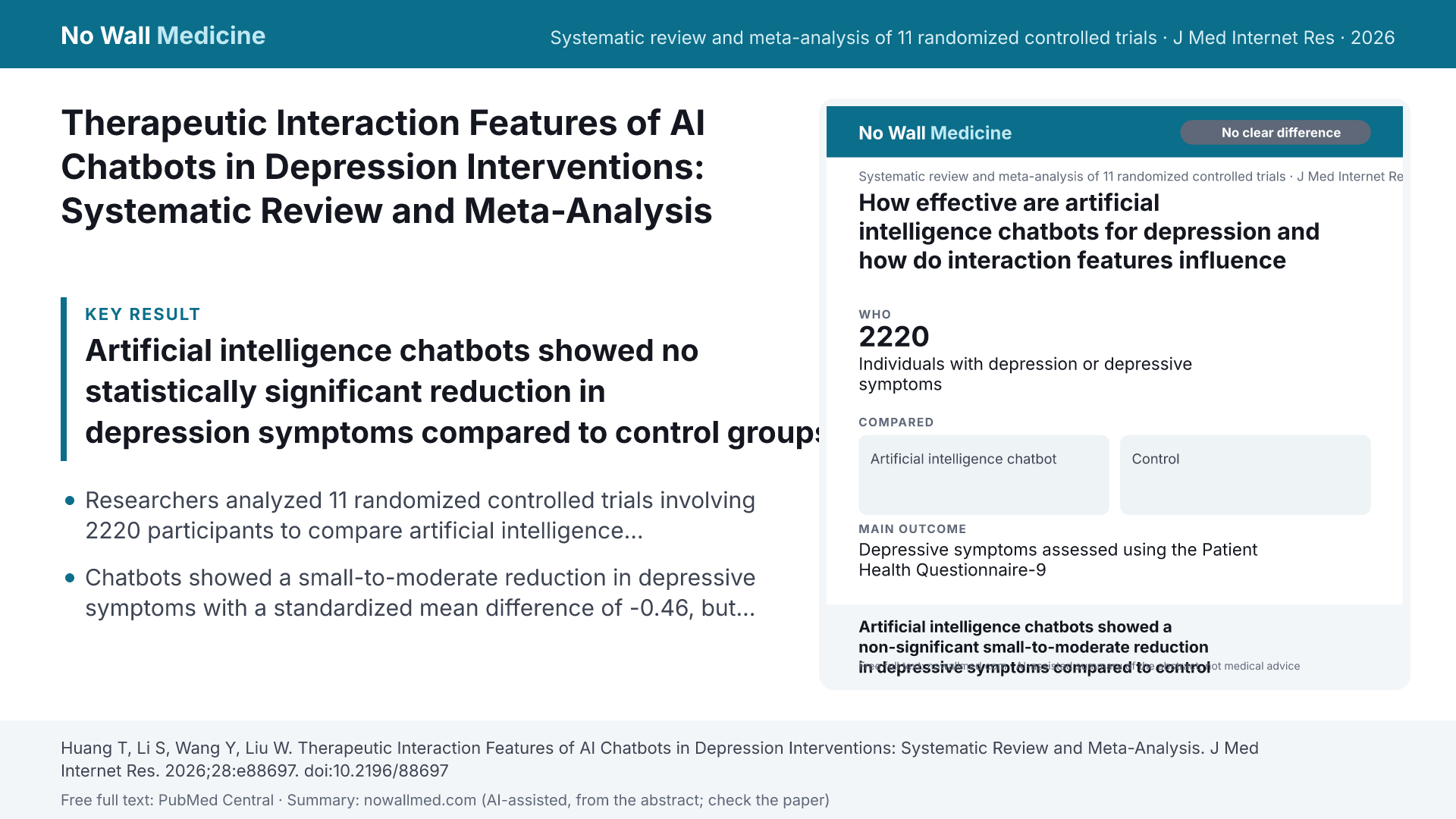
Therapeutic Interaction Features of AI Chatbots in Depression Interventions: Systematic Review and Meta-Analysis
Key result: Artificial intelligence chatbots showed no statistically significant reduction in depression symptoms compared to control groups
Key points
- Researchers analyzed 11 randomized controlled trials involving 2220 participants to compare artificial intelligence chatbots against control conditions for depression.
- Chatbots showed a small-to-moderate reduction in depressive symptoms with a standardized mean difference of -0.46, but the result was not statistically significant.
- Emotional responsiveness, structured feedback, and interaction frequency were associated with higher adherence to the interventions in high-scoring subgroups.
Why it matters: Limited evidence exists regarding how specific chatbot interaction features influence treatment adherence and clinical outcomes for people with depression.
Limitation the authors note: The authors noted a small number of randomized controlled trials, high heterogeneity, reliance on study-reported descriptions, and potential publication bias.
Discussion prompts
- Would these patients look like yours? Who was left out?
- Is the main outcome one that matters to patients?
- Is the difference large enough to change what you do?
Cite: Huang T, Li S, Wang Y, Liu W. Therapeutic Interaction Features of AI Chatbots in Depression Interventions: Systematic Review and Meta-Analysis. J Med Internet Res. 2026;28:e88697. doi:10.2196/88697
Free full text: PubMed Central · Summary and visual abstract: nowallmed.com/a/therapeutic-interaction-features-of-ai-chatbots-in-depression-1336u3t/ (AI-assisted from the abstract; check the paper before relying on it).