Natural antimicrobial peptides show high potency but face significant toxicity challenges in bacterial infection research
Therapeutic potential and safety challenges of antimicrobial peptides and peptidomimetics against ESKAPEE pathogens: a systematic review with quantitative analysis
Systematic review with quantitative analysisMixed results
What is the therapeutic potential and safety of antimicrobial peptides and peptidomimetics?
Who
Antimicrobial peptides and peptidomimetics against ESKAPEE pathogens
Compared
Natural antimicrobial peptides: most potent in vitro against Gram-negative bacteria but frequently caused significant host toxicity
Peptidomimetics: generally provided a wider safety margin than synthetic peptides
Main outcome
therapeutic balance of potency and safety
Bottom line: Natural peptides are potent but toxic, while peptidomimetics offer better safety but face pharmacokinetic challenges.
Limitation: Limited cytotoxicity data prevented robust selectivity analysis for natural compounds.
J Antimicrob Chemother · 2026-07-27 · Save PNG
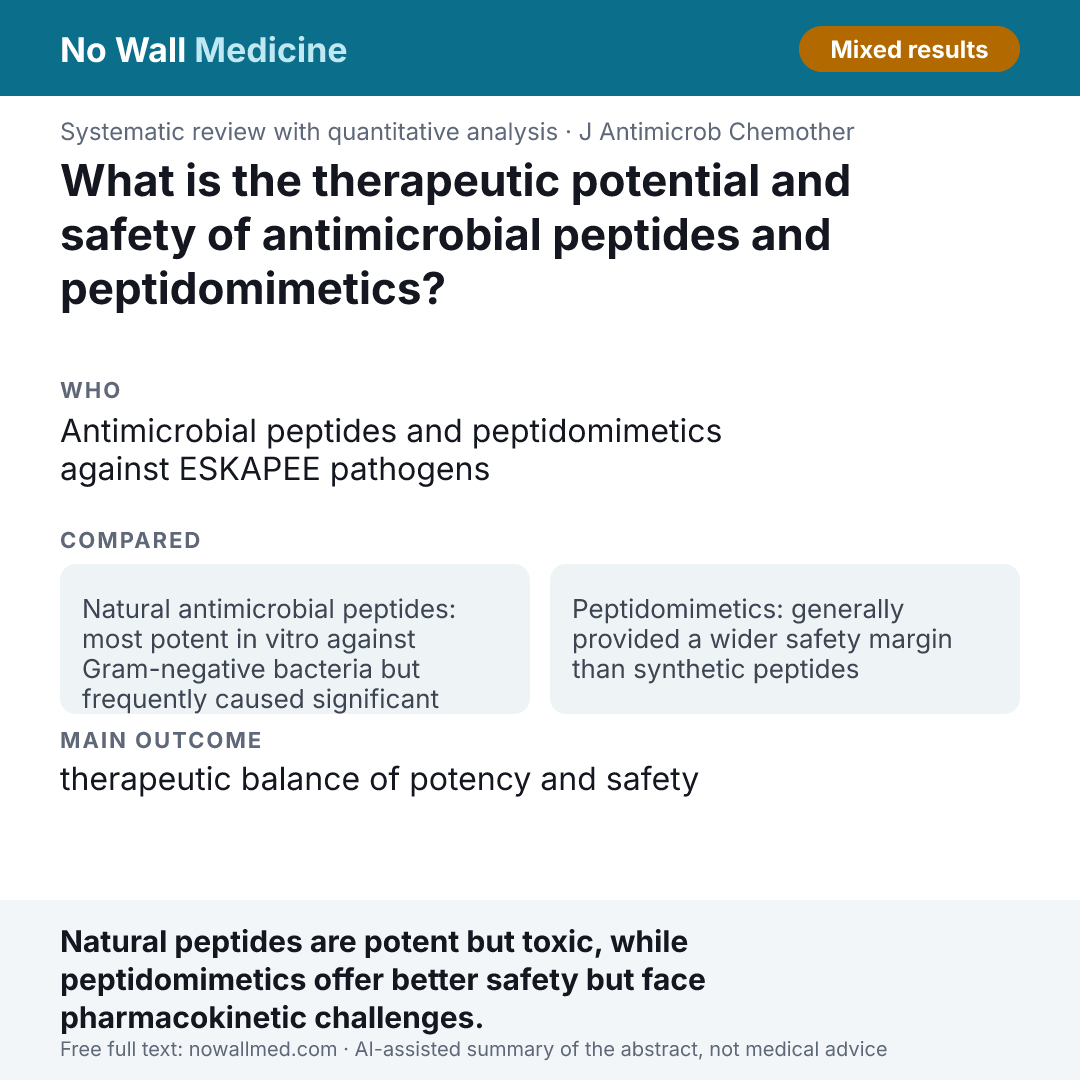
Clinical question: What is the therapeutic potential and safety of antimicrobial peptides and peptidomimetics?
Why it matters: The advancement of antimicrobial peptides as alternatives to traditional antibiotics is often limited by toxicity and poor pharmacokinetics.
Key points
- Researchers analyzed 136 peptides from 47 studies to evaluate the balance of potency and safety against multidrug-resistant bacteria.
- Natural antimicrobial peptides were most potent in laboratory tests against Gram-negative bacteria but frequently caused significant host toxicity.
- Peptidomimetics, which are synthetic molecules designed to mimic peptides, generally provided a wider safety margin than natural peptides.
Limitation the authors note: Limited cytotoxicity data prevented robust selectivity analysis for natural compounds.
Headline and key points written with AI from the paper’s abstract, with every number checked against it. Read the paper before relying on them.
Was this summary helpful?
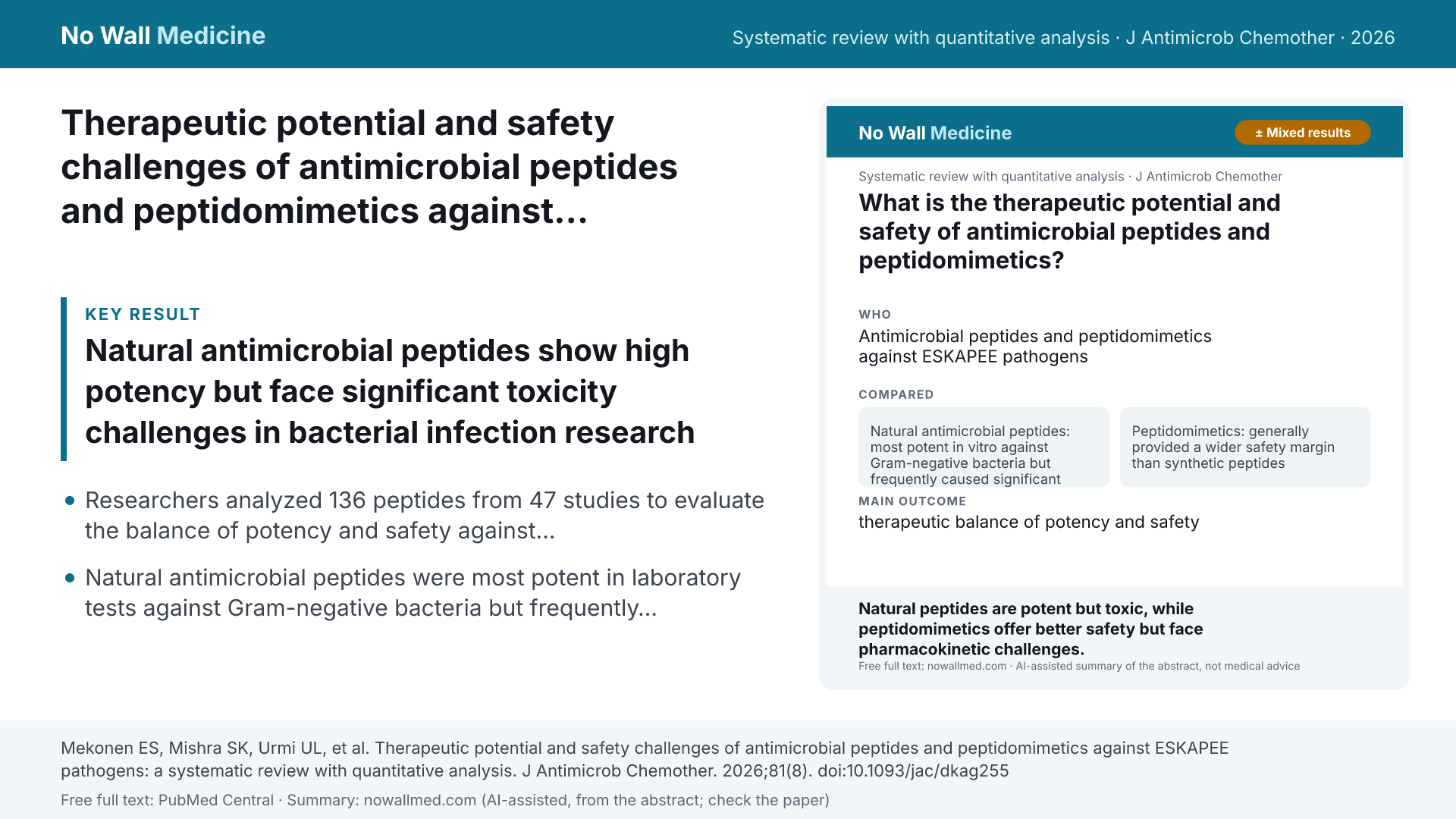
Subject terms
Headline, design, result, key points, caveat and citation as plain text.
Cite this article
Mekonen ES, Mishra SK, Urmi UL, et al. Therapeutic potential and safety challenges of antimicrobial peptides and peptidomimetics against ESKAPEE pathogens: a systematic review with quantitative analysis. J Antimicrob Chemother. 2026;81(8). doi:10.1093/jac/dkag255
Spotted a mistake? Suggest a correction