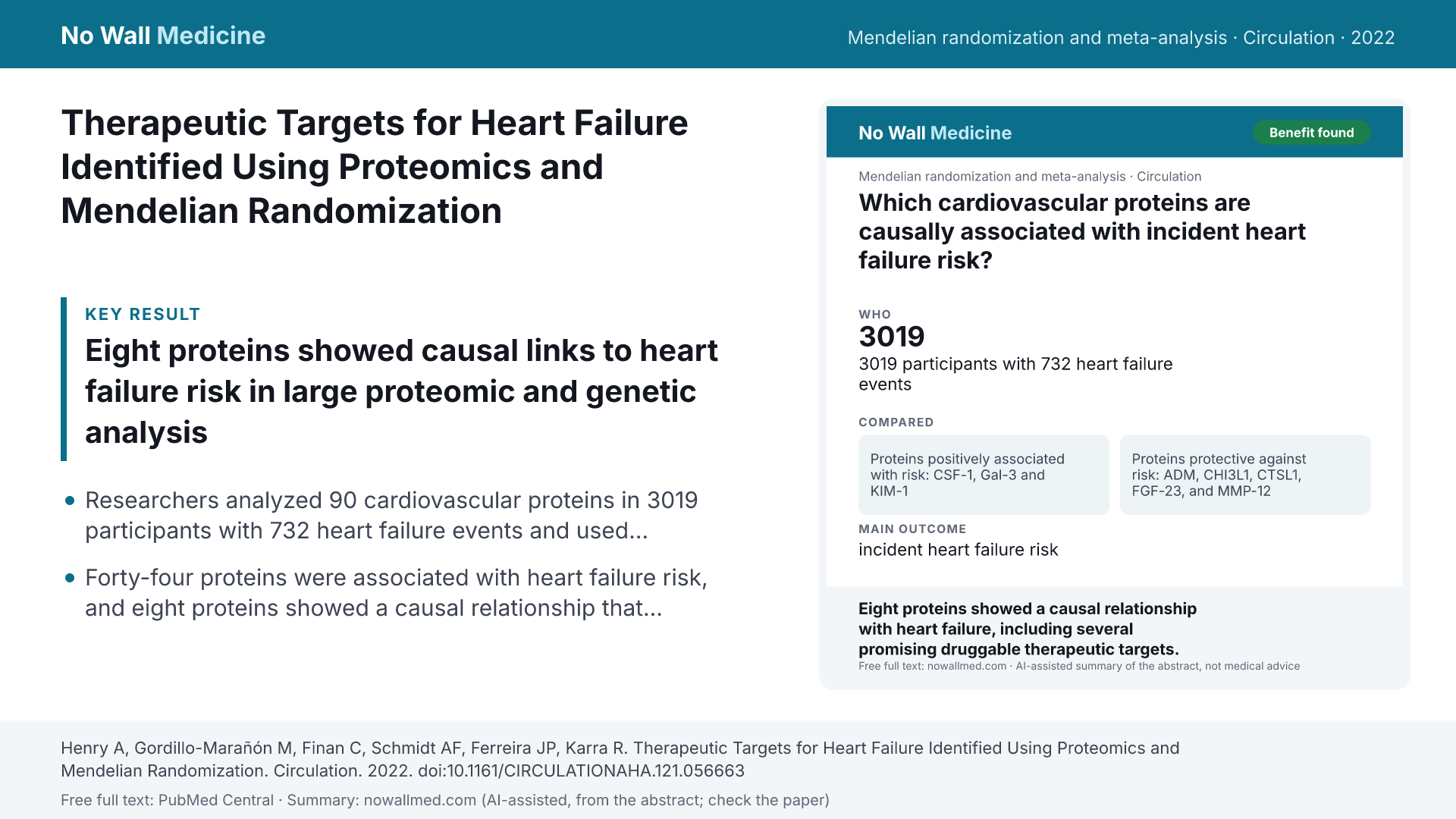
Eight proteins showed causal links to heart failure risk in large proteomic and genetic analysis
Therapeutic Targets for Heart Failure Identified Using Proteomics and Mendelian Randomization
Mendelian randomization and meta-analysisBenefit found
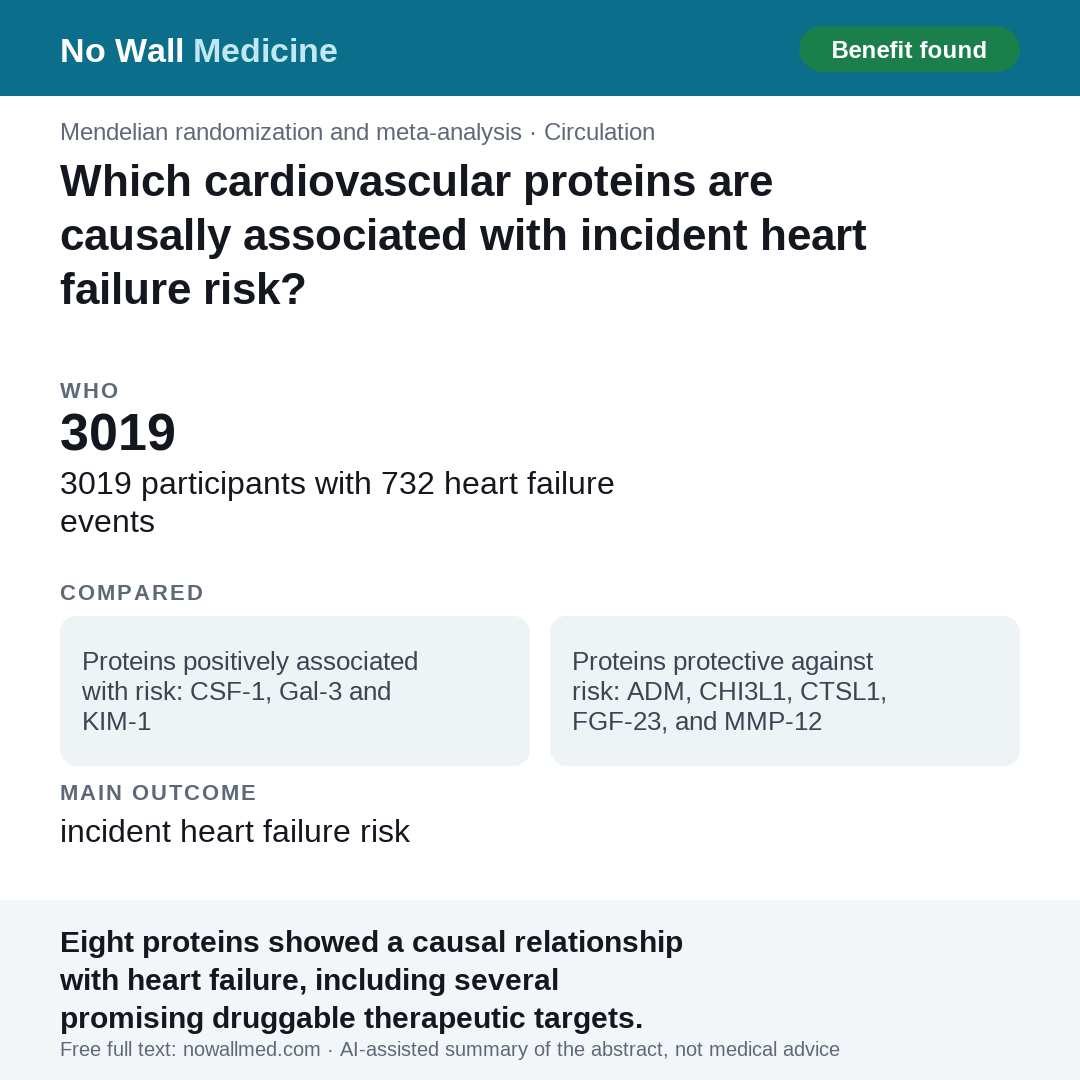
Which cardiovascular proteins are causally associated with incident heart failure risk?
Who
3019
3019 participants with 732 heart failure events
Compared
Proteins positively associated with risk: CSF-1, Gal-3 and KIM-1
Proteins protective against risk: ADM, CHI3L1, CTSL1, FGF-23, and MMP-12
Main outcome
incident heart failure risk
Bottom line: Eight proteins showed a causal relationship with heart failure, including several promising druggable therapeutic targets.
Circulation · 2022-03-18Download image
Clinical question: Which cardiovascular proteins are causally associated with incident heart failure risk?
Why it matters: The biological mechanisms of heart failure are not fully understood, making it difficult to identify new proteins that could serve as therapeutic targets.
Key points
- Researchers analyzed 90 cardiovascular proteins in 3019 participants with 732 heart failure events and used genetic data from over 30000 individuals.
- Forty-four proteins were associated with heart failure risk, and eight proteins showed a causal relationship that remained robust across multiple sensitivity analyses.
- Higher levels of CSF-1, Gal-3, and KIM-1 were associated with heart failure risk, while higher ADM, CHI3L1, CTSL1, FGF-23, and MMP-12 were associated with protection.
Headline and key points written with AI from the paper’s abstract, with every number checked against it. Read the paper before relying on them.
Was this summary helpful?
Subject terms
Cite this article
Henry A, Gordillo-Marañón M, Finan C, Schmidt AF, Ferreira JP, Karra R. Therapeutic Targets for Heart Failure Identified Using Proteomics and Mendelian Randomization. Circulation. 2022. doi:10.1161/CIRCULATIONAHA.121.056663
Spotted a mistake? Suggest a correction
Top studies every Monday
The week’s key trials and guidelines in your specialties, plus any topics you follow. By email, free.
Get the weekly digest