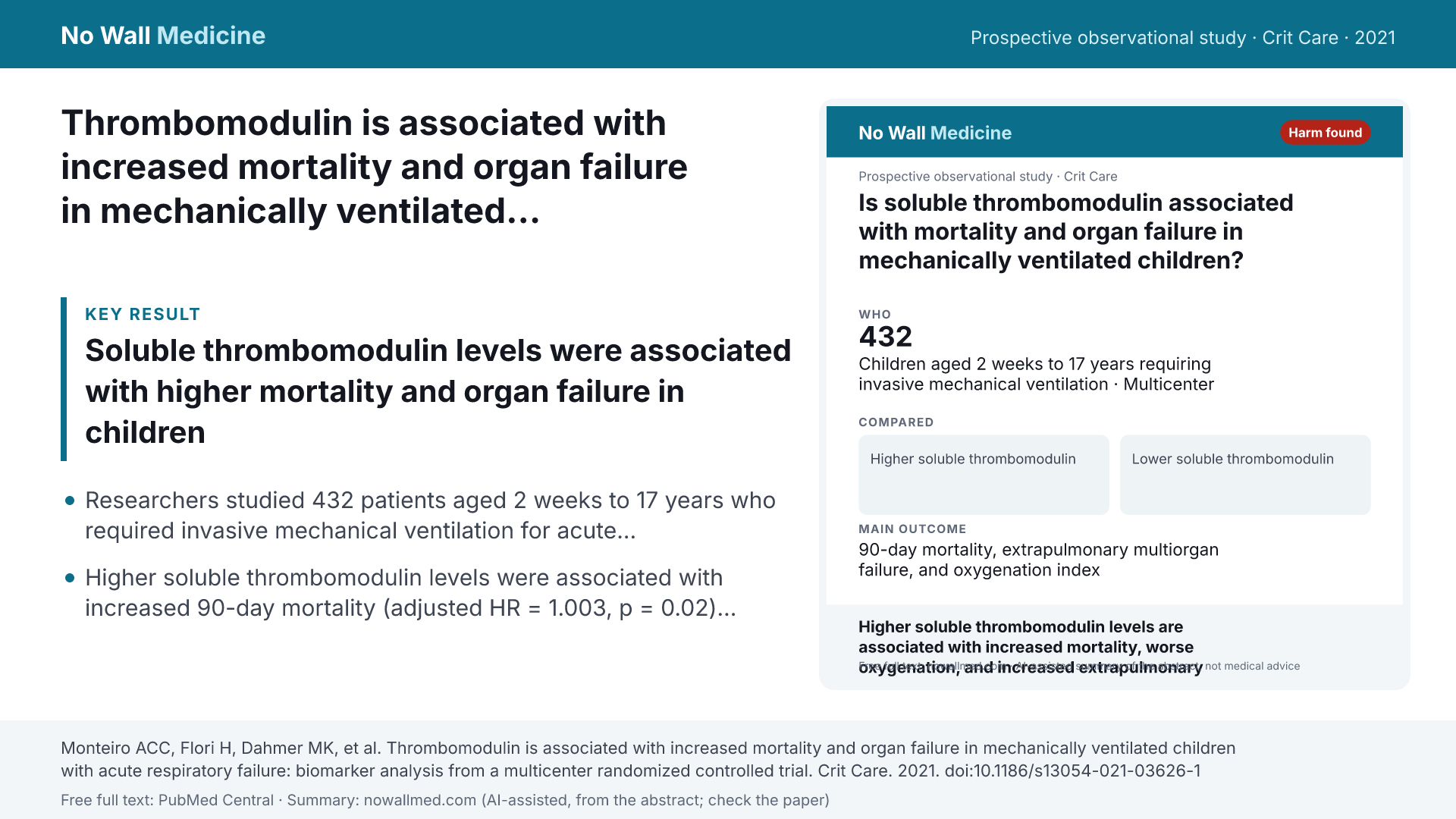
Thrombomodulin is associated with increased mortality and organ failure in mechanically ventilated children with acute respiratory failure: biomarker analysis from a multicenter randomized controlled trial
Key result: Soluble thrombomodulin levels were associated with higher mortality and organ failure in children
Key points
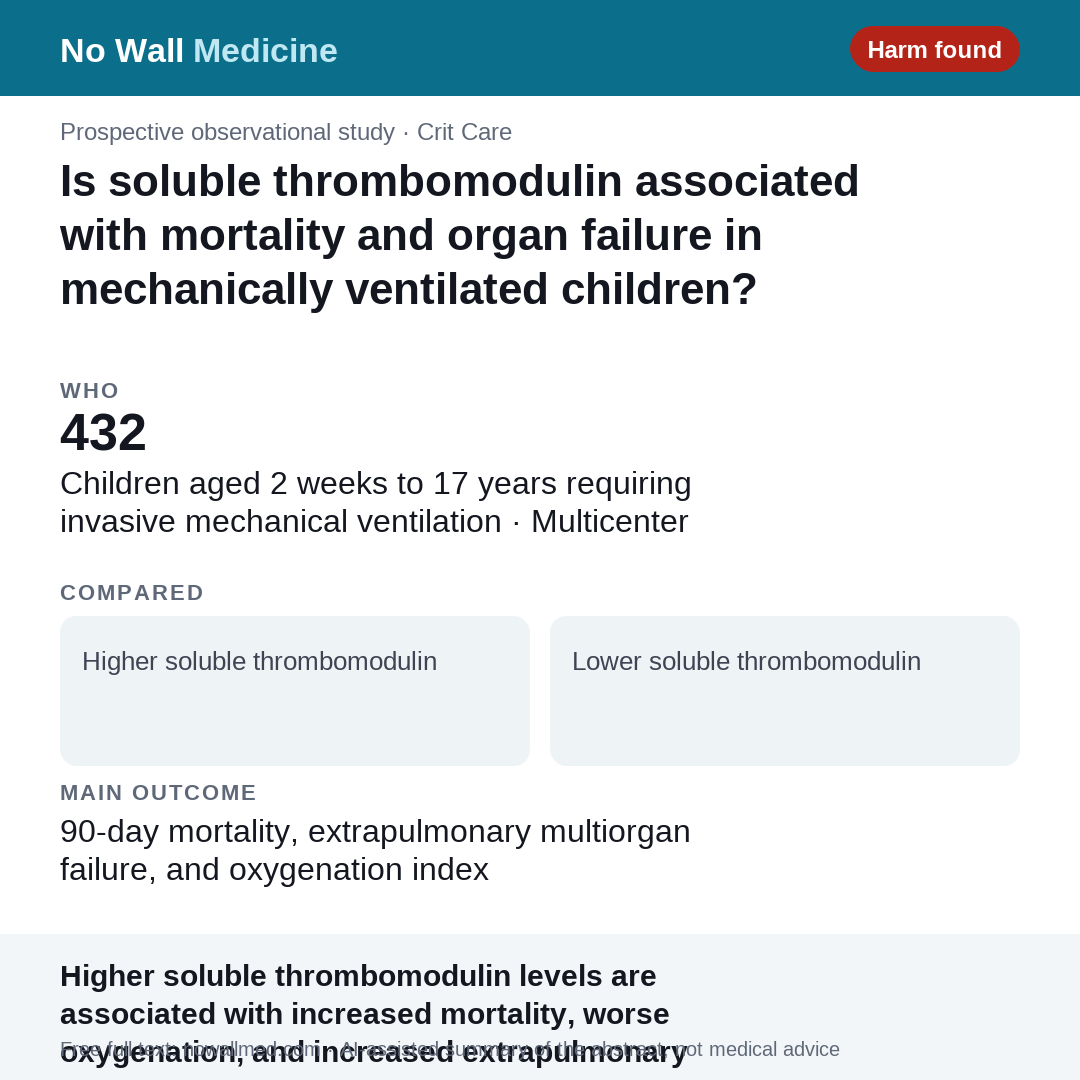
- Researchers studied 432 patients aged 2 weeks to 17 years who required invasive mechanical ventilation for acute respiratory failure.
- Higher soluble thrombomodulin levels were associated with increased 90-day mortality (adjusted HR = 1.003, p = 0.02) and worse oxygenation index.
- Both initial soluble thrombomodulin levels and the rate of change were associated with increased extrapulmonary multiorgan failure.
Why it matters: It is unknown if soluble thrombomodulin, a marker of vascular injury, can help predict outcomes in children with acute respiratory failure.
Discussion prompts
- Would these patients look like yours? Who was left out?
- Is the main outcome one that matters to patients?
- Is the difference large enough to change what you do?
Cite: Monteiro ACC, Flori H, Dahmer MK, et al. Thrombomodulin is associated with increased mortality and organ failure in mechanically ventilated children with acute respiratory failure: biomarker analysis from a multicenter randomized controlled trial. Crit Care. 2021. doi:10.1186/s13054-021-03626-1
Free full text: PubMed Central · Summary and visual abstract: nowallmed.com/a/thrombomodulin-is-associated-with-increased-mortality-and-organ-otek4b/ (AI-assisted from the abstract; check the paper before relying on it).