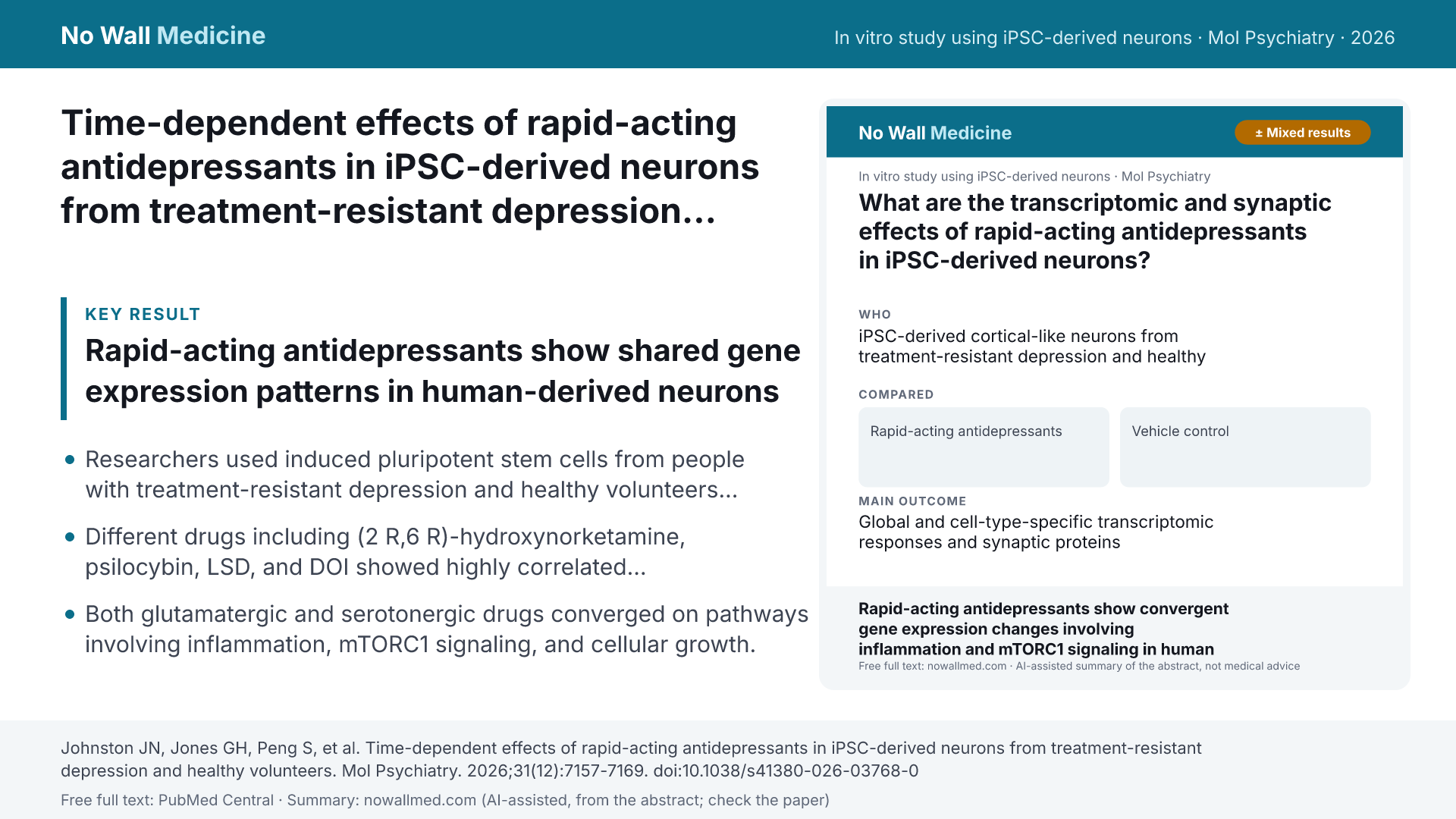
Rapid-acting antidepressants show shared gene expression patterns in human-derived neurons
Time-dependent effects of rapid-acting antidepressants in iPSC-derived neurons from treatment-resistant depression and healthy volunteers
In vitro study using iPSC-derived neuronsMixed results
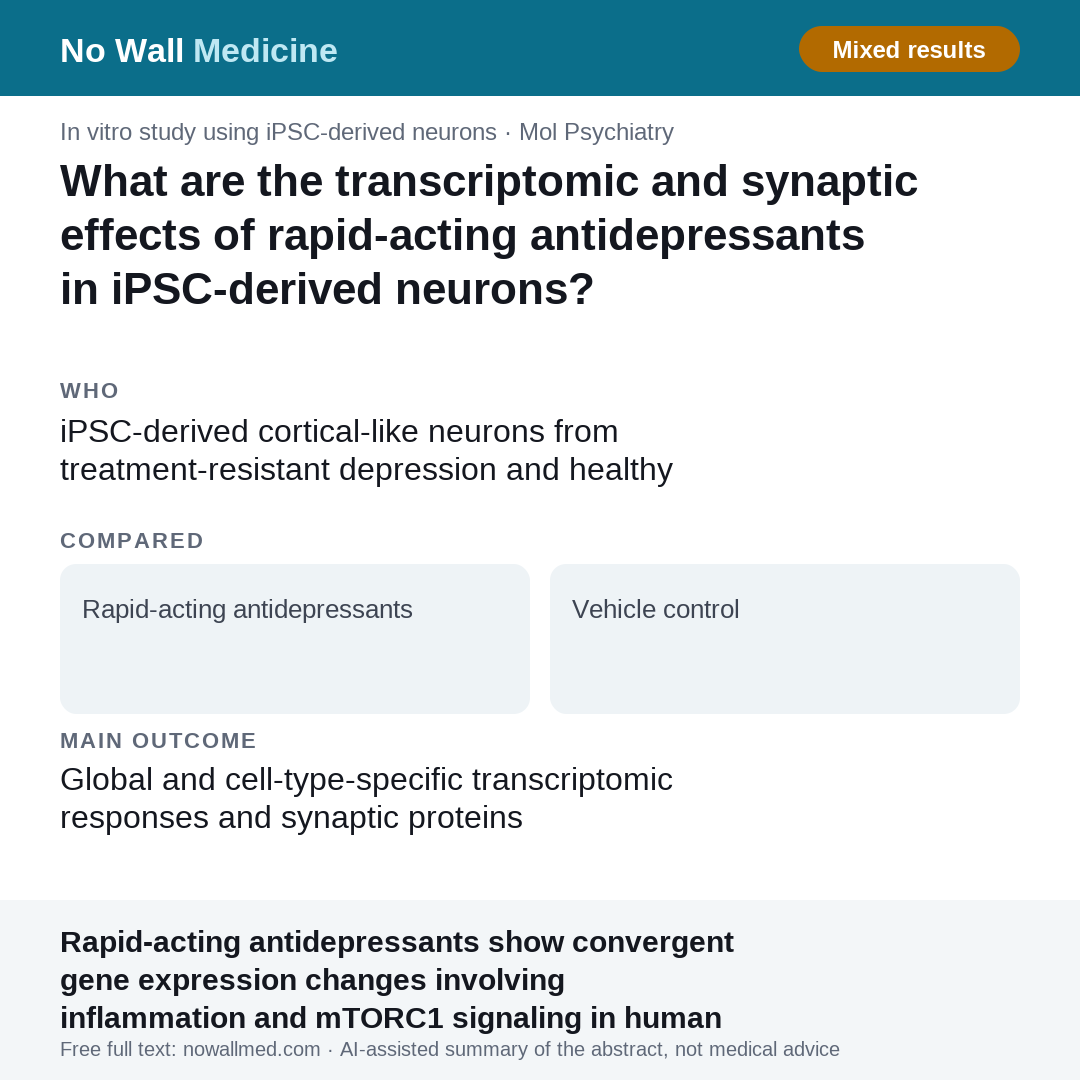
What are the transcriptomic and synaptic effects of rapid-acting antidepressants in iPSC-derived neurons?
Who
iPSC-derived cortical-like neurons from treatment-resistant depression and healthy volunteers
Compared
Rapid-acting antidepressants
Vehicle control
Main outcome
Global and cell-type-specific transcriptomic responses and synaptic proteins
Bottom line: Rapid-acting antidepressants show convergent gene expression changes involving inflammation and mTORC1 signaling in human iPSC-derived neurons.
Mol Psychiatry · 2026-07-24Download image
Clinical question: What are the transcriptomic and synaptic effects of rapid-acting antidepressants in iPSC-derived neurons?
Why it matters: The molecular mechanisms that contribute to the therapeutic effects of rapid-acting antidepressants remain unclear.
Key points
- Researchers used induced pluripotent stem cells from people with treatment-resistant depression and healthy volunteers to create cortical-like neurons.
- Different drugs including (2 R,6 R)-hydroxynorketamine, psilocybin, LSD, and DOI showed highly correlated gene expression changes at matched timepoints.
- Both glutamatergic and serotonergic drugs converged on pathways involving inflammation, mTORC1 signaling, and cellular growth.
Headline and key points written with AI from the paper’s abstract, with every number checked against it. Read the paper before relying on them.
Was this summary helpful?
Subject terms
Cite this article
Johnston JN, Jones GH, Peng S, et al. Time-dependent effects of rapid-acting antidepressants in iPSC-derived neurons from treatment-resistant depression and healthy volunteers. Mol Psychiatry. 2026. doi:10.1038/s41380-026-03768-0
Spotted a mistake? Suggest a correction