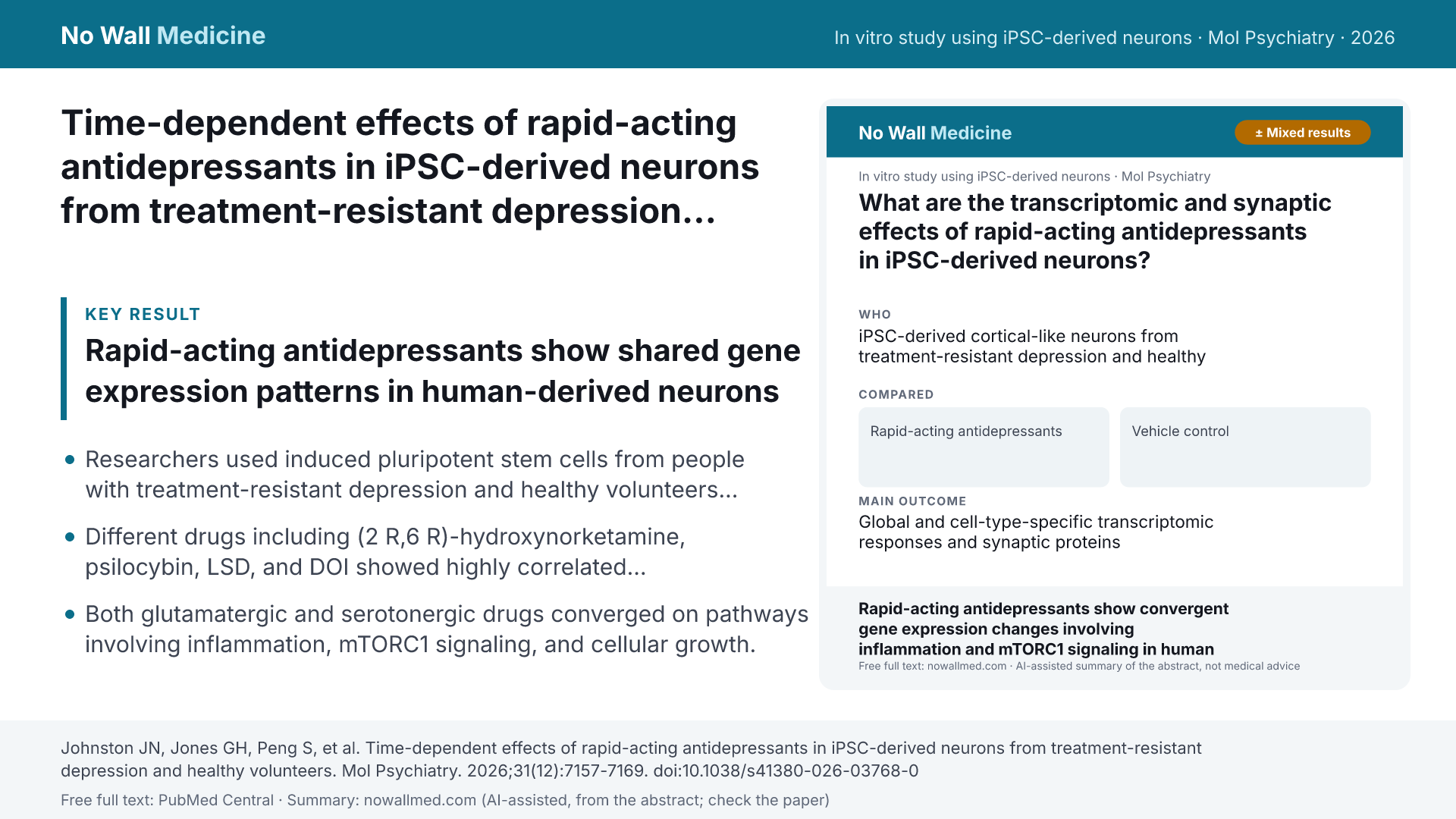
Time-dependent effects of rapid-acting antidepressants in iPSC-derived neurons from treatment-resistant depression and healthy volunteers
Key result: Rapid-acting antidepressants show shared gene expression patterns in human-derived neurons
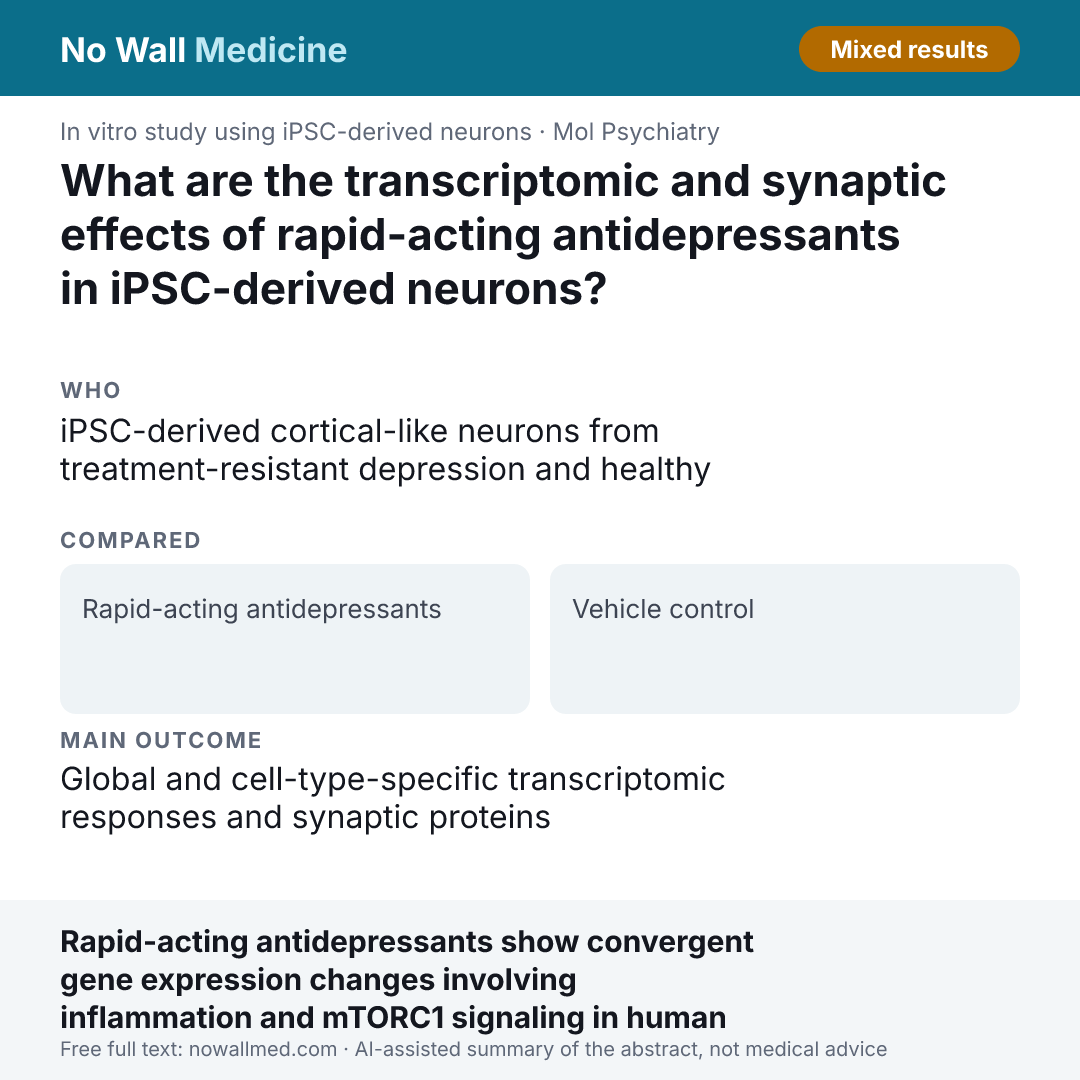
In vitro study using iPSC-derived neuronsMixed results
What are the transcriptomic and synaptic effects of rapid-acting antidepressants in iPSC-derived neurons?
Who
iPSC-derived cortical-like neurons from treatment-resistant depression and healthy volunteers
Compared
Rapid-acting antidepressants
Vehicle control
Main outcome
Global and cell-type-specific transcriptomic responses and synaptic proteins
Bottom line: Rapid-acting antidepressants show convergent gene expression changes involving inflammation and mTORC1 signaling in human iPSC-derived neurons.
Mol Psychiatry · 2026-07-24 · Save PNG
Key points
- Researchers used induced pluripotent stem cells from people with treatment-resistant depression and healthy volunteers to create cortical-like neurons.
- Different drugs including (2 R,6 R)-hydroxynorketamine, psilocybin, LSD, and DOI showed highly correlated gene expression changes at matched timepoints.
- Both glutamatergic and serotonergic drugs converged on pathways involving inflammation, mTORC1 signaling, and cellular growth.
Discussion prompts
- Would these patients look like yours? Who was left out?
- Is the main outcome one that matters to patients?
- Is the difference large enough to change what you do?
Cite: Johnston JN, Jones GH, Peng S, et al. Time-dependent effects of rapid-acting antidepressants in iPSC-derived neurons from treatment-resistant depression and healthy volunteers. Mol Psychiatry. 2026;31(12):7157-7169. doi:10.1038/s41380-026-03768-0
Free full text: PubMed Central · Summary and visual abstract: nowallmed.com/a/time-dependent-effects-of-rapid-acting-antidepressants-in-ipsc-1a8b4z7/ (AI-assisted from the abstract; check the paper before relying on it).