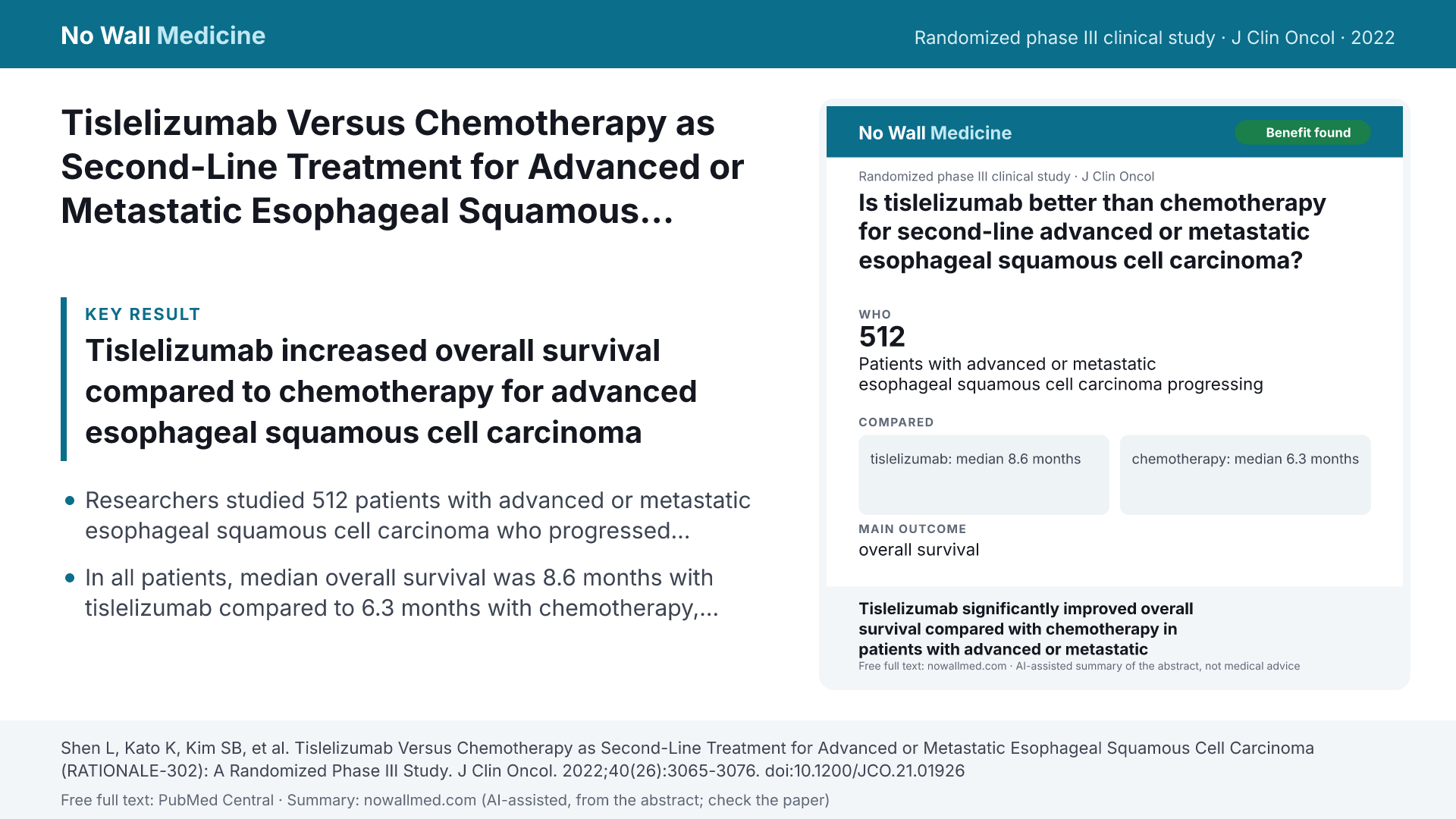
Tislelizumab increased overall survival compared to chemotherapy for advanced esophageal squamous cell carcinoma
Tislelizumab Versus Chemotherapy as Second-Line Treatment for Advanced or Metastatic Esophageal Squamous Cell Carcinoma (RATIONALE-302): A Randomized Phase III Study
Randomized phase III clinical studyBenefit found
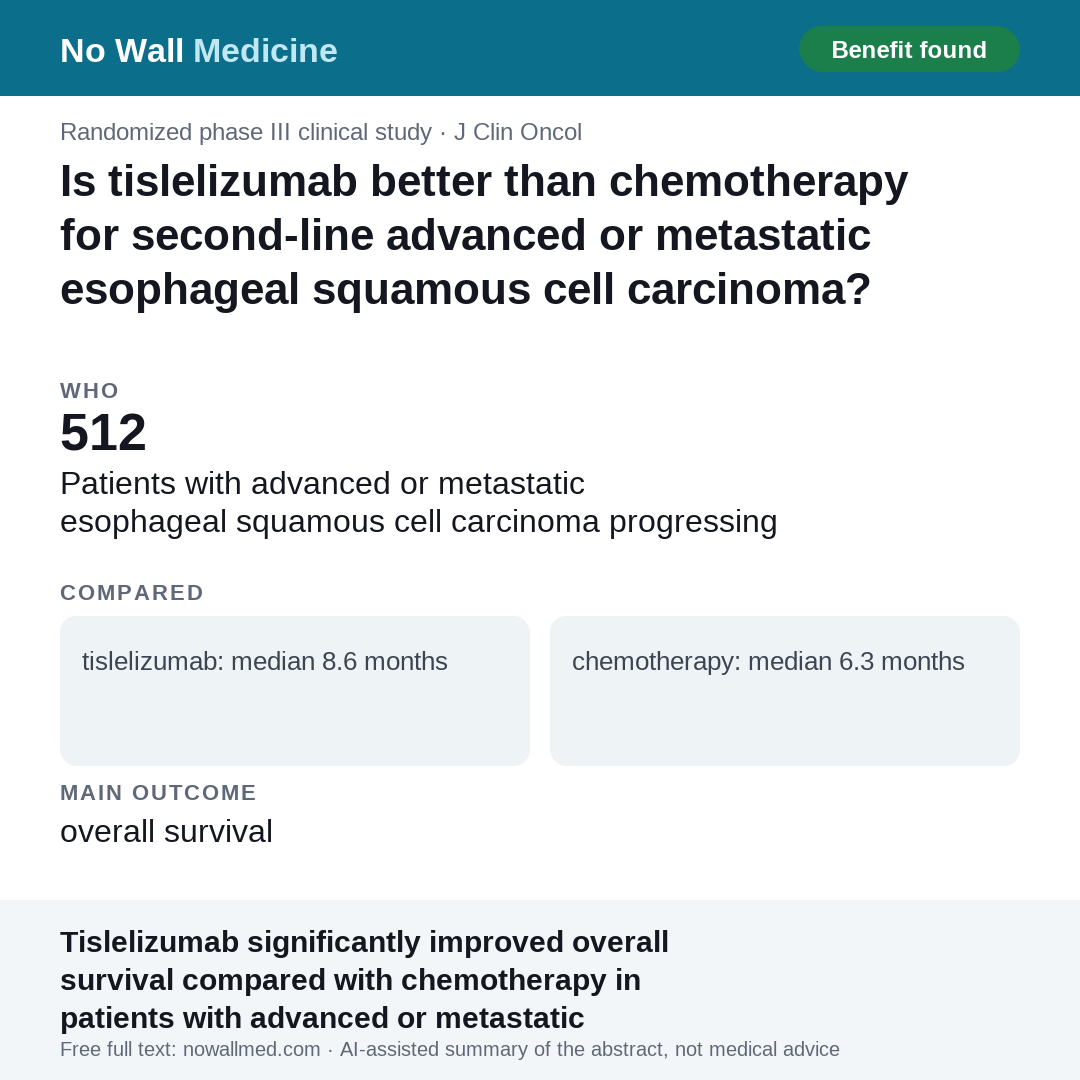
Is tislelizumab better than chemotherapy for second-line advanced or metastatic esophageal squamous cell carcinoma?
Who
512
Patients with advanced or metastatic esophageal squamous cell carcinoma progressing after first-line therapy · 11 countries/regions
Compared
tislelizumab: median 8.6 months
chemotherapy: median 6.3 months
Main outcome
overall survival
Result: hazard ratio 0.70 (95% CI 0.57 to 0.85)
Bottom line: Tislelizumab significantly improved overall survival compared with chemotherapy in patients with advanced or metastatic esophageal squamous cell carcinoma.
J Clin Oncol · 2022-04-20Download image
Clinical question: Is tislelizumab better than chemotherapy for second-line advanced or metastatic esophageal squamous cell carcinoma?
Why it matters: Treatment options are limited for patients with advanced or metastatic esophageal squamous cell carcinoma after they progress on first-line systemic therapy.
Key points
- Researchers studied 512 patients with advanced or metastatic esophageal squamous cell carcinoma who progressed after first-line treatment and were assigned to receive either tislelizumab or chemotherapy.
- In all patients, median overall survival was 8.6 months with tislelizumab compared to 6.3 months with chemotherapy, and patients with a tumor area positivity score of 10% or more lived 10.3 months versus 6.8 months.
- Tislelizumab was associated with a 20.3% objective response rate compared to 9.8% for chemotherapy and fewer grade 3 or higher treatment-related adverse events at 18.8% versus 55.8%.
Headline and key points written with AI from the paper’s abstract, with every number checked against it. Read the paper before relying on them.
Was this summary helpful?
Subject terms
Cite this article
Shen L, Kato K, Kim SB, Ajani JA, Zhao K, He Z. Tislelizumab Versus Chemotherapy as Second-Line Treatment for Advanced or Metastatic Esophageal Squamous Cell Carcinoma (RATIONALE-302): A Randomized Phase III Study. J Clin Oncol. 2022. doi:10.1200/JCO.21.01926
Spotted a mistake? Suggest a correction
Top studies every Monday
The week’s key trials and guidelines in your specialties, plus any topics you follow. By email, free.
Get the weekly digest