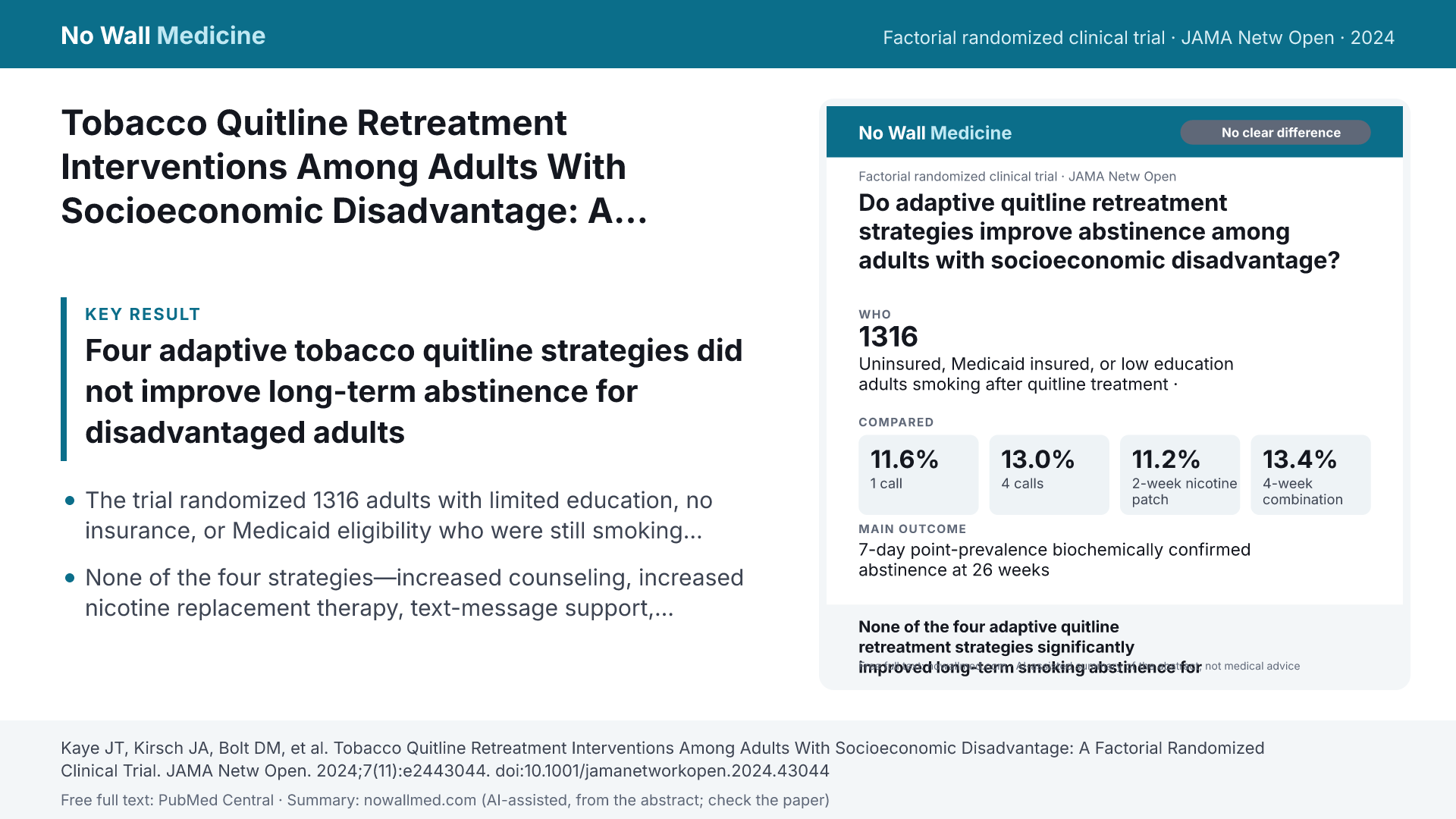
Four adaptive tobacco quitline strategies did not improve long-term abstinence for disadvantaged adults
Tobacco Quitline Retreatment Interventions Among Adults With Socioeconomic Disadvantage: A Factorial Randomized Clinical Trial
Factorial randomized clinical trialNo clear difference
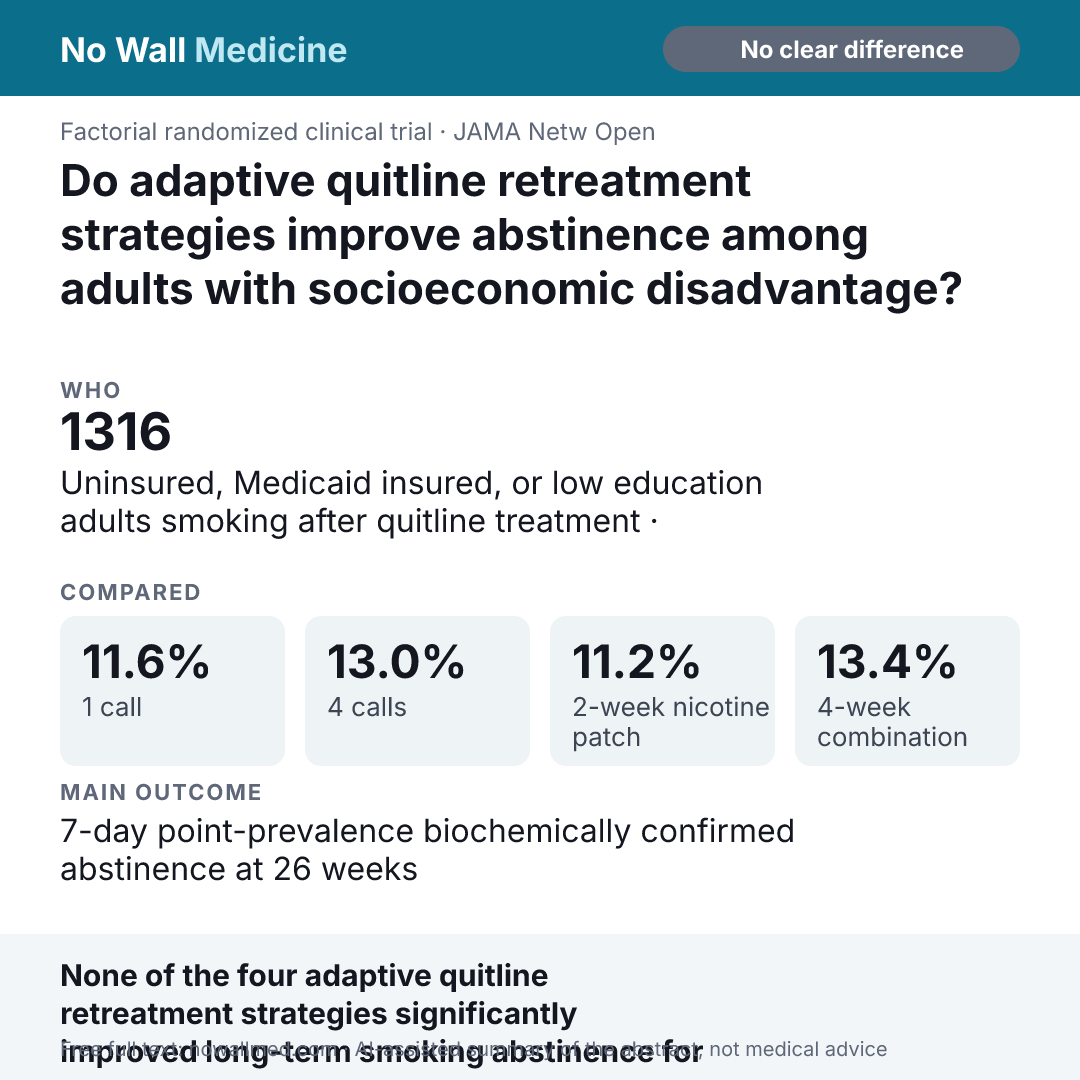
Do adaptive quitline retreatment strategies improve abstinence among adults with socioeconomic disadvantage?
Who
1316
Uninsured, Medicaid insured, or low education adults smoking after quitline treatment · Wisconsin Tobacco Quit Line
Compared
11.6%1 call (77/662)
13.0%4 calls (85/654)
11.2%2-week nicotine patch (73/654)
13.4%4-week combination nicotine replacement therapy (89/662)
Main outcome
7-day point-prevalence biochemically confirmed abstinence at 26 weeks
Bottom line: None of the four adaptive quitline retreatment strategies significantly improved long-term smoking abstinence for adults with socioeconomic disadvantage.
JAMA Netw Open · 2024-11-04 · NCT03538938
Why it matters: Standard tobacco quitline treatment may not be enough to sustain abstinence for people experiencing socioeconomic disadvantage.
Headline and visual abstract written with AI from the paper’s abstract, with every number checked against it. Read the paper before relying on them.
Was this summary helpful?
Subject terms
Cite this article
Kaye JT, Kirsch JA, Bolt DM, et al. Tobacco Quitline Retreatment Interventions Among Adults With Socioeconomic Disadvantage: A Factorial Randomized Clinical Trial. JAMA Netw Open. 2024;7(11):e2443044. doi:10.1001/jamanetworkopen.2024.43044
Spotted a mistake? Suggest a correction