Transcranial direct current stimulation was associated with lower anxiety in colorectal cancer surgery patients
Transcranial Direct Current Stimulation for Anxiety During Laparoscopic Colorectal Cancer Surgery: A Randomized Clinical Trial
Randomized clinical trialBenefit found
Does transcranial direct current stimulation reduce perioperative anxiety during laparoscopic colorectal cancer surgery?
Who
196
Patients aged 18 years or older undergoing elective laparoscopic radical resection for colorectal cancer · Affiliated Hospital of Xuzhou Medical University
Compared
38.8%active transcranial direct current stimulation group
70.4%sham transcranial direct current stimulation group
Main outcome
incidence of perioperative anxiety using Hospital Anxiety and Depression Scale-Anxiety subscale
Result: relative risk, 0.55 (95% CI, 0.42-0.73)
Bottom line: Two sessions of active transcranial direct current stimulation decreased perioperative anxiety incidence in colorectal cancer surgery patients.
JAMA Netw Open · 2024-04-01Download image
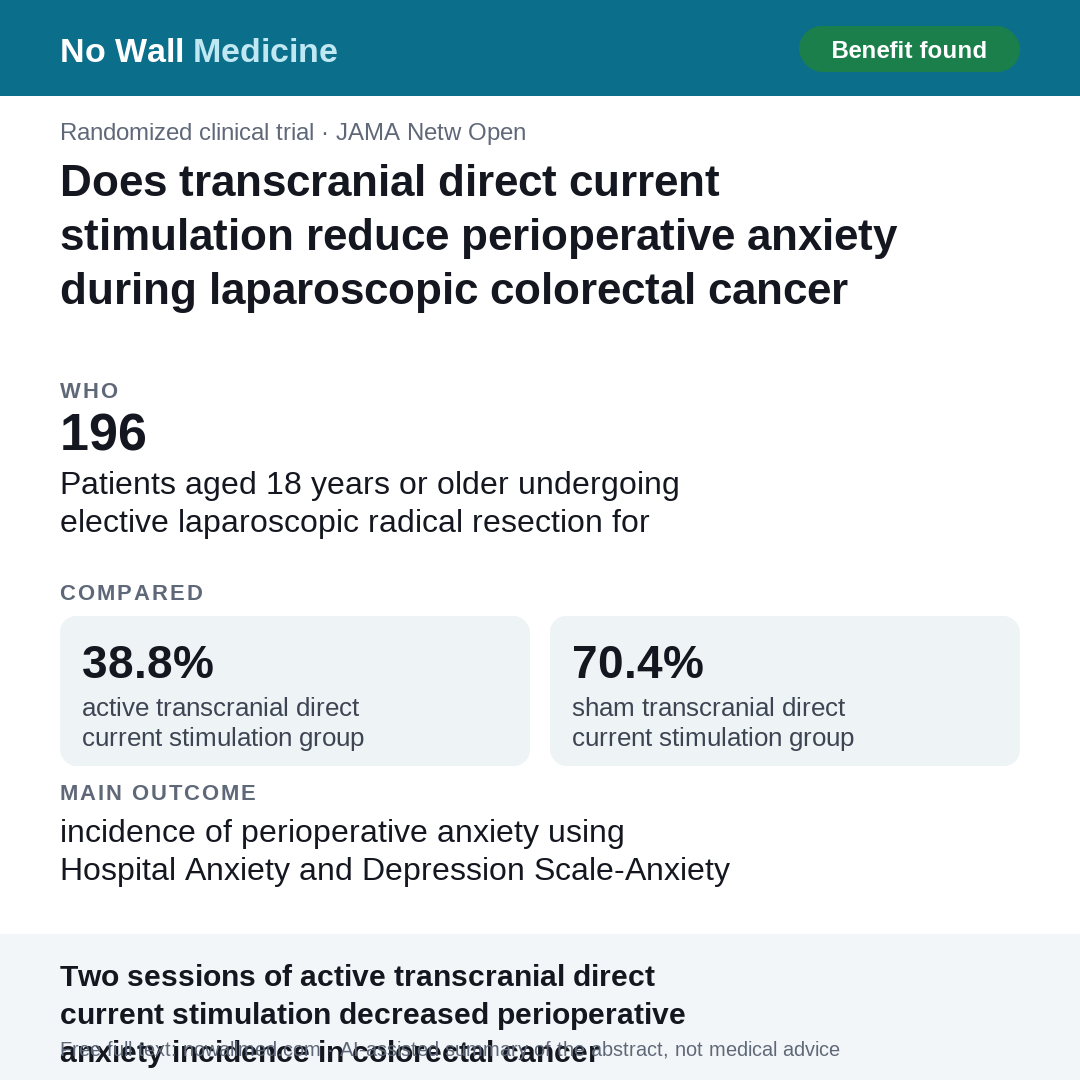
Clinical question: Does transcranial direct current stimulation reduce perioperative anxiety during laparoscopic colorectal cancer surgery?
Why it matters: It was unknown if transcranial direct current stimulation, a method of using low electrical currents to stimulate the brain, could impact anxiety levels during the period surrounding surgery.
In absolute numbers
active transcranial direct current stimulation group: 38.8% · sham transcranial direct current stimulation group: 70.4% → a difference of 31.6 percentage points, so about 4 people would need the treatment for 1 more to benefit (number needed to treat) over the trial’s follow-up.
Worked out by us from the two group results above, not reported by the authors. Check the paper for the exact outcome and timing.
Key points
- Researchers studied 196 patients undergoing laparoscopic colorectal cancer resection who were randomly assigned to receive either active or sham transcranial direct current stimulation.
- The incidence of perioperative anxiety was 38.8% in the active group compared to 70.4% in the sham group.
- Active stimulation was also associated with lower rates of postoperative delirium, lower median pain scores, and better sleep quality scores.
Headline and key points written with AI from the paper’s abstract, with every number checked against it. Read the paper before relying on them.
Was this summary helpful?
Subject terms
Cite this article
Li C, Tao M, Chen D, Wei Q, Xiong X, Zhao W. Transcranial Direct Current Stimulation for Anxiety During Laparoscopic Colorectal Cancer Surgery: A Randomized Clinical Trial. JAMA Netw Open. 2024. doi:10.1001/jamanetworkopen.2024.6589
Spotted a mistake? Suggest a correction
Top studies every Monday
The week’s key trials and guidelines in your specialties, plus any topics you follow. By email, free.
Get the weekly digest