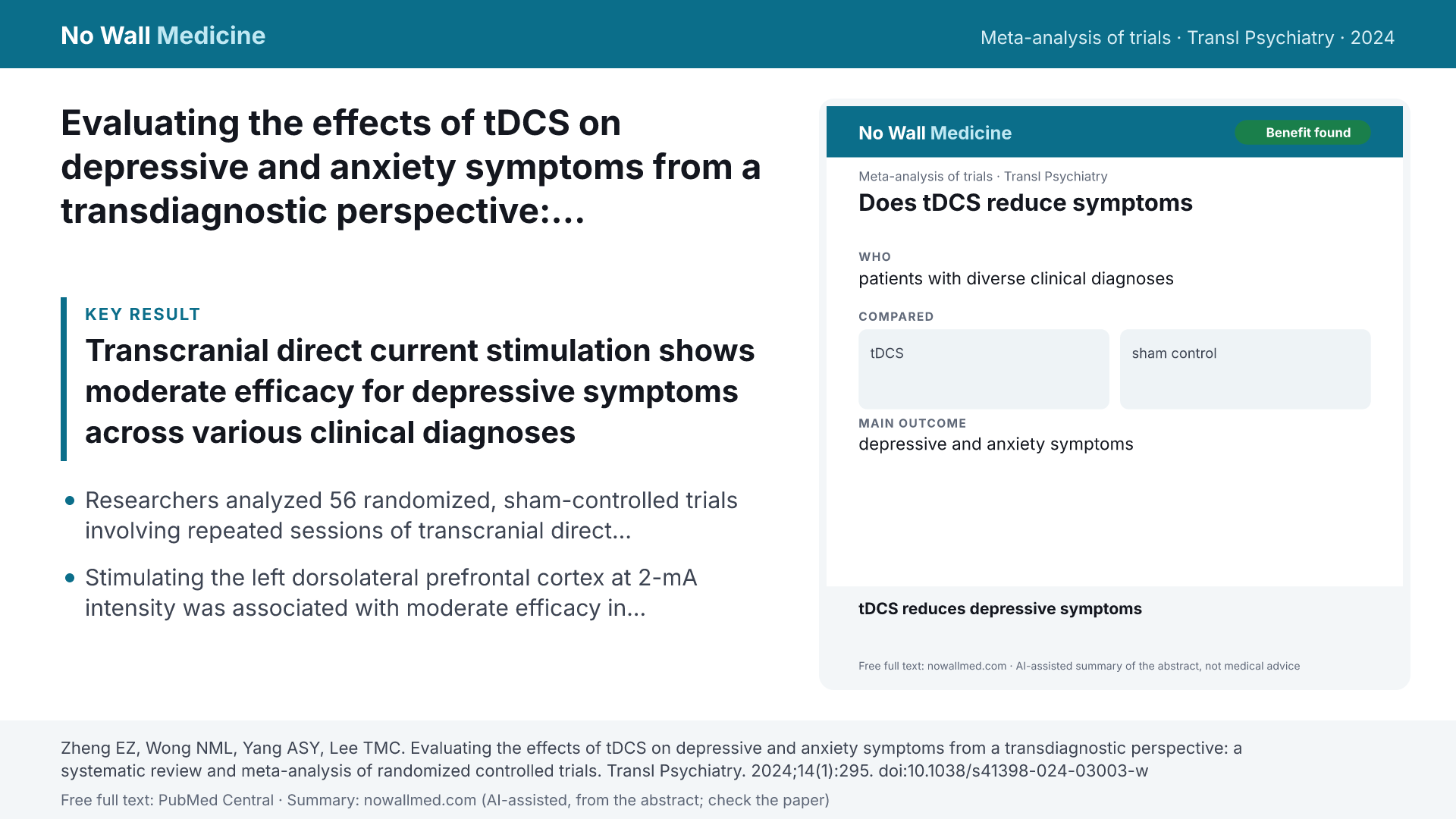
Transcranial direct current stimulation shows moderate efficacy for depressive symptoms across various clinical diagnoses
Evaluating the effects of tDCS on depressive and anxiety symptoms from a transdiagnostic perspective: a systematic review and meta-analysis of randomized controlled trials
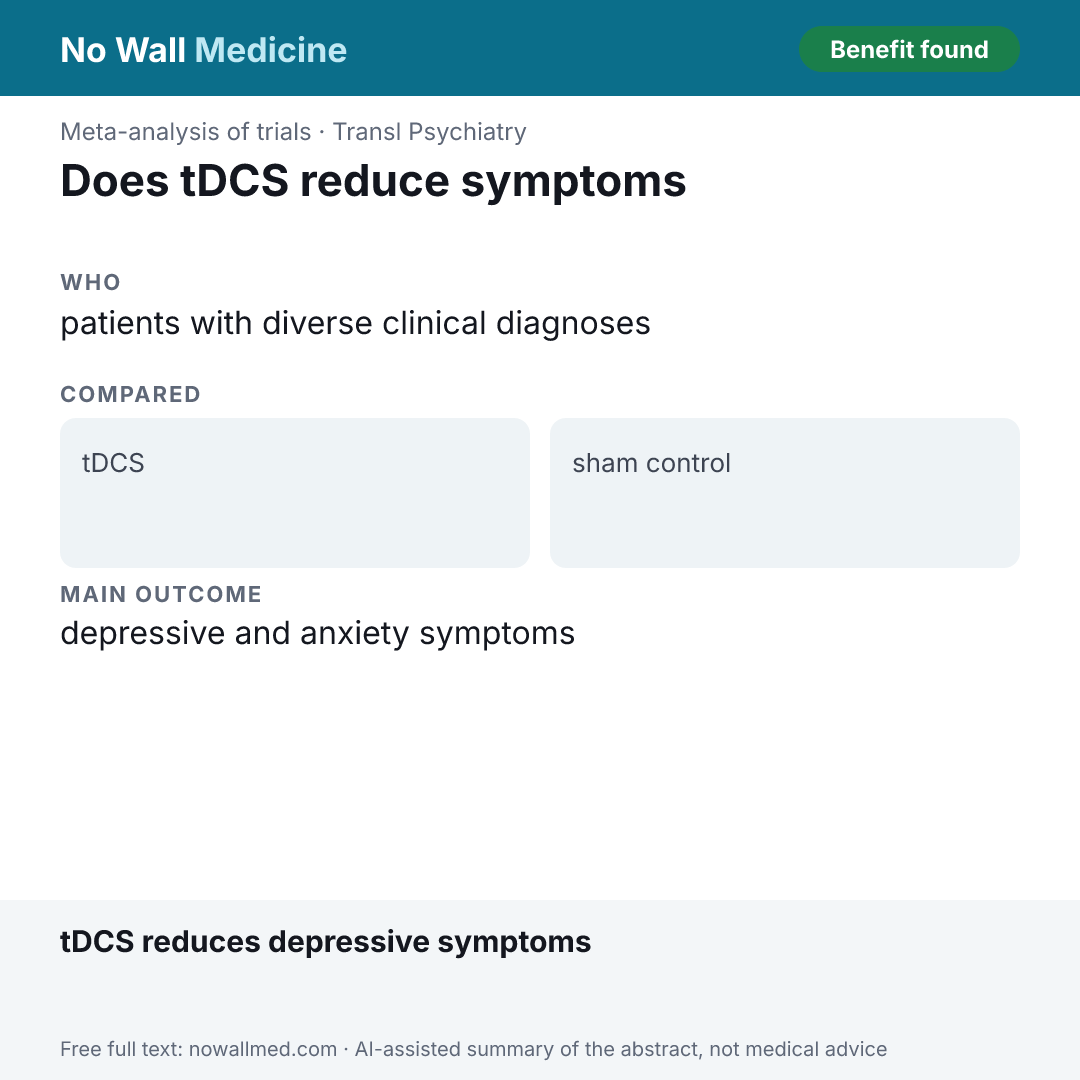
Meta-analysis of trialsBenefit found
Does tDCS reduce symptoms
Who
patients with diverse clinical diagnoses
Compared
tDCS
sham control
Main outcome
depressive and anxiety symptoms
Bottom line: tDCS reduces depressive symptoms
Transl Psychiatry · 2024-07-18 · Save PNG
Why it matters: The neural mechanisms underlying depressive and anxiety symptoms across different disorders remain unclear, which limits the effectiveness of conventional treatments.
Key points
- Researchers analyzed 56 randomized, sham-controlled trials involving repeated sessions of transcranial direct current stimulation, a technique that uses low electrical currents to modulate brain activity.
- Stimulating the left dorsolateral prefrontal cortex at 2-mA intensity was associated with moderate efficacy in alleviating depressive symptoms across different clinical conditions.
- The findings regarding the effect of this stimulation on anxiety symptoms showed greater heterogeneity than the results for depression.
Headline and key points written with AI from the paper’s abstract, with every number checked against it. Read the paper before relying on them.
Was this summary helpful?
Subject terms
Headline, design, result, key points, caveat and citation as plain text.
Cite this article
Zheng EZ, Wong NML, Yang ASY, Lee TMC. Evaluating the effects of tDCS on depressive and anxiety symptoms from a transdiagnostic perspective: a systematic review and meta-analysis of randomized controlled trials. Transl Psychiatry. 2024;14(1):295. doi:10.1038/s41398-024-03003-w
Spotted a mistake? Suggest a correction