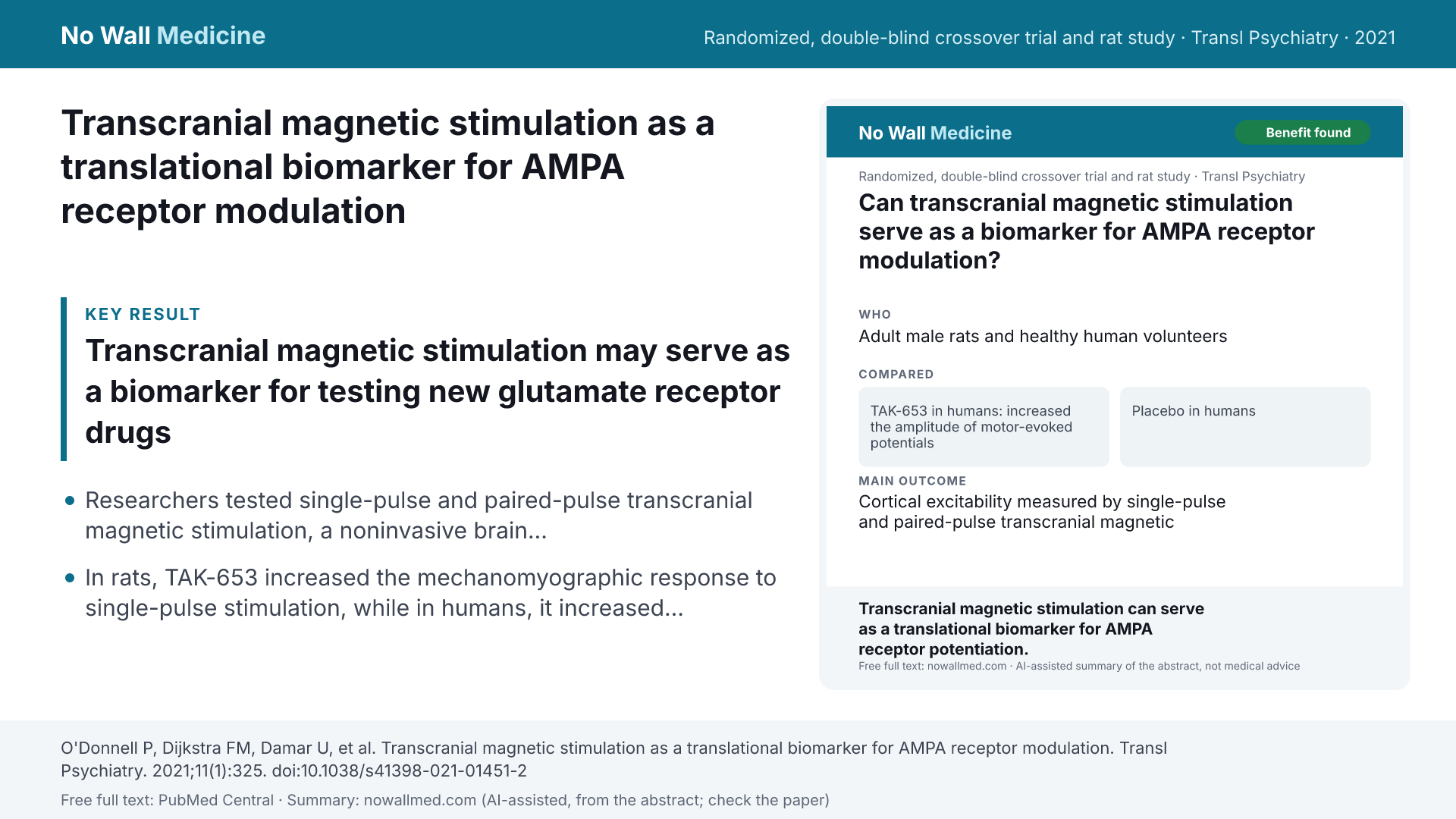
Transcranial magnetic stimulation may serve as a biomarker for testing new glutamate receptor drugs
Transcranial magnetic stimulation as a translational biomarker for AMPA receptor modulation
Randomized, double-blind crossover trial and rat studyBenefit found
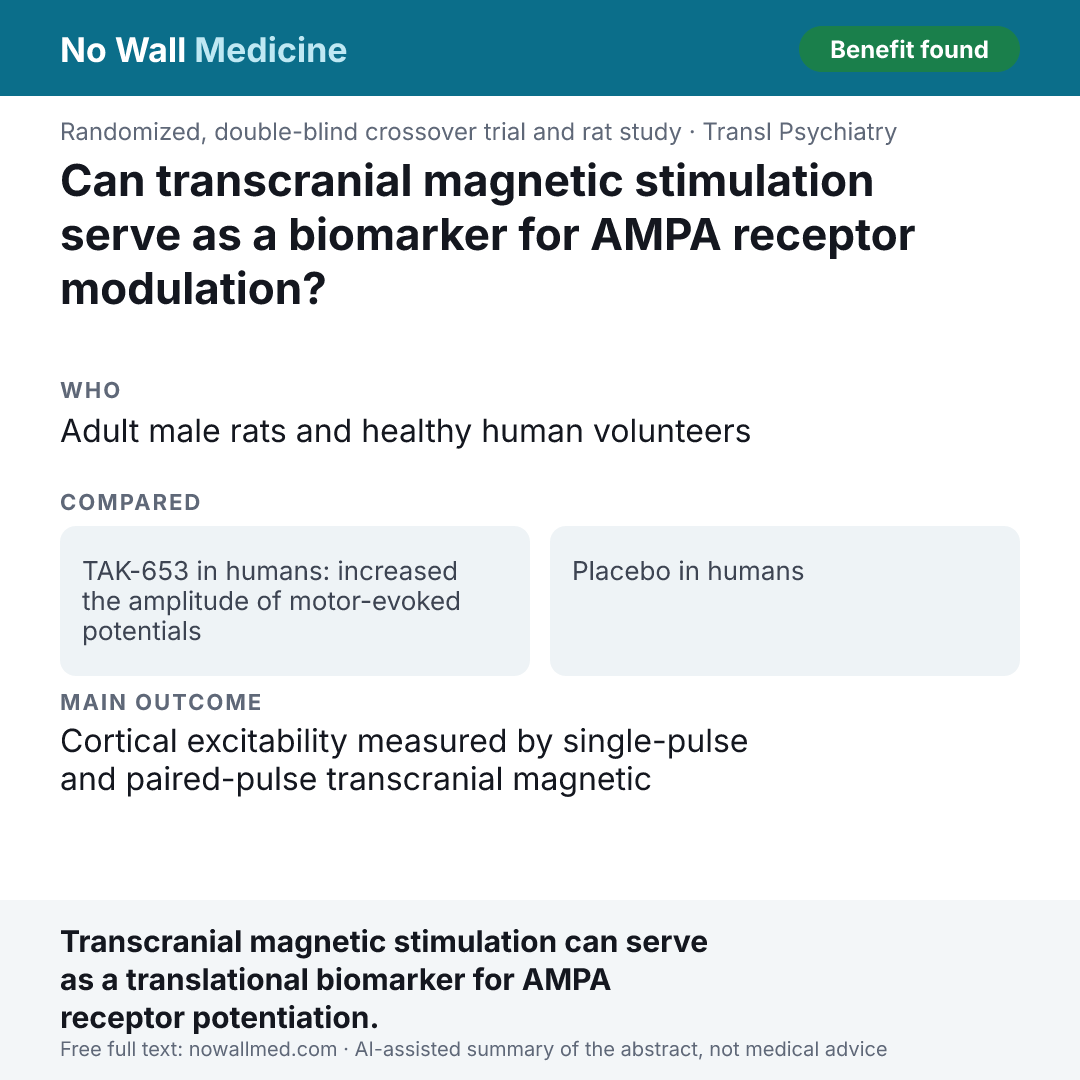
Can transcranial magnetic stimulation serve as a biomarker for AMPA receptor modulation?
Who
Adult male rats and healthy human volunteers
Compared
TAK-653 in humans: increased the amplitude of motor-evoked potentials
Placebo in humans
Main outcome
Cortical excitability measured by single-pulse and paired-pulse transcranial magnetic stimulation
Bottom line: Transcranial magnetic stimulation can serve as a translational biomarker for AMPA receptor potentiation.
Transl Psychiatry · 2021-05-27 · Save PNG
Clinical question: Can transcranial magnetic stimulation serve as a biomarker for AMPA receptor modulation?
Why it matters: There are currently no translational biomarkers available to evaluate physiological responses to the activation of glutamatergic brain circuits.
Key points
- Researchers tested single-pulse and paired-pulse transcranial magnetic stimulation, a noninvasive brain stimulation technique, in 31 male rats and 24 healthy humans.
- In rats, TAK-653 increased the mechanomyographic response to single-pulse stimulation, while in humans, it increased the amplitude of motor-evoked potentials.
- In the human study, TAK-653 did not affect the resting motor threshold or paired-pulse responses.
Headline and key points written with AI from the paper’s abstract, with every number checked against it. Read the paper before relying on them.
Was this summary helpful?
Subject terms
Headline, design, result, key points, caveat and citation as plain text.
Cite this article
O'Donnell P, Dijkstra FM, Damar U, et al. Transcranial magnetic stimulation as a translational biomarker for AMPA receptor modulation. Transl Psychiatry. 2021. doi:10.1038/s41398-021-01451-2
Spotted a mistake? Suggest a correction