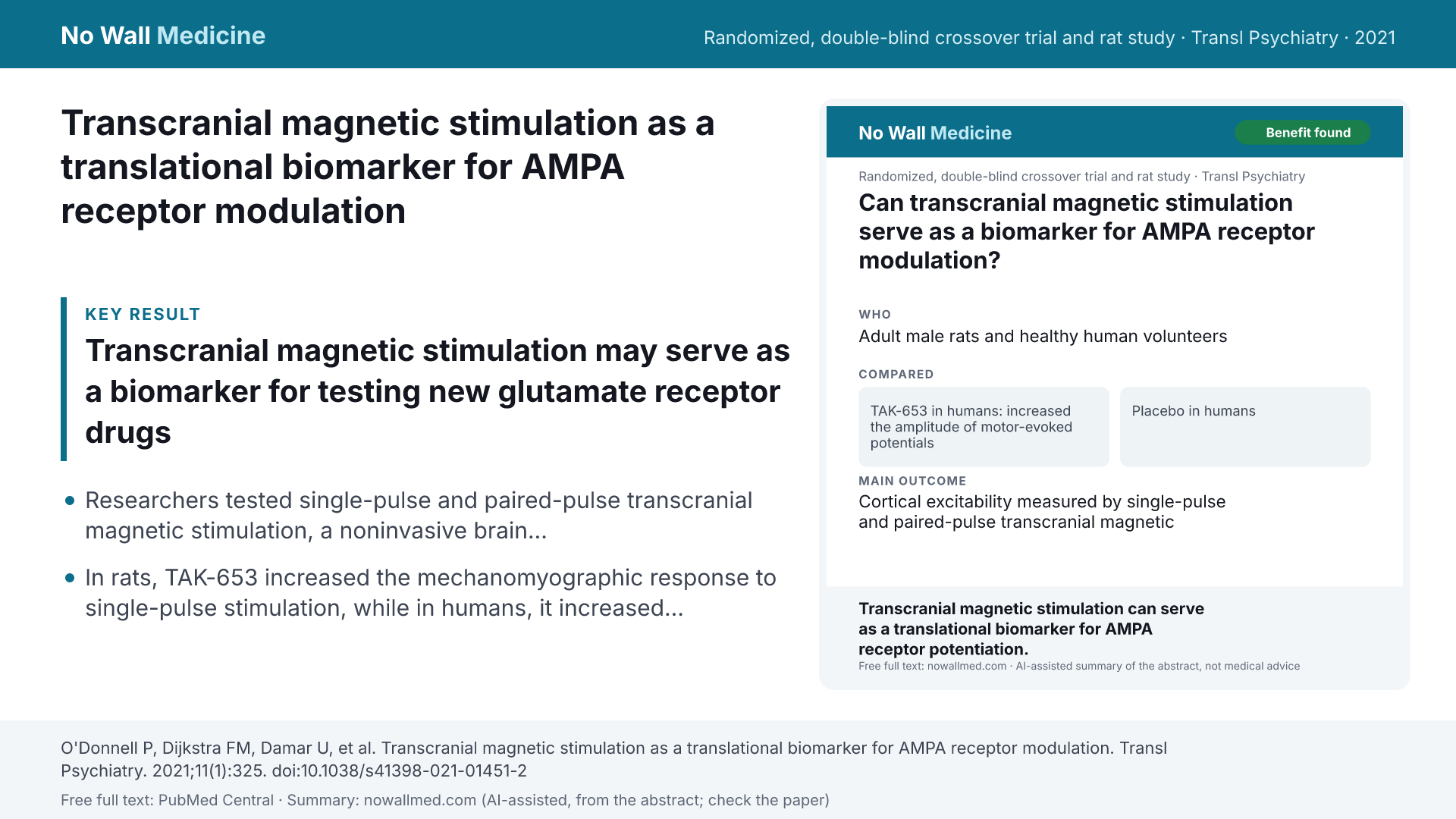
Transcranial magnetic stimulation as a translational biomarker for AMPA receptor modulation
Key result: Transcranial magnetic stimulation may serve as a biomarker for testing new glutamate receptor drugs
Randomized, double-blind crossover trial and rat studyBenefit found
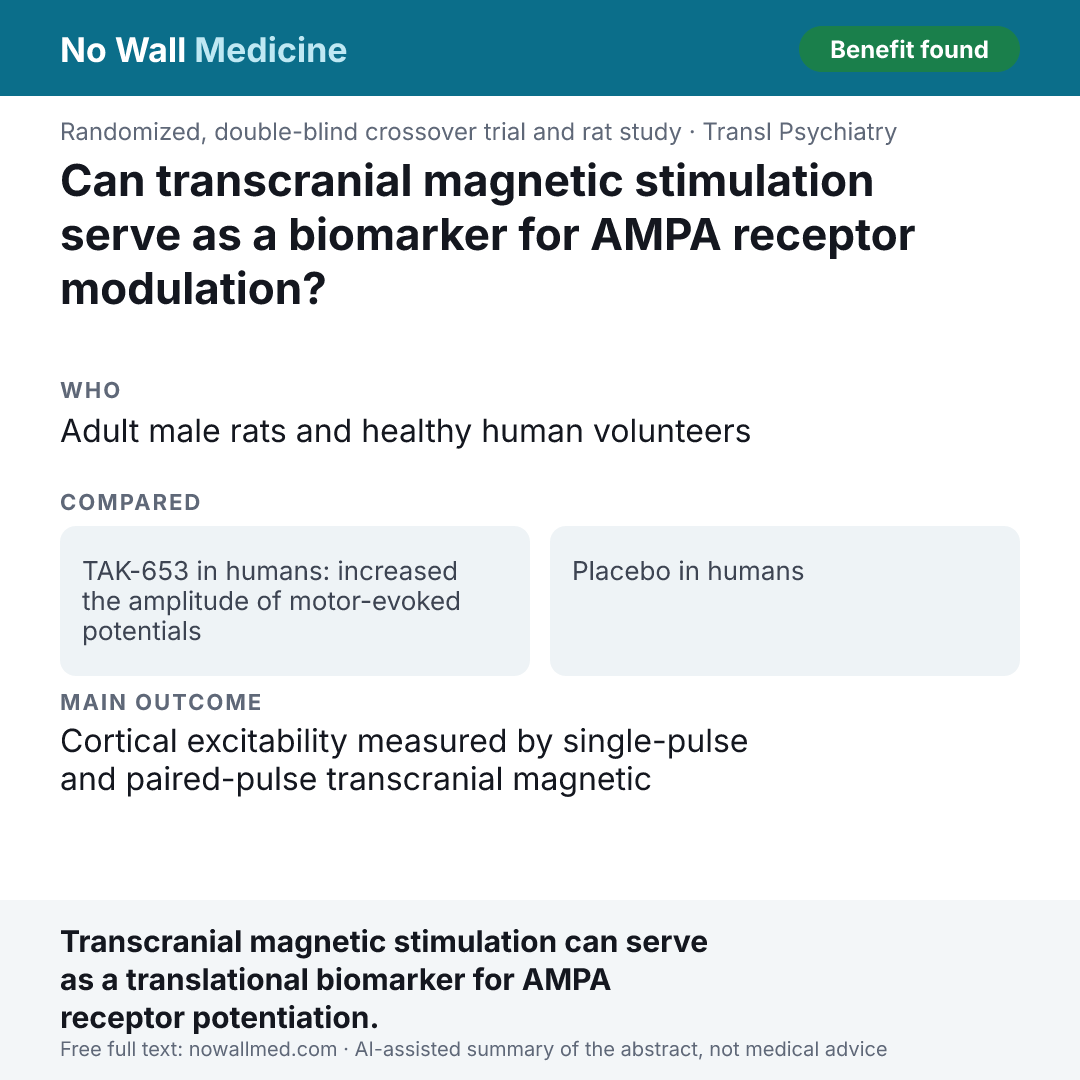
Can transcranial magnetic stimulation serve as a biomarker for AMPA receptor modulation?
Who
Adult male rats and healthy human volunteers
Compared
TAK-653 in humans: increased the amplitude of motor-evoked potentials
Placebo in humans
Main outcome
Cortical excitability measured by single-pulse and paired-pulse transcranial magnetic stimulation
Bottom line: Transcranial magnetic stimulation can serve as a translational biomarker for AMPA receptor potentiation.
Transl Psychiatry · 2021-05-27 · Save PNG
Key points
- Researchers tested single-pulse and paired-pulse transcranial magnetic stimulation, a noninvasive brain stimulation technique, in 31 male rats and 24 healthy humans.
- In rats, TAK-653 increased the mechanomyographic response to single-pulse stimulation, while in humans, it increased the amplitude of motor-evoked potentials.
- In the human study, TAK-653 did not affect the resting motor threshold or paired-pulse responses.
Why it matters: There are currently no translational biomarkers available to evaluate physiological responses to the activation of glutamatergic brain circuits.
Discussion prompts
- Would these patients look like yours? Who was left out?
- Is the main outcome one that matters to patients?
- Is the difference large enough to change what you do?
Cite: O'Donnell P, Dijkstra FM, Damar U, et al. Transcranial magnetic stimulation as a translational biomarker for AMPA receptor modulation. Transl Psychiatry. 2021;11(1):325. doi:10.1038/s41398-021-01451-2
Free full text: PubMed Central · Summary and visual abstract: nowallmed.com/a/transcranial-magnetic-stimulation-as-a-translational-biomarker-for-1cqo36m/ (AI-assisted from the abstract; check the paper before relying on it).