Combining magnetic brain stimulation with speech therapy improved language scores in chronic poststroke aphasia
Transcranial Magnetic Stimulation Combined With Multimodality Aphasia Therapy for Chronic Poststroke Aphasia: A Randomized Clinical Trial
Parallel-group, double-blind, sham-controlled randomized clinical trialBenefit found
Does 1-Hz repetitive transcranial magnetic stimulation combined with multimodality aphasia therapy improve chronic poststroke aphasia?
Who
44
Individuals with chronic nonfluent aphasia after left middle cerebral artery stroke · An outpatient neurorehabilitation clinic
Compared
7.6 pointsrTMS combined with M-MAT (95% CI 4.1-11.1)
3.0 pointsSham stimulation plus M-MAT (95% CI -0.3 to 5.2)
Main outcome
Western Aphasia Battery aphasia quotient scores
Result: mean difference 4.6 points, 95% CI 0.6-8.6
Bottom line: Combining 1-Hz repetitive transcranial magnetic stimulation with multimodality aphasia therapy improves aphasia severity more than sham stimulation.
Neurology · 2025-02-25Download image
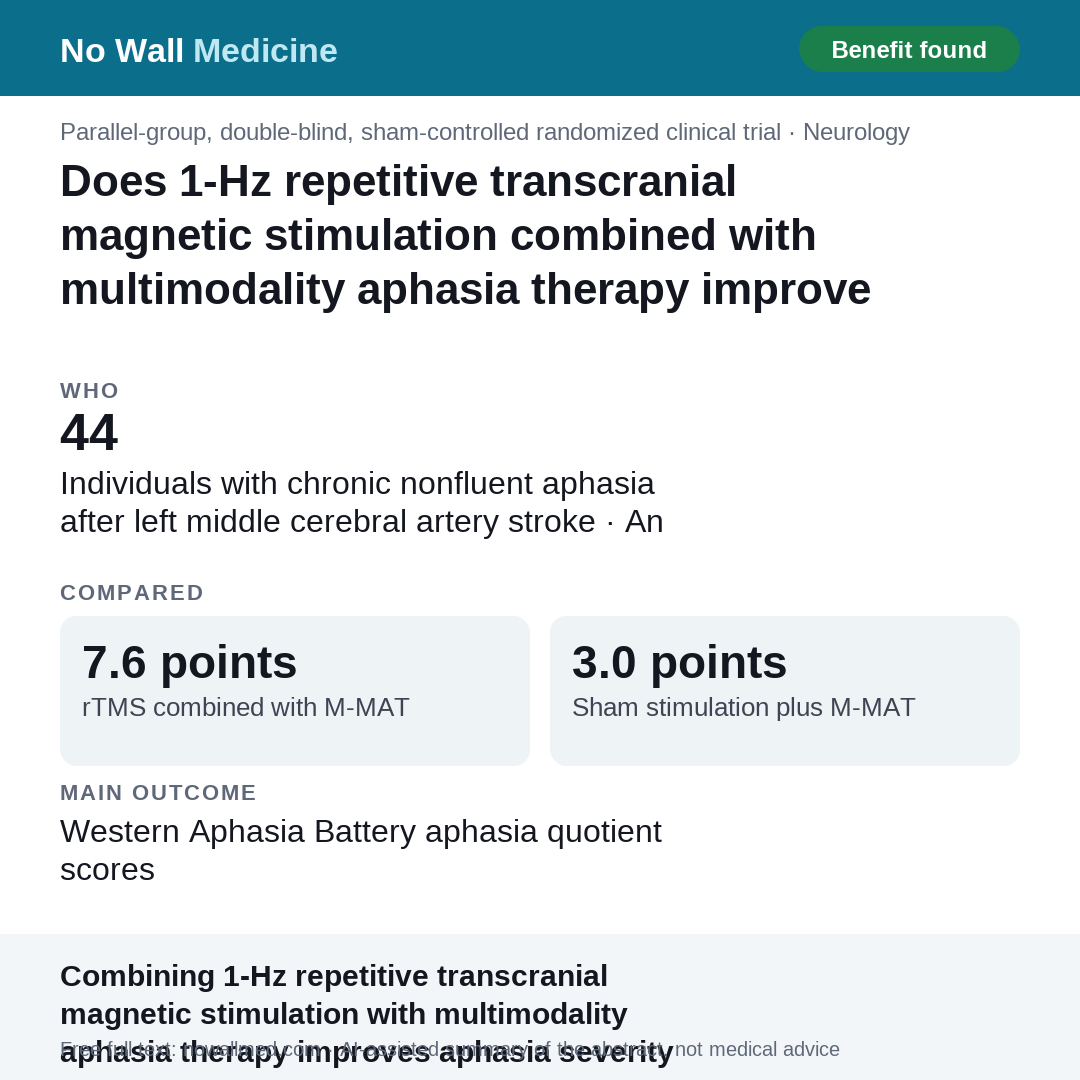
Clinical question: Does 1-Hz repetitive transcranial magnetic stimulation combined with multimodality aphasia therapy improve chronic poststroke aphasia?
Why it matters: It was unknown if pairing repetitive transcranial magnetic stimulation, a method using magnetic fields to stimulate brain cells, with intensive speech therapy would improve outcomes for chronic aphasia.
Key points
- Researchers studied 44 participants with chronic nonfluent aphasia after a stroke, comparing magnetic brain stimulation with sham stimulation combined with 35 hours of speech therapy.
- The group receiving magnetic brain stimulation showed a 7.6 point change in language scores at 15 weeks compared to a 3.0 point change in the sham group.
- At 15 weeks, the magnetic stimulation group had higher language scores, indicating fewer word-finding difficulties and more complete sentences than the sham group.
Headline and key points written with AI from the paper’s abstract, with every number checked against it. Read the paper before relying on them.
Was this summary helpful?
Subject terms
Cite this article
Low TA, Lindland K, Kirton A, Carlson HL, Harris AD, Goodyear BG. Transcranial Magnetic Stimulation Combined With Multimodality Aphasia Therapy for Chronic Poststroke Aphasia: A Randomized Clinical Trial. Neurology. 2025. doi:10.1212/WNL.0000000000213424
Spotted a mistake? Suggest a correction
Top studies every Monday
The week’s key trials and guidelines in your specialties, plus any topics you follow. By email, free.
Get the weekly digest