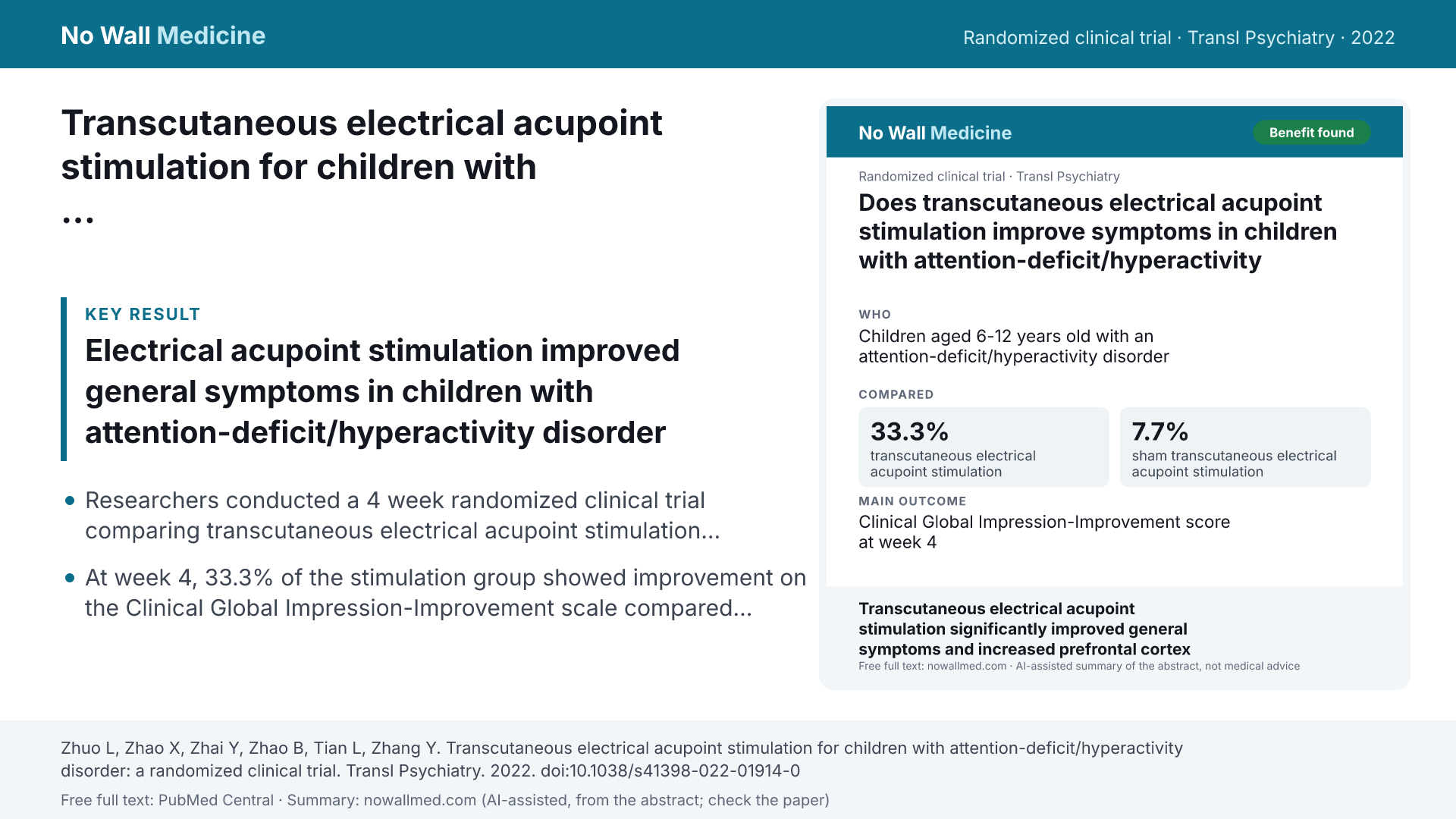
Electrical acupoint stimulation improved general symptoms in children with attention-deficit/hyperactivity disorder
Transcutaneous electrical acupoint stimulation for children with attention-deficit/hyperactivity disorder: a randomized clinical trial
Randomized clinical trialBenefit found
Does transcutaneous electrical acupoint stimulation improve symptoms in children with attention-deficit/hyperactivity disorder?
Who
Children aged 6-12 years old with an attention-deficit/hyperactivity disorder diagnosis
Compared
33.3%transcutaneous electrical acupoint stimulation
7.7%sham transcutaneous electrical acupoint stimulation
Main outcome
Clinical Global Impression-Improvement score at week 4
Bottom line: Transcutaneous electrical acupoint stimulation significantly improved general symptoms and increased prefrontal cortex blood flow in children with attention-deficit/hyperactivity disorder.
Transl Psychiatry · 2022-04-21Download image
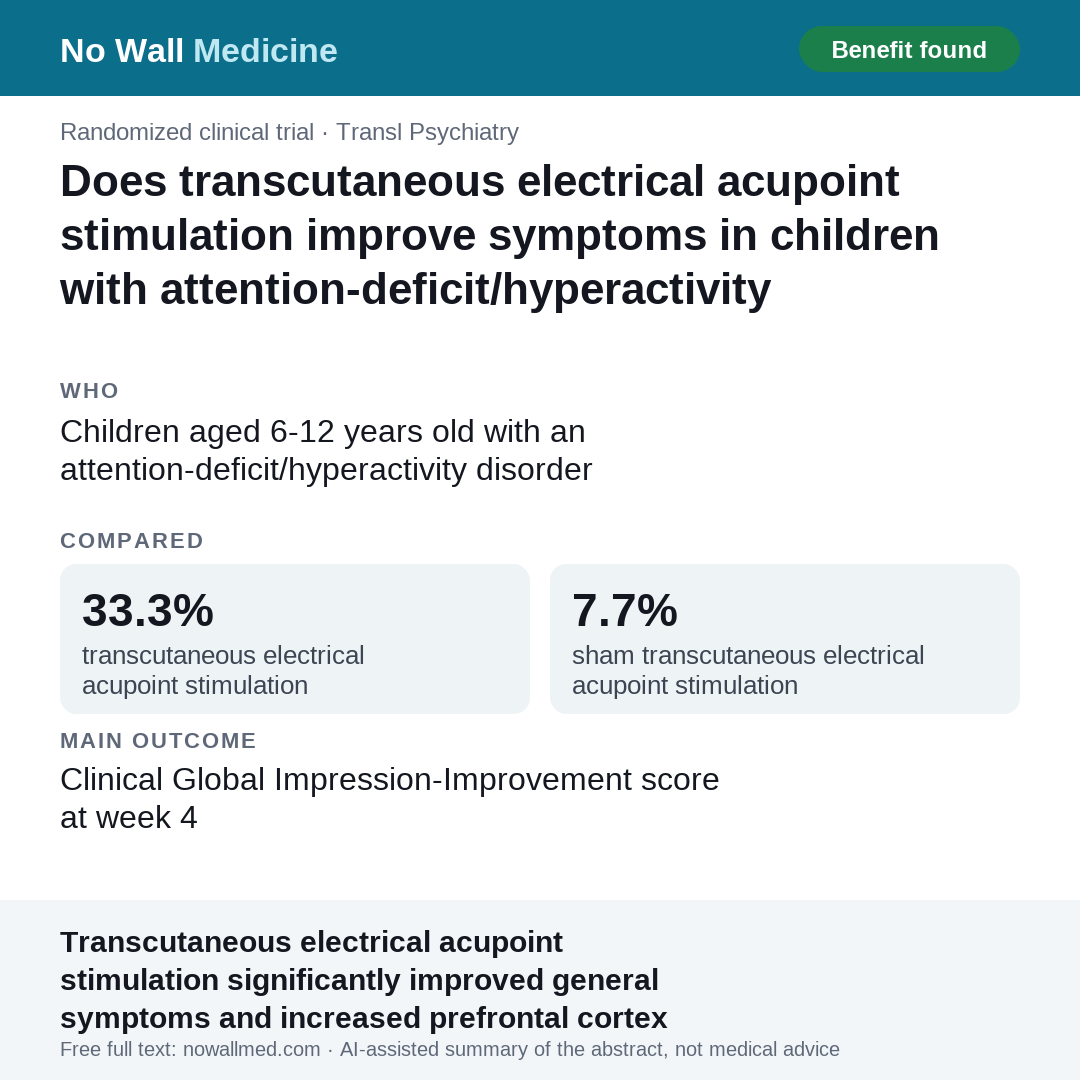
Clinical question: Does transcutaneous electrical acupoint stimulation improve symptoms in children with attention-deficit/hyperactivity disorder?
Why it matters: The effects of transcutaneous electrical acupoint stimulation for children diagnosed with attention-deficit/hyperactivity disorder are currently little known.
Key points
- Researchers conducted a 4 week randomized clinical trial comparing transcutaneous electrical acupoint stimulation (a noninvasive electrical stimulation technique) to a sham version in children aged 6-12 years with ADHD.
- At week 4, 33.3% of the stimulation group showed improvement on the Clinical Global Impression-Improvement scale compared to 7.7% in the sham group.
- The stimulation group showed a greater decrease in Clinical Global Impression-Severity of Illness scores (-0.87) than the sham group (-0.28) and higher prefrontal cortex oxygenated hemoglobin levels.
Limitation the authors note: Further clinical trials are required to understand the long-term efficacy in a larger clinical sample.
Headline and key points written with AI from the paper’s abstract, with every number checked against it. Read the paper before relying on them.
Was this summary helpful?
Subject terms
Cite this article
Zhuo L, Zhao X, Zhai Y, Zhao B, Tian L, Zhang Y. Transcutaneous electrical acupoint stimulation for children with attention-deficit/hyperactivity disorder: a randomized clinical trial. Transl Psychiatry. 2022. doi:10.1038/s41398-022-01914-0
Spotted a mistake? Suggest a correction