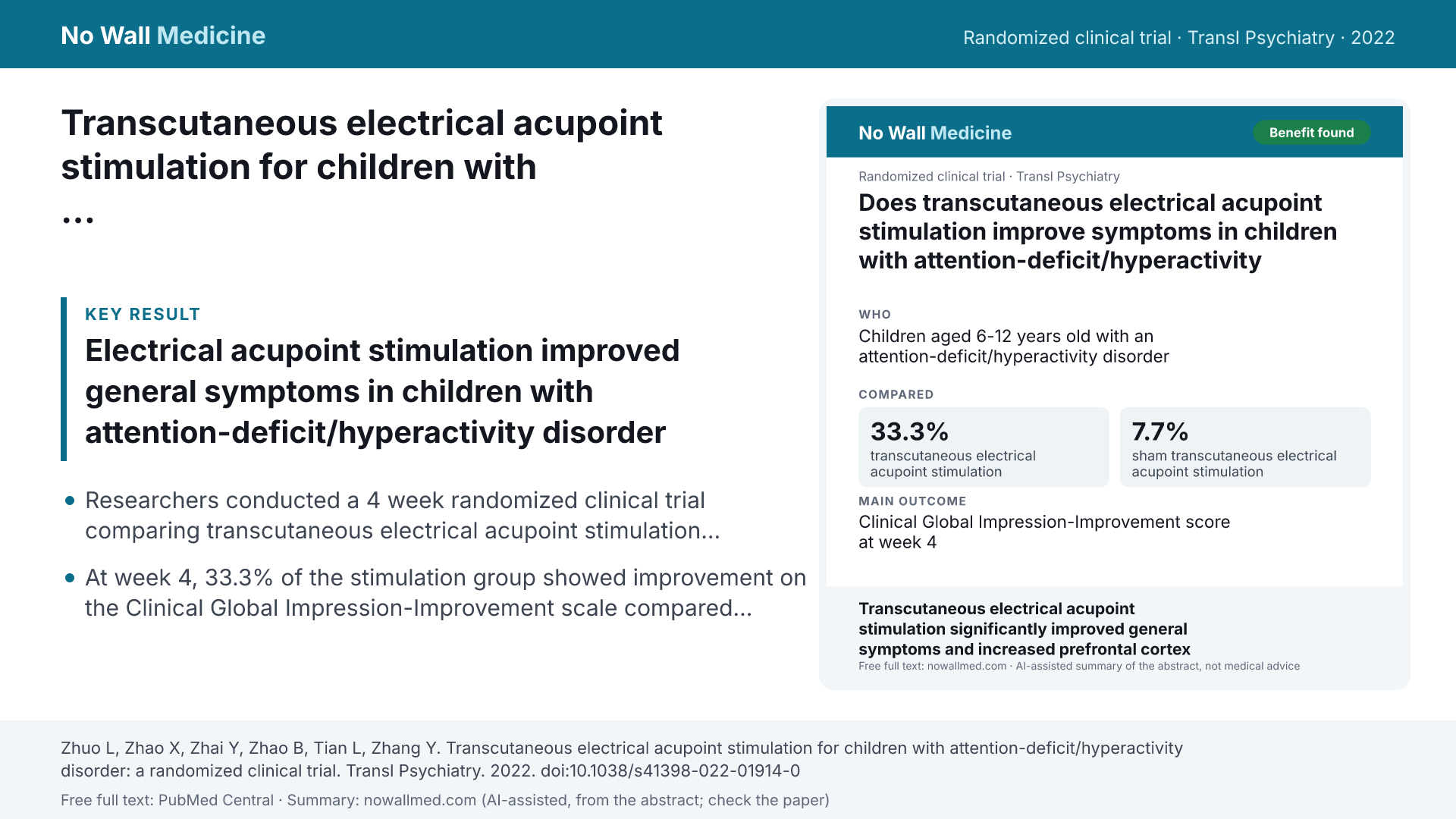
Transcutaneous electrical acupoint stimulation for children with attention-deficit/hyperactivity disorder: a randomized clinical trial
Key result: Electrical acupoint stimulation improved general symptoms in children with attention-deficit/hyperactivity disorder
Key points
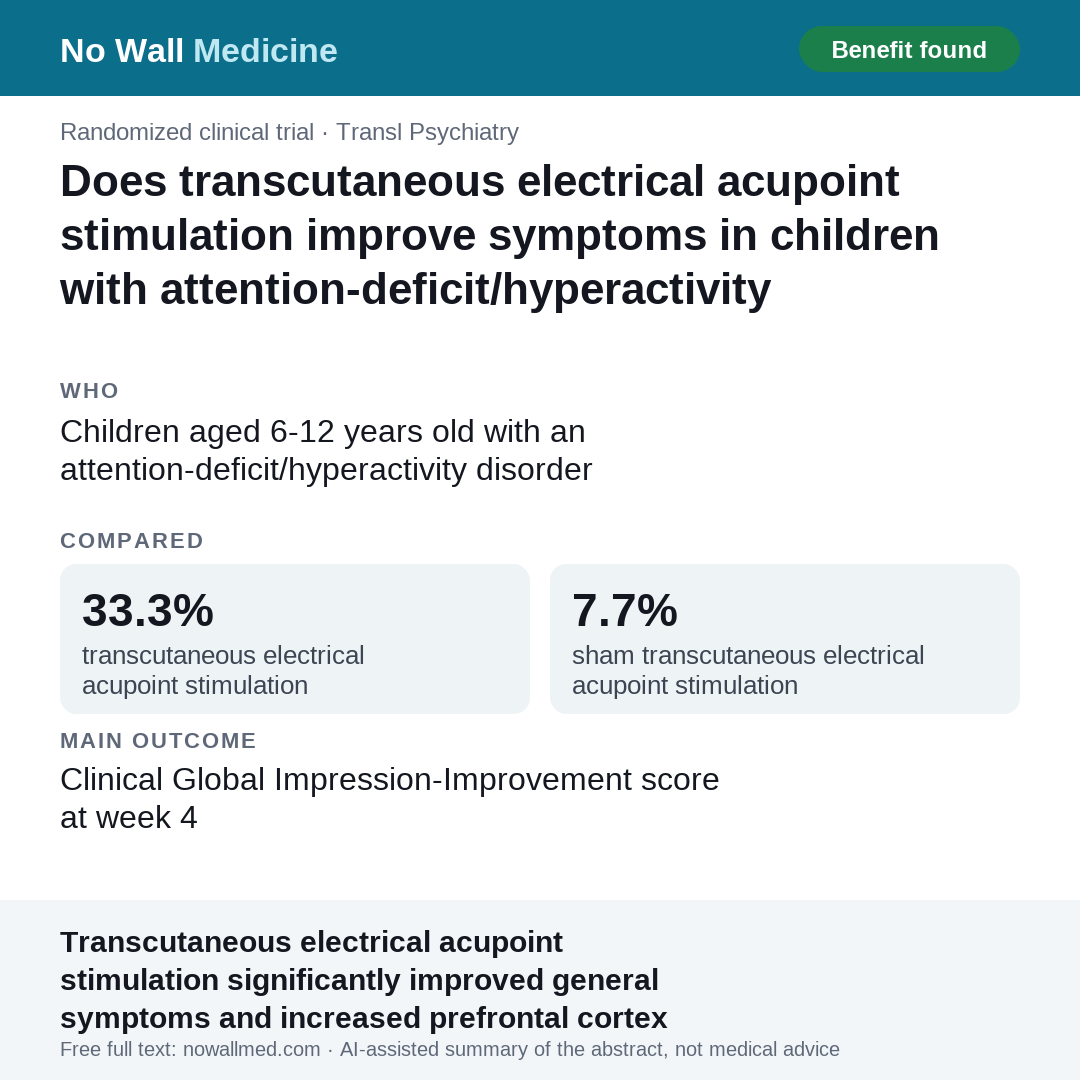
- Researchers conducted a 4 week randomized clinical trial comparing transcutaneous electrical acupoint stimulation (a noninvasive electrical stimulation technique) to a sham version in children aged 6-12 years with ADHD.
- At week 4, 33.3% of the stimulation group showed improvement on the Clinical Global Impression-Improvement scale compared to 7.7% in the sham group.
- The stimulation group showed a greater decrease in Clinical Global Impression-Severity of Illness scores (-0.87) than the sham group (-0.28) and higher prefrontal cortex oxygenated hemoglobin levels.
Why it matters: The effects of transcutaneous electrical acupoint stimulation for children diagnosed with attention-deficit/hyperactivity disorder are currently little known.
Limitation the authors note: Further clinical trials are required to understand the long-term efficacy in a larger clinical sample.
Discussion prompts
- Would these patients look like yours? Who was left out?
- Is the main outcome one that matters to patients?
- Is the difference large enough to change what you do?
Cite: Zhuo L, Zhao X, Zhai Y, Zhao B, Tian L, Zhang Y. Transcutaneous electrical acupoint stimulation for children with attention-deficit/hyperactivity disorder: a randomized clinical trial. Transl Psychiatry. 2022. doi:10.1038/s41398-022-01914-0
Free full text: PubMed Central · Summary and visual abstract: nowallmed.com/a/transcutaneous-electrical-acupoint-stimulation-for-children-with-n53i15/ (AI-assisted from the abstract; check the paper before relying on it).