Pollution exposure was associated with increased water loss through the skin barrier
Transepidermal water loss (TEWL): Environment and pollution-A systematic review
Systematic reviewMixed results
How do environmental conditions and pollution affect transepidermal water loss?
Who
Humans
Compared
Pollution exposure: increased TEWL
Season and climate: contradictory results
Main outcome
Transepidermal water loss
Bottom line: Pollution increases transepidermal water loss, but effects of season and climate remain unconfirmed.
Skin Health Dis · 2022-02-25 · Save PNG
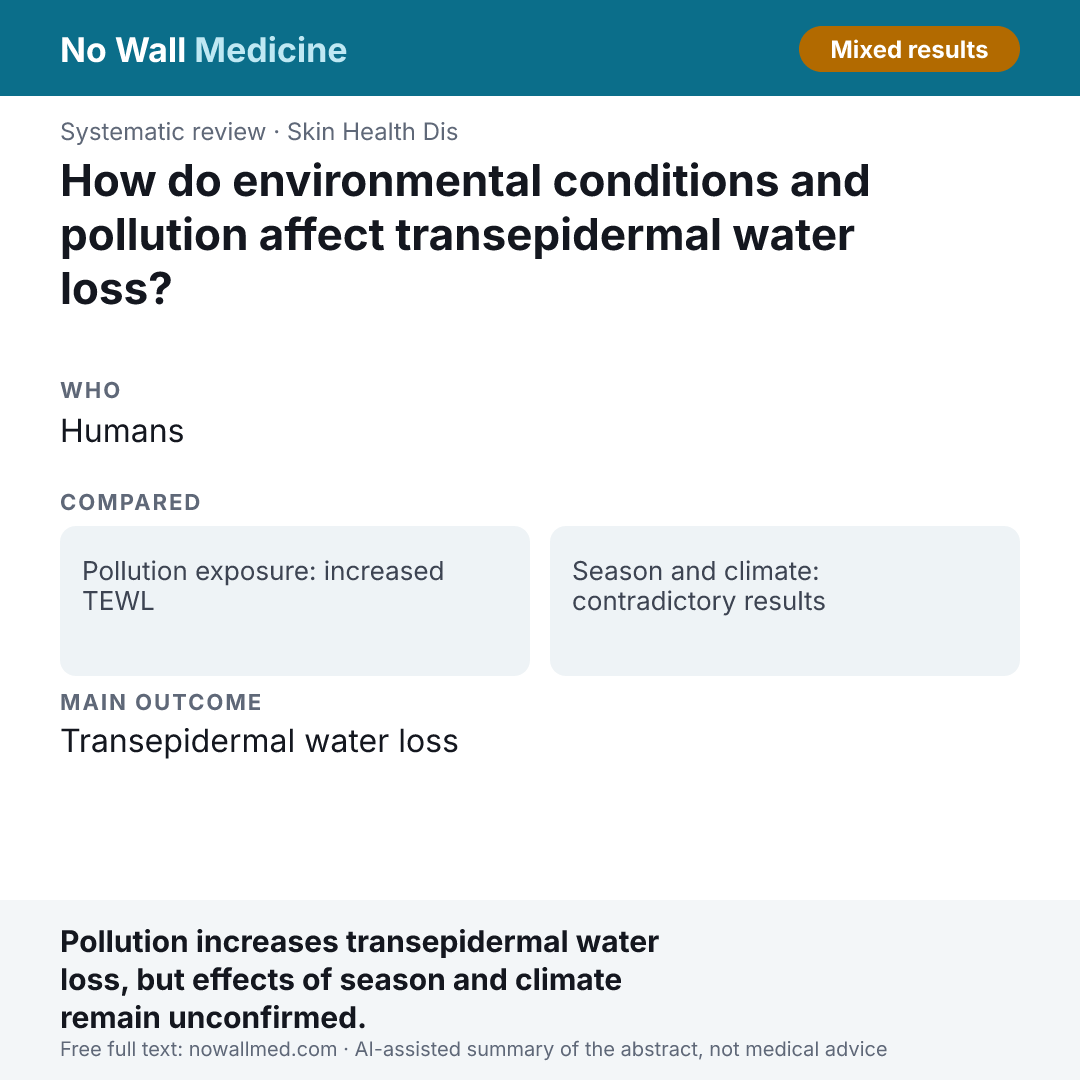
Clinical question: How do environmental conditions and pollution affect transepidermal water loss?
Why it matters: The impact of environmental conditions and pollution on the amount of water lost through the skin barrier has yet to be determined.
Key points
- Researchers reviewed 15 studies to examine how environmental conditions and pollution affect transepidermal water loss, which is the amount of water lost through the skin's outermost layer.
- Four studies on pollution showed increased transepidermal water loss in people exposed to nitrogen dioxide or particulate matter.
- The 11 studies examining seasonal and environmental conditions showed contradictory results with no consensus reached.
Headline and key points written with AI from the paper’s abstract, with every number checked against it. Read the paper before relying on them.
Was this summary helpful?
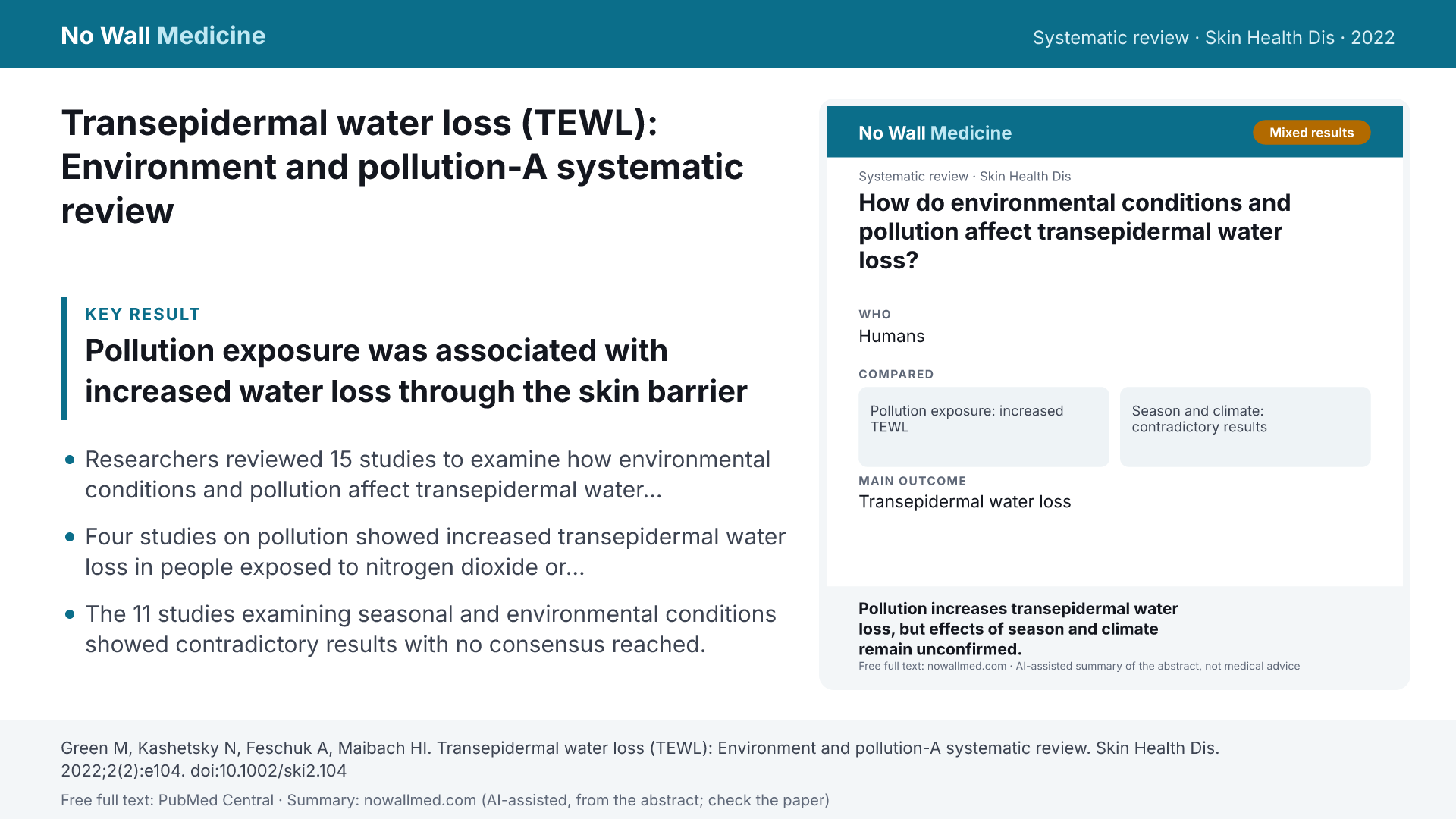
Headline, design, result, key points, caveat and citation as plain text.
Cite this article
Green M, Kashetsky N, Feschuk A, Maibach HI. Transepidermal water loss (TEWL): Environment and pollution-A systematic review. Skin Health Dis. 2022. doi:10.1002/ski2.104
Spotted a mistake? Suggest a correction