Transepidermal water loss (TEWL): Environment and pollution-A systematic review
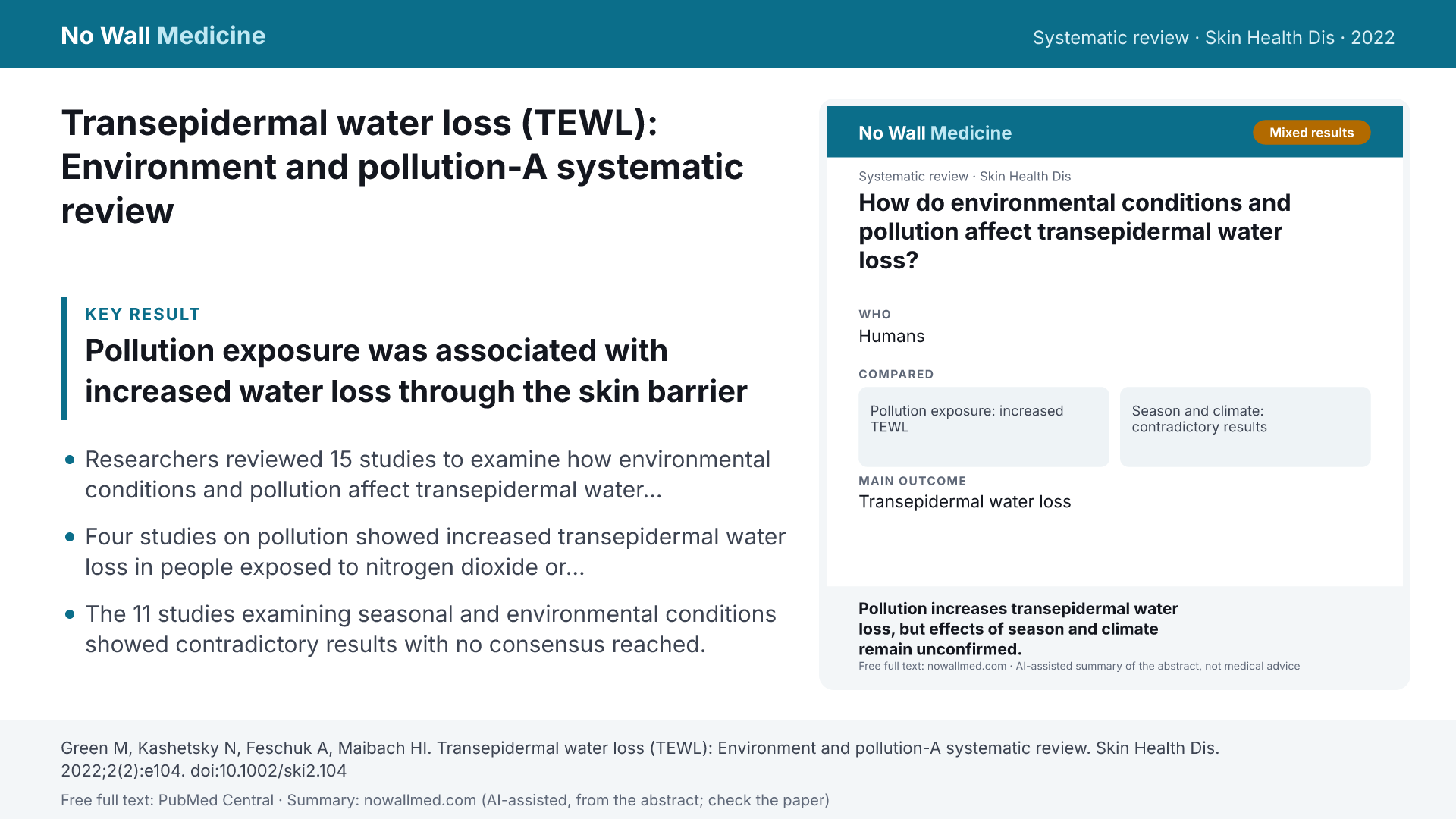
Key result: Pollution exposure was associated with increased water loss through the skin barrier
Systematic reviewMixed results
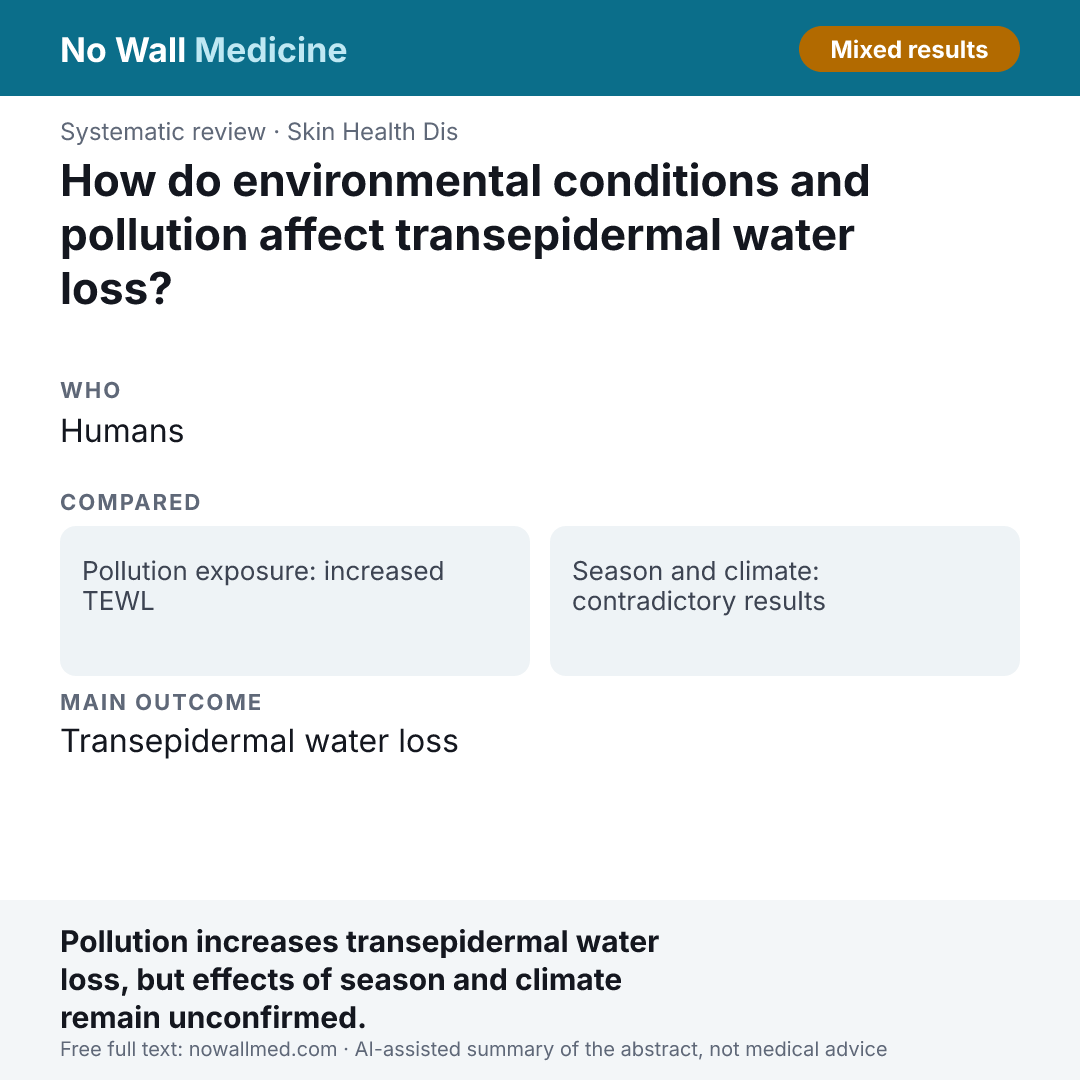
How do environmental conditions and pollution affect transepidermal water loss?
Who
Humans
Compared
Pollution exposure: increased TEWL
Season and climate: contradictory results
Main outcome
Transepidermal water loss
Bottom line: Pollution increases transepidermal water loss, but effects of season and climate remain unconfirmed.
Skin Health Dis · 2022-02-25 · Save PNG
Key points
- Researchers reviewed 15 studies to examine how environmental conditions and pollution affect transepidermal water loss, which is the amount of water lost through the skin's outermost layer.
- Four studies on pollution showed increased transepidermal water loss in people exposed to nitrogen dioxide or particulate matter.
- The 11 studies examining seasonal and environmental conditions showed contradictory results with no consensus reached.
Why it matters: The impact of environmental conditions and pollution on the amount of water lost through the skin barrier has yet to be determined.
Discussion prompts
- Would these patients look like yours? Who was left out?
- Is the main outcome one that matters to patients?
- Is the difference large enough to change what you do?
Cite: Green M, Kashetsky N, Feschuk A, Maibach HI. Transepidermal water loss (TEWL): Environment and pollution-A systematic review. Skin Health Dis. 2022. doi:10.1002/ski2.104
Free full text: PubMed Central · Summary and visual abstract: nowallmed.com/a/transepidermal-water-loss-tewl-environment-and-pollution-a-systematic-tb1ovm/ (AI-assisted from the abstract; check the paper before relying on it).