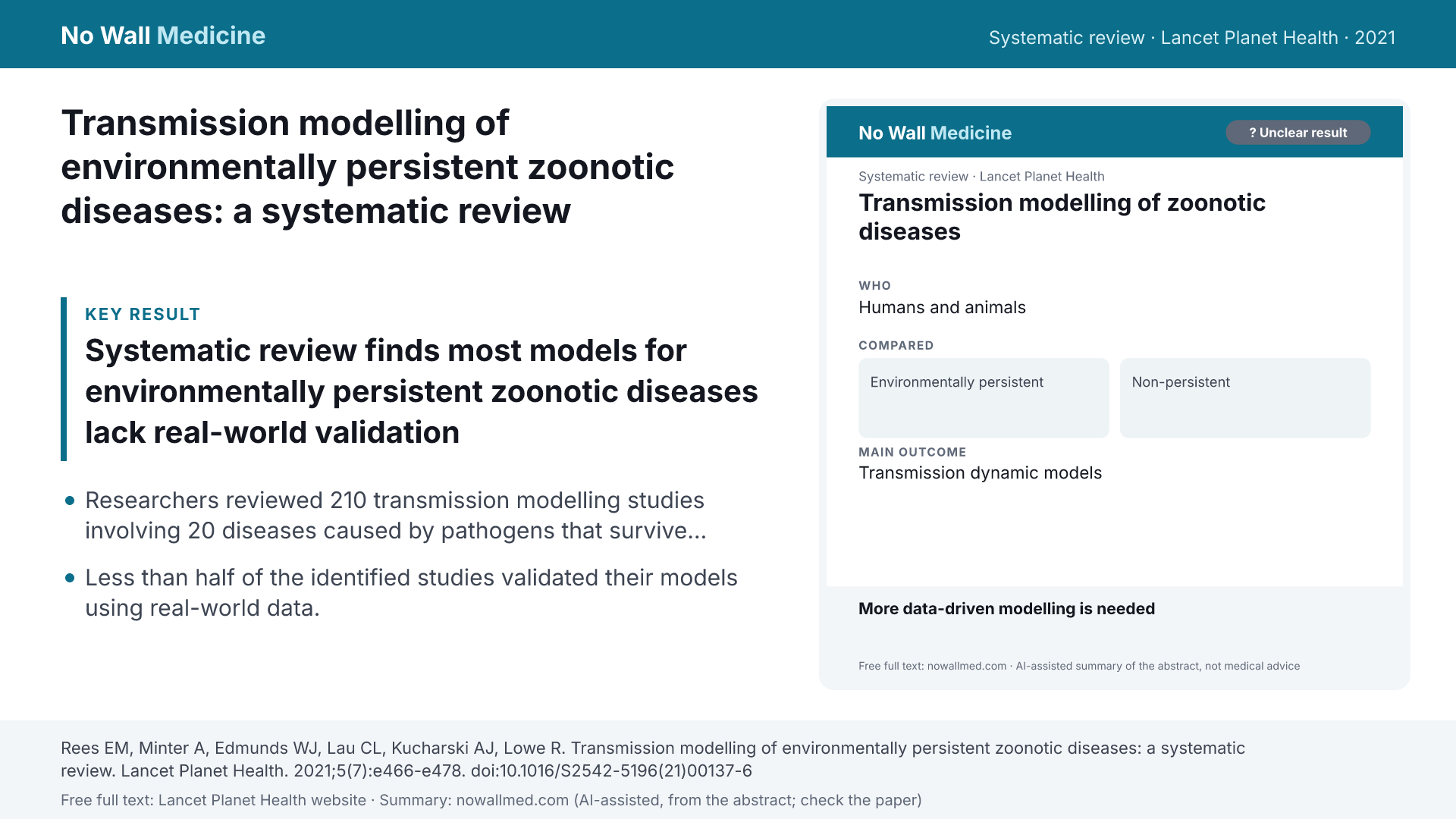
Systematic review finds most models for environmentally persistent zoonotic diseases lack real-world validation
Transmission modelling of environmentally persistent zoonotic diseases: a systematic review
Systematic reviewUnclear result
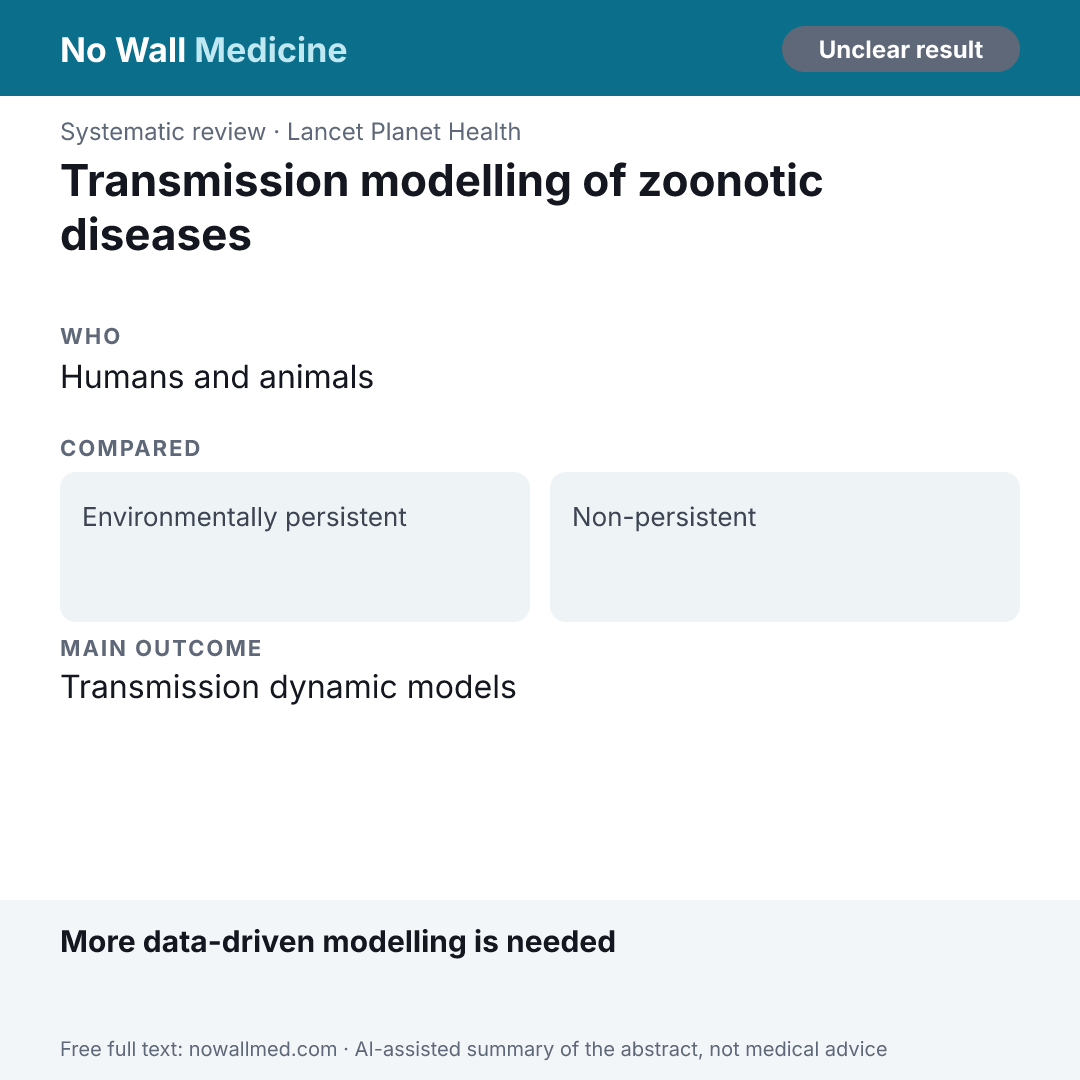
Transmission modelling of zoonotic diseases
Who
Humans and animals
Compared
Environmentally persistent
Non-persistent
Main outcome
Transmission dynamic models
Bottom line: More data-driven modelling is needed
Lancet Planet Health · 2021-07-10 · Save PNG
Key points
- Researchers reviewed 210 transmission modelling studies involving 20 diseases caused by pathogens that survive more than 48 h in the environment.
- Less than half of the identified studies validated their models using real-world data.
- Most studies focused on diseases of domestic animals or high-income settings, and environmental data on pathogen persistence was rarely included.
Headline and key points written with AI from the paper’s abstract, with every number checked against it. Read the paper before relying on them.
Was this summary helpful?
Abstract
Transmission of many infectious diseases depends on interactions between humans, animals, and the environment. Incorporating these complex processes in transmission dynamic models can help inform policy and disease control interventions. We identified 20 diseases involving environmentally persistent pathogens (ie, pathogens that survive for more than 48 h in the environment and can cause subsequent human infections), of which indirect transmission can occur from animals to humans via the environment. Using a systematic approach, we critically appraised dynamic transmission models for environmentally persistent zoonotic diseases to quantify traits of models across diseases. 210 transmission modelling studies were identified and most studies considered diseases of domestic animals or high-income settings, or both. We found that less than half of studies validated their models to real-world data, and environmental data on pathogen persistence was rarely incorporated. Model structures varied, with few studies considering the animal-human-environment interface of transmission in the context of a One Health framework. This Review highlights the need for more data-driven modelling of these diseases and a holistic One Health approach to model these pathogens to inform disease prevention and control strategies.
Abstract reproduced under the article’s CC BY licence.
Subject terms
Headline, design, result, key points, caveat and citation as plain text.
Cite this article
Rees EM, Minter A, Edmunds WJ, Lau CL, Kucharski AJ, Lowe R. Transmission modelling of environmentally persistent zoonotic diseases: a systematic review. Lancet Planet Health. 2021. doi:10.1016/S2542-5196(21)00137-6
Spotted a mistake? Suggest a correction