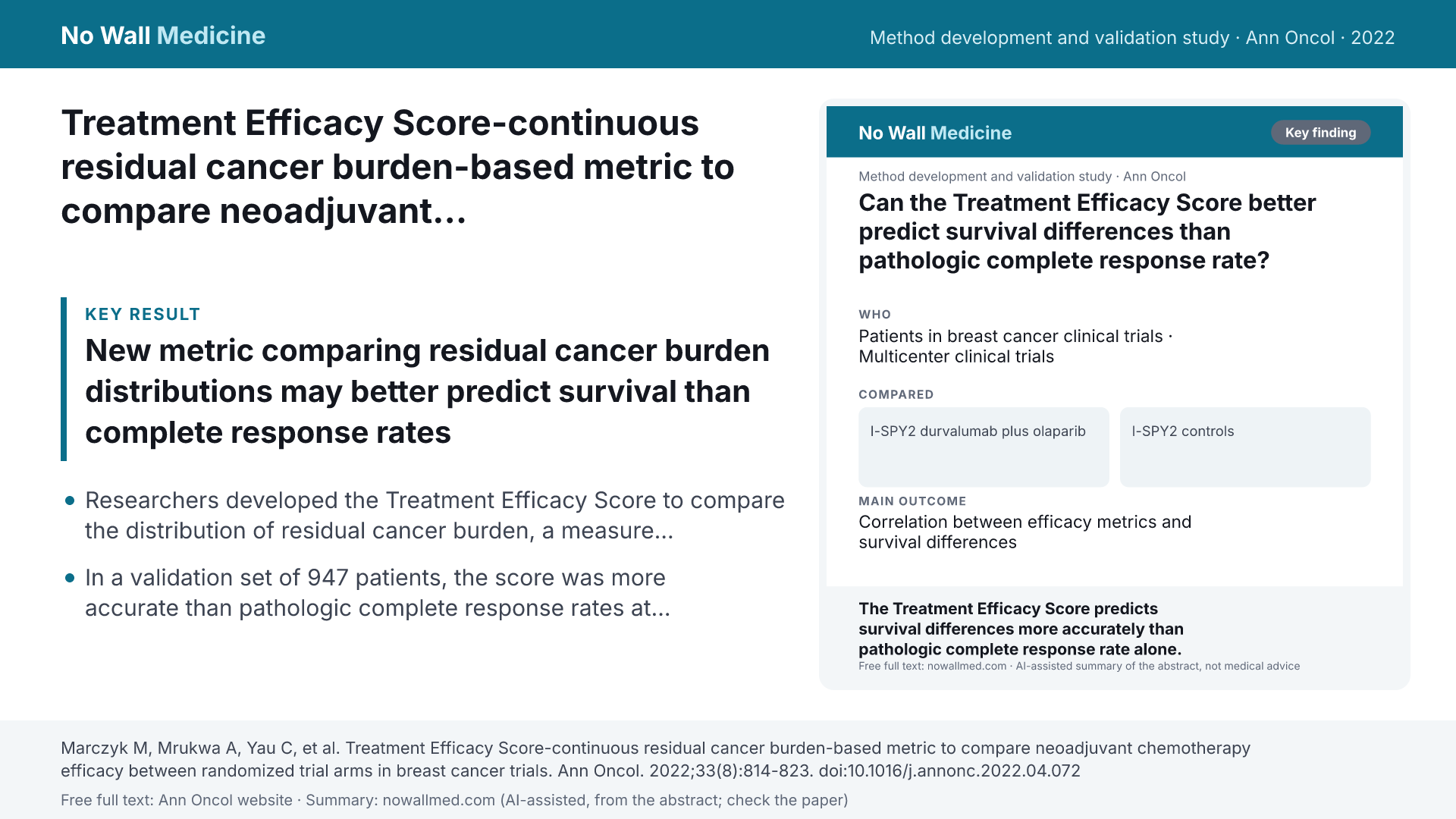
Treatment Efficacy Score-continuous residual cancer burden-based metric to compare neoadjuvant chemotherapy efficacy between randomized trial arms in breast cancer trials
Key result: New metric comparing residual cancer burden distributions may better predict survival than complete response rates
Key points
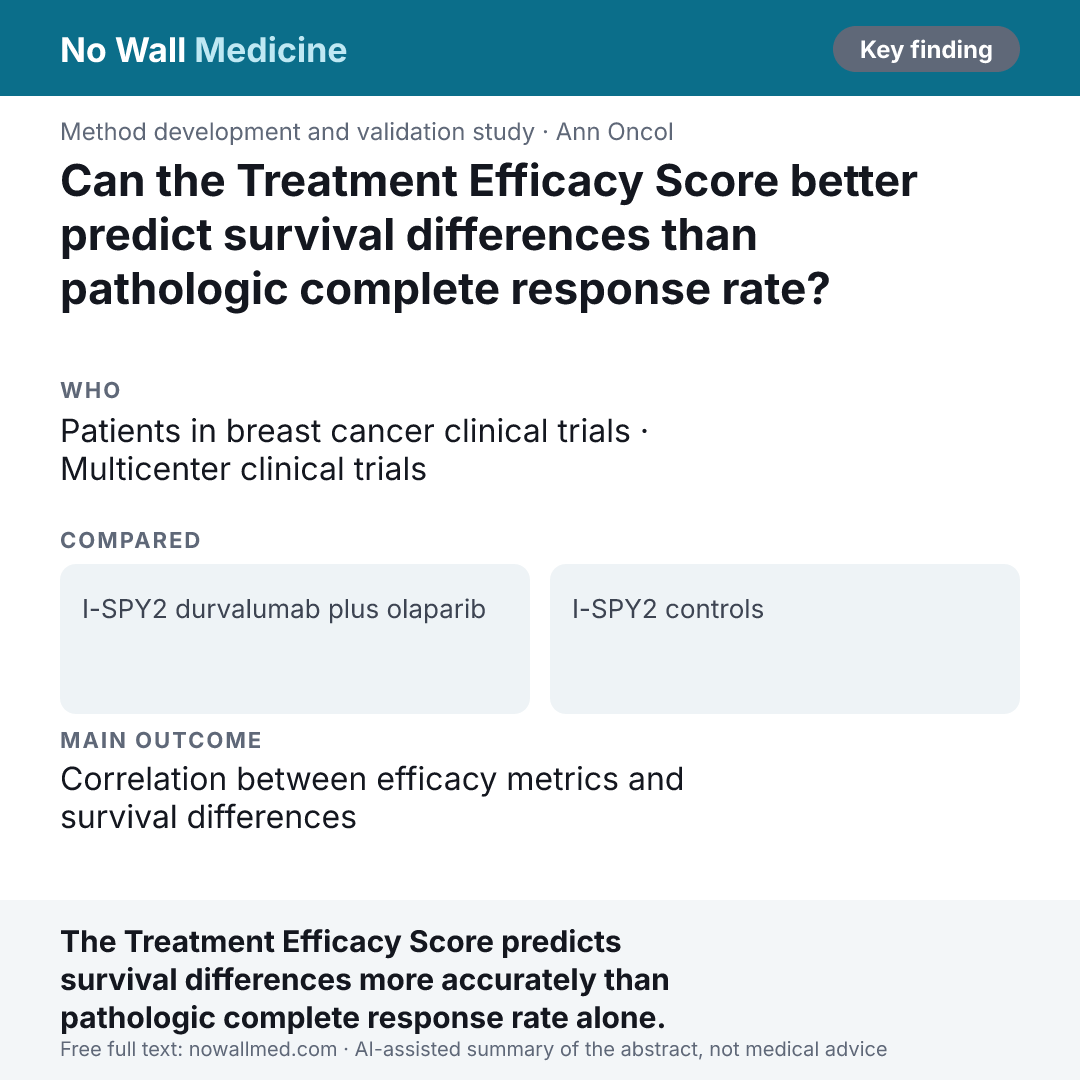
- Researchers developed the Treatment Efficacy Score to compare the distribution of residual cancer burden, a measure of remaining tumor after chemotherapy, between clinical trial arms.
- In a validation set of 947 patients, the score was more accurate than pathologic complete response rates at identifying less effective regimens that failed to reduce high residual cancer burden.
- The correlation between the Treatment Efficacy Score and survival was higher than the correlation between the difference in pathologic complete response rates and survival.
Why it matters: Standard pathologic complete response rates do not capture how much a treatment reduces the amount of remaining cancer in patients who do not achieve a full response.
Discussion prompts
- Would these patients look like yours? Who was left out?
- Is the main outcome one that matters to patients?
- Is the difference large enough to change what you do?
Cite: Marczyk M, Mrukwa A, Yau C, et al. Treatment Efficacy Score-continuous residual cancer burden-based metric to compare neoadjuvant chemotherapy efficacy between randomized trial arms in breast cancer trials. Ann Oncol. 2022. doi:10.1016/j.annonc.2022.04.072
Free full text: Ann Oncol website · Summary and visual abstract: nowallmed.com/a/treatment-efficacy-score-continuous-residual-cancer-burden-based-103y9l3/ (AI-assisted from the abstract; check the paper before relying on it).