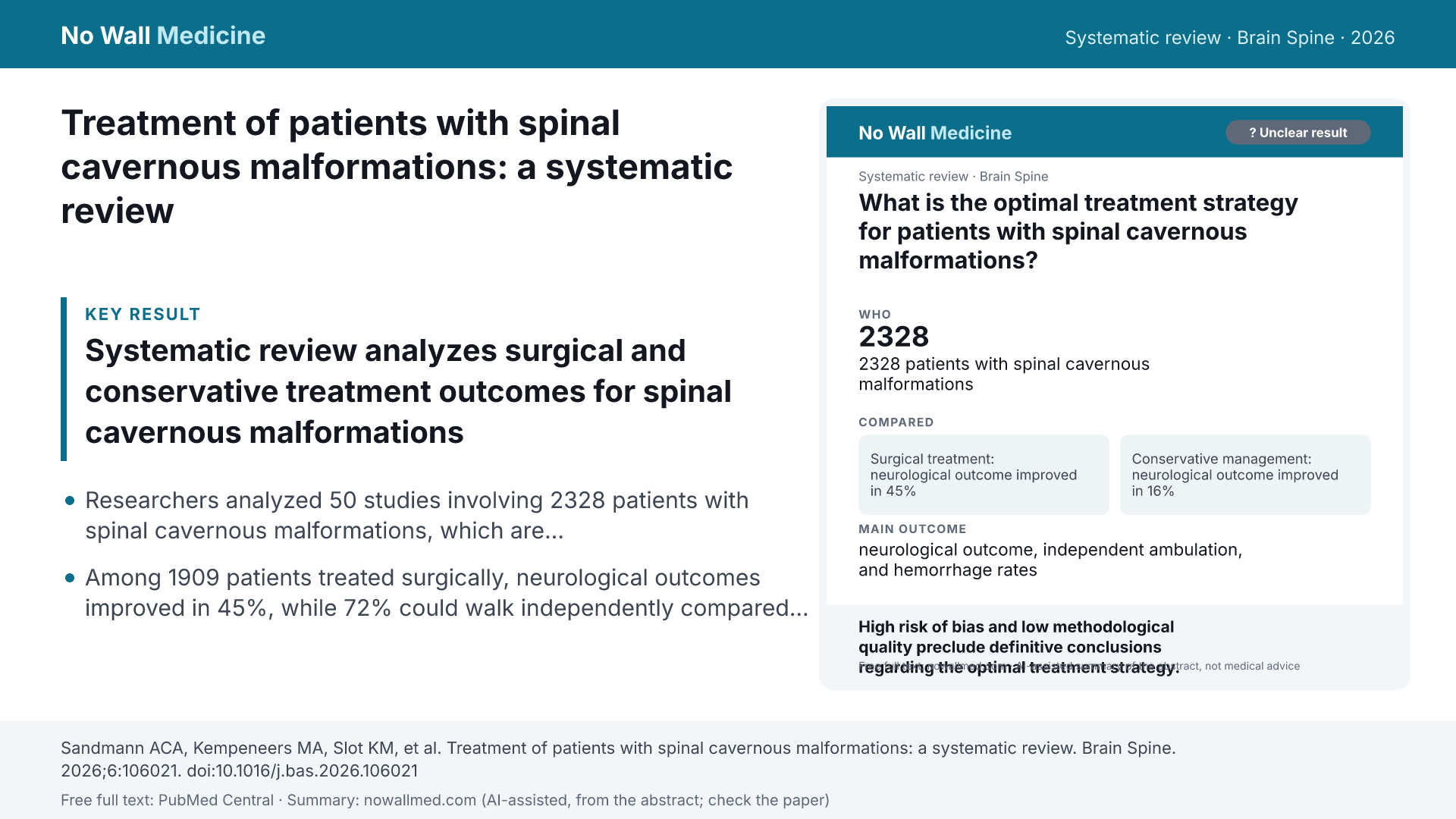
Systematic review analyzes surgical and conservative treatment outcomes for spinal cavernous malformations
Treatment of patients with spinal cavernous malformations: a systematic review
Systematic reviewUnclear result
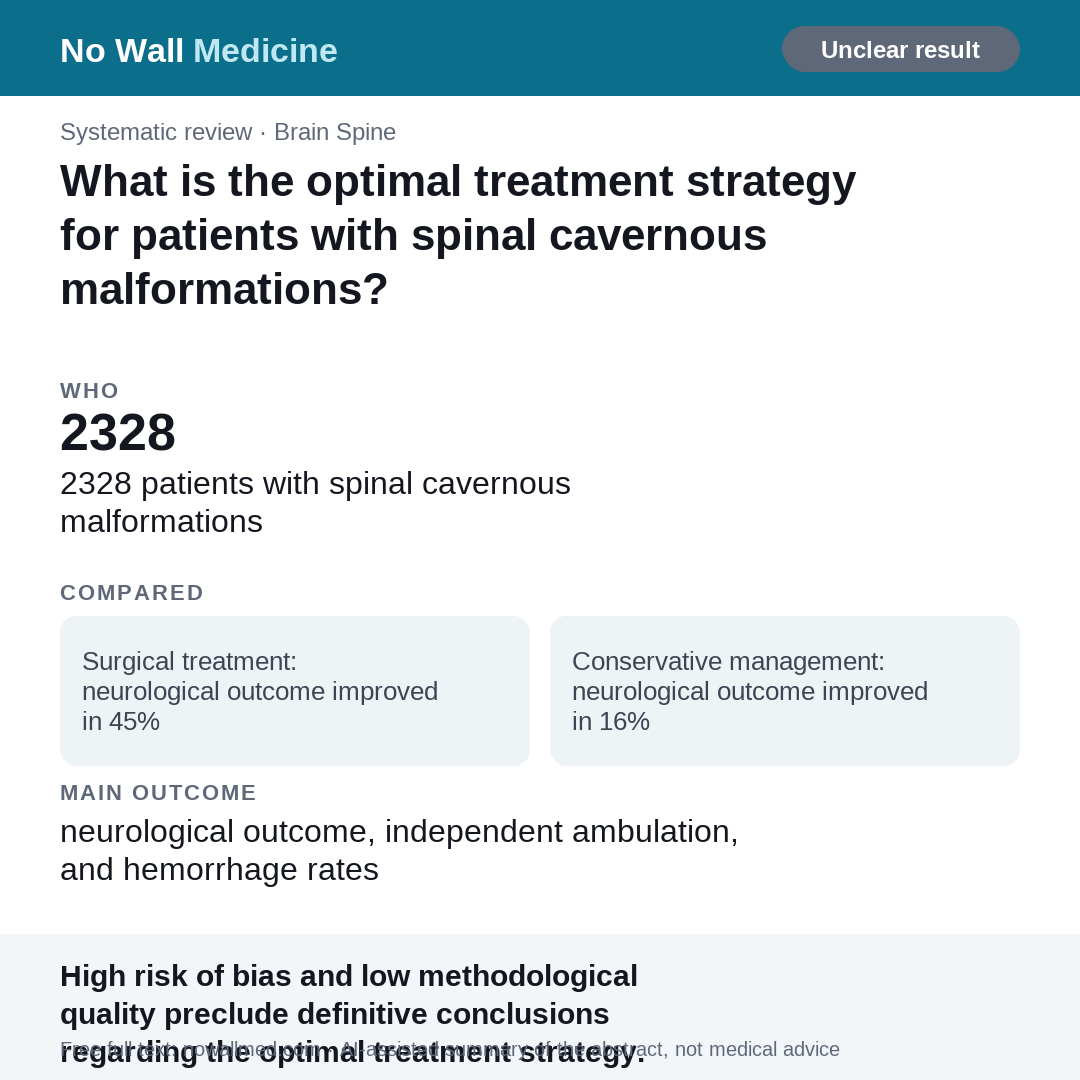
What is the optimal treatment strategy for patients with spinal cavernous malformations?
Who
2328
2328 patients with spinal cavernous malformations
Compared
Surgical treatment: neurological outcome improved in 45%
Conservative management: neurological outcome improved in 16%
Main outcome
neurological outcome, independent ambulation, and hemorrhage rates
Bottom line: High risk of bias and low methodological quality preclude definitive conclusions regarding the optimal treatment strategy.
Limitation: Low methodological quality and high risk of bias complicated direct comparisons.
Brain Spine · 2026-03-25Download image
Clinical question: What is the optimal treatment strategy for patients with spinal cavernous malformations?
Why it matters: Clinicians lack a clear consensus on the optimal treatment strategy between surgery and conservative management for spinal cavernous malformations.
Key points
- Researchers analyzed 50 studies involving 2328 patients with spinal cavernous malformations, which are vascular malformations located within the spinal cord.
- Among 1909 patients treated surgically, neurological outcomes improved in 45%, while 72% could walk independently compared to 60% before surgery.
- Among 419 patients managed conservatively, neurological outcomes improved in 16%, and 76% could walk independently compared to 79% at baseline.
Limitation the authors note: The majority of included studies were retrospective, single-center, and had a serious risk of bias.
Headline and key points written with AI from the paper’s abstract, with every number checked against it. Read the paper before relying on them.
Was this summary helpful?
Cite this article
Sandmann ACA, Kempeneers MA, Slot KM, van den Berg R, Vandertop WP, Verbaan D. Treatment of patients with spinal cavernous malformations: a systematic review. Brain Spine. 2026. doi:10.1016/j.bas.2026.106021
Spotted a mistake? Suggest a correction
Top studies every Monday
The week’s key trials and guidelines in your specialties, plus any topics you follow. By email, free.
Get the weekly digest