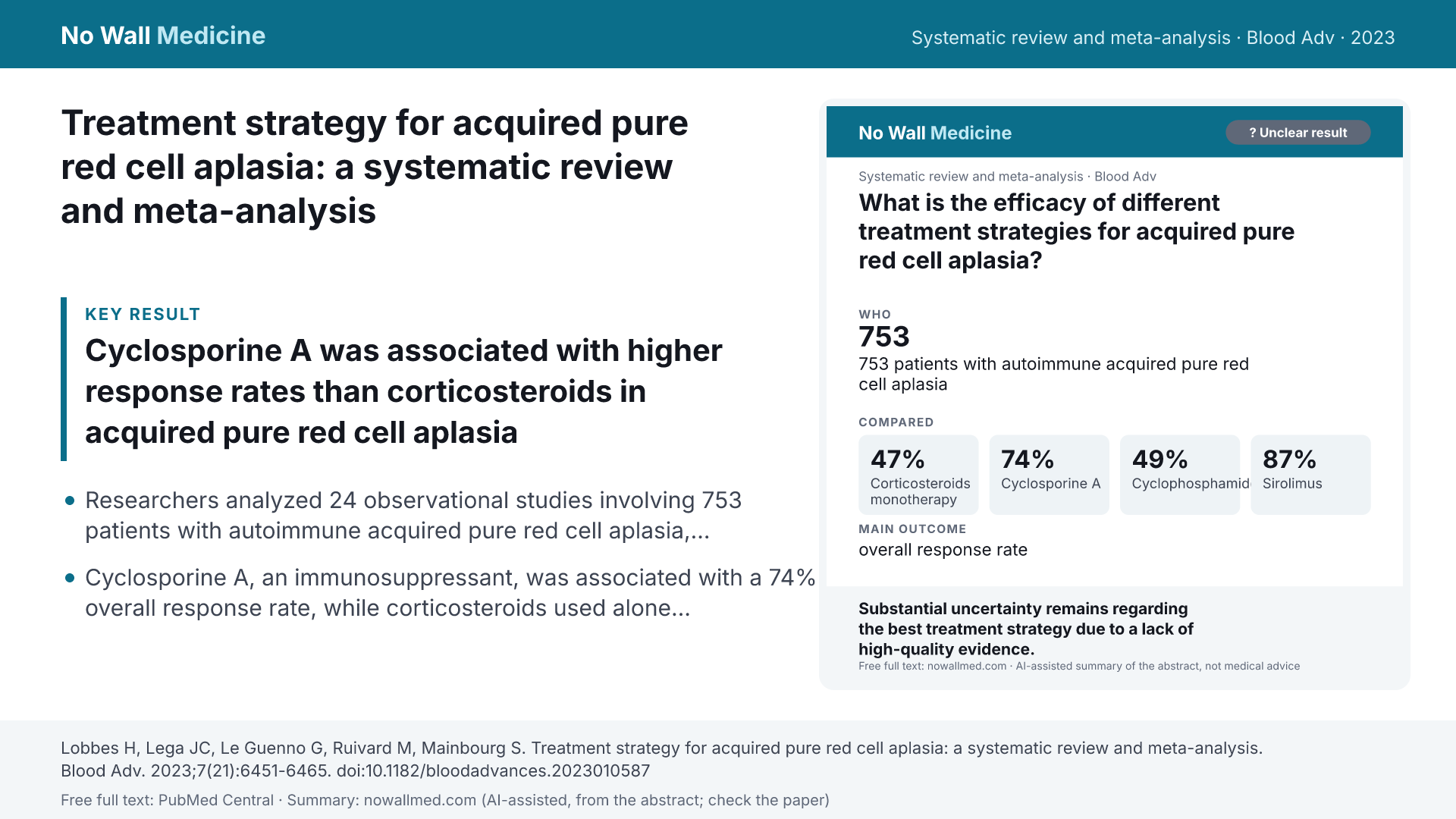
Treatment strategy for acquired pure red cell aplasia: a systematic review and meta-analysis
Key result: Cyclosporine A was associated with higher response rates than corticosteroids in acquired pure red cell aplasia
Key points
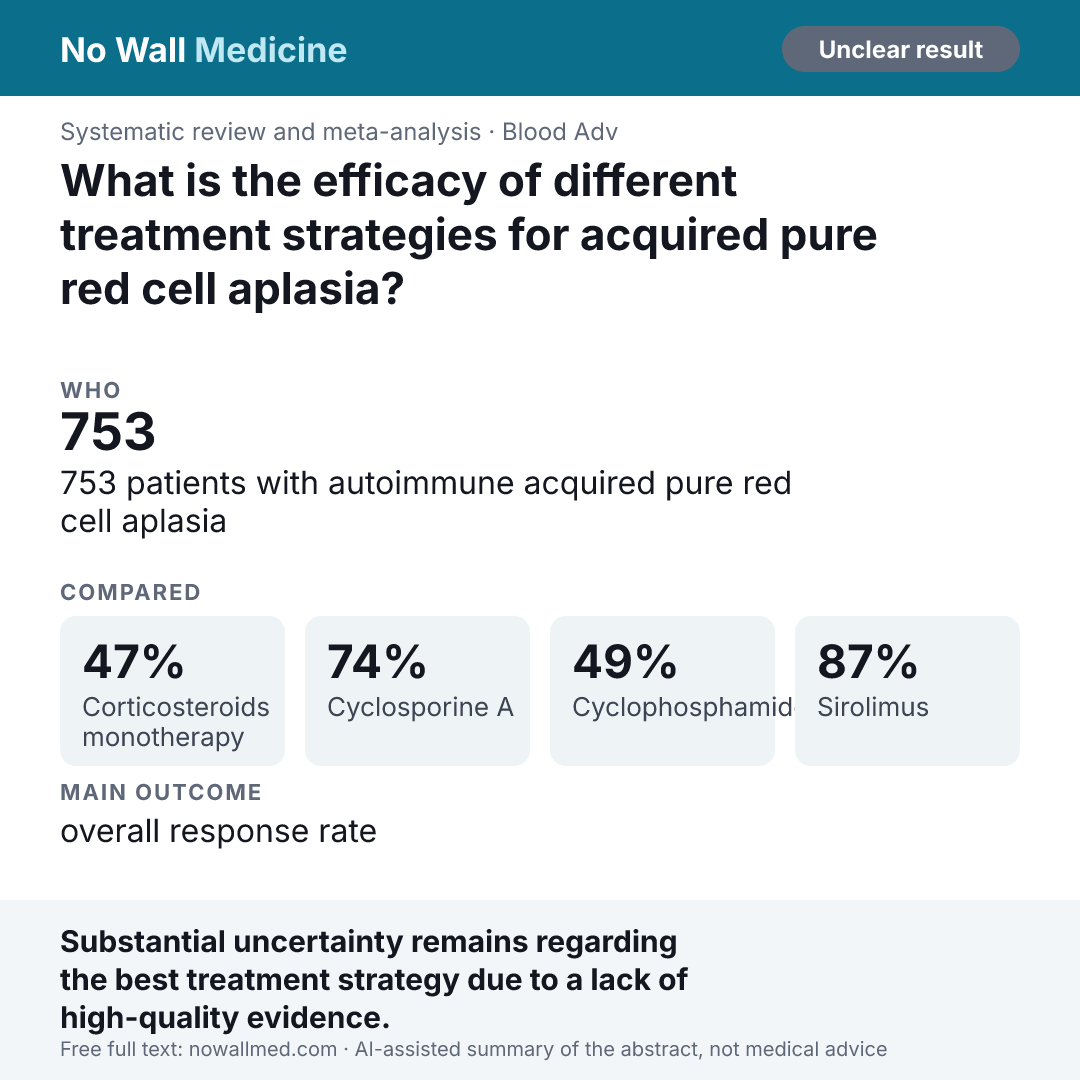
- Researchers analyzed 24 observational studies involving 753 patients with autoimmune acquired pure red cell aplasia, a condition where the body attacks its own red blood cell precursors.
- Cyclosporine A, an immunosuppressant, was associated with a 74% overall response rate, while corticosteroids used alone as first-line treatment had a 47% response rate.
- Cyclophosphamide, a chemotherapy drug, was associated with a 49% response rate, and sirolimus was associated with an 87% response rate after cyclosporine A failure.
Why it matters: Clinical guidelines for treating autoimmune acquired pure red cell aplasia rely on expert recommendations because controlled trials are currently unavailable.
Limitation the authors note: The included studies were observational with moderate to high risk of bias and substantial heterogeneity.
Discussion prompts
- Would these patients look like yours? Who was left out?
- Is the main outcome one that matters to patients?
- Is the difference large enough to change what you do?
Cite: Lobbes H, Lega JC, Le Guenno G, Ruivard M, Mainbourg S. Treatment strategy for acquired pure red cell aplasia: a systematic review and meta-analysis. Blood Adv. 2023;7(21):6451-6465. doi:10.1182/bloodadvances.2023010587
Free full text: PubMed Central · Summary and visual abstract: nowallmed.com/a/treatment-strategy-for-acquired-pure-red-cell-aplasia-a-systematic-1mouvaw/ (AI-assisted from the abstract; check the paper before relying on it).