Trends in Transcatheter Versus Surgical Aortic Valve Replacement Outcomes in Patients With Low-Surgical Risk: A Systematic Review and Meta-Analysis of Randomized Trials
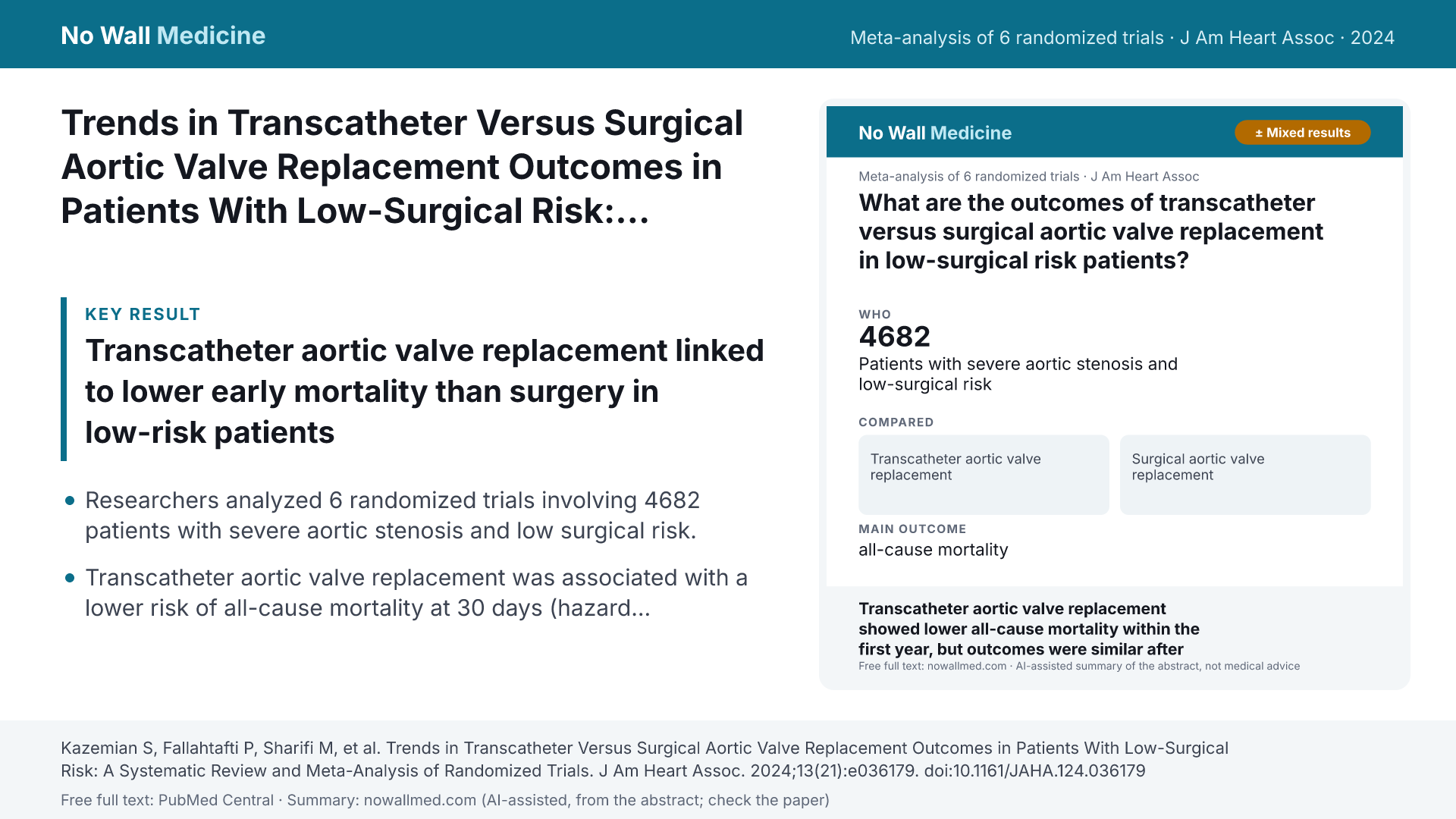
Key result: Transcatheter aortic valve replacement linked to lower early mortality than surgery in low-risk patients
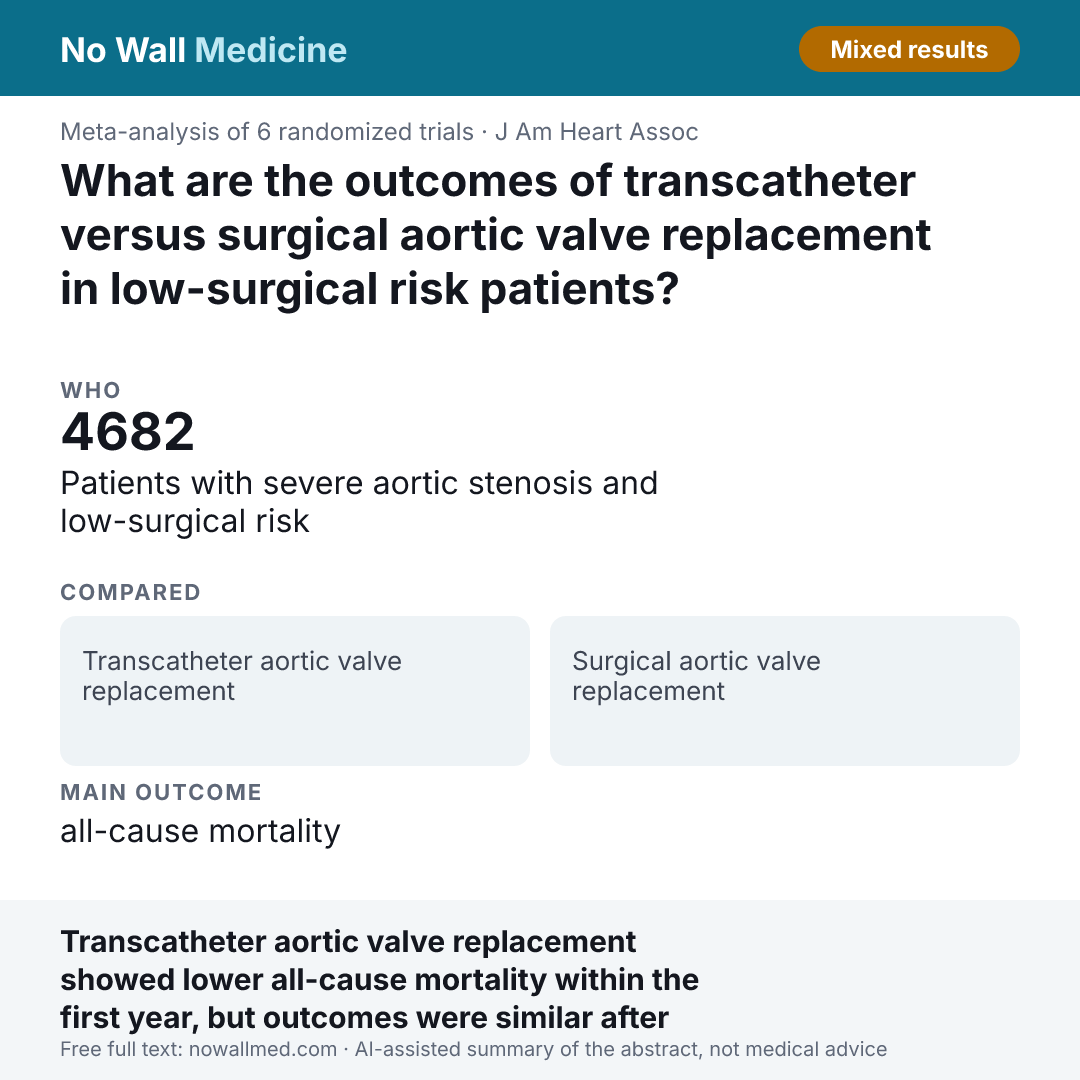
Meta-analysis of 6 randomized trialsMixed results
What are the outcomes of transcatheter versus surgical aortic valve replacement in low-surgical risk patients?
Who
4682
Patients with severe aortic stenosis and low-surgical risk
Compared
Transcatheter aortic valve replacement
Surgical aortic valve replacement
Main outcome
all-cause mortality
Result: hazard ratio 0.45 (95% CI 0.26-0.77) at 30-day follow-up
Bottom line: Transcatheter aortic valve replacement showed lower all-cause mortality within the first year, but outcomes were similar after one year.
J Am Heart Assoc · 2024-10-18 · Save PNG
Key points
- Researchers analyzed 6 randomized trials involving 4682 patients with severe aortic stenosis and low surgical risk.
- Transcatheter aortic valve replacement was associated with a lower risk of all-cause mortality at 30 days (hazard ratio 0.45) and up to 1 year (hazard ratio 0.55).
- At follow-ups longer than 1 year, the risk of all-cause mortality was similar between the two procedures.
Discussion prompts
- Would these patients look like yours? Who was left out?
- Is the main outcome one that matters to patients?
- Is the difference large enough to change what you do?
Cite: Kazemian S, Fallahtafti P, Sharifi M, et al. Trends in Transcatheter Versus Surgical Aortic Valve Replacement Outcomes in Patients With Low-Surgical Risk: A Systematic Review and Meta-Analysis of Randomized Trials. J Am Heart Assoc. 2024;13(21):e036179. doi:10.1161/JAHA.124.036179
Free full text: PubMed Central · Summary and visual abstract: nowallmed.com/a/trends-in-transcatheter-versus-surgical-aortic-valve-replacement-zqihur/ (AI-assisted from the abstract; check the paper before relying on it).