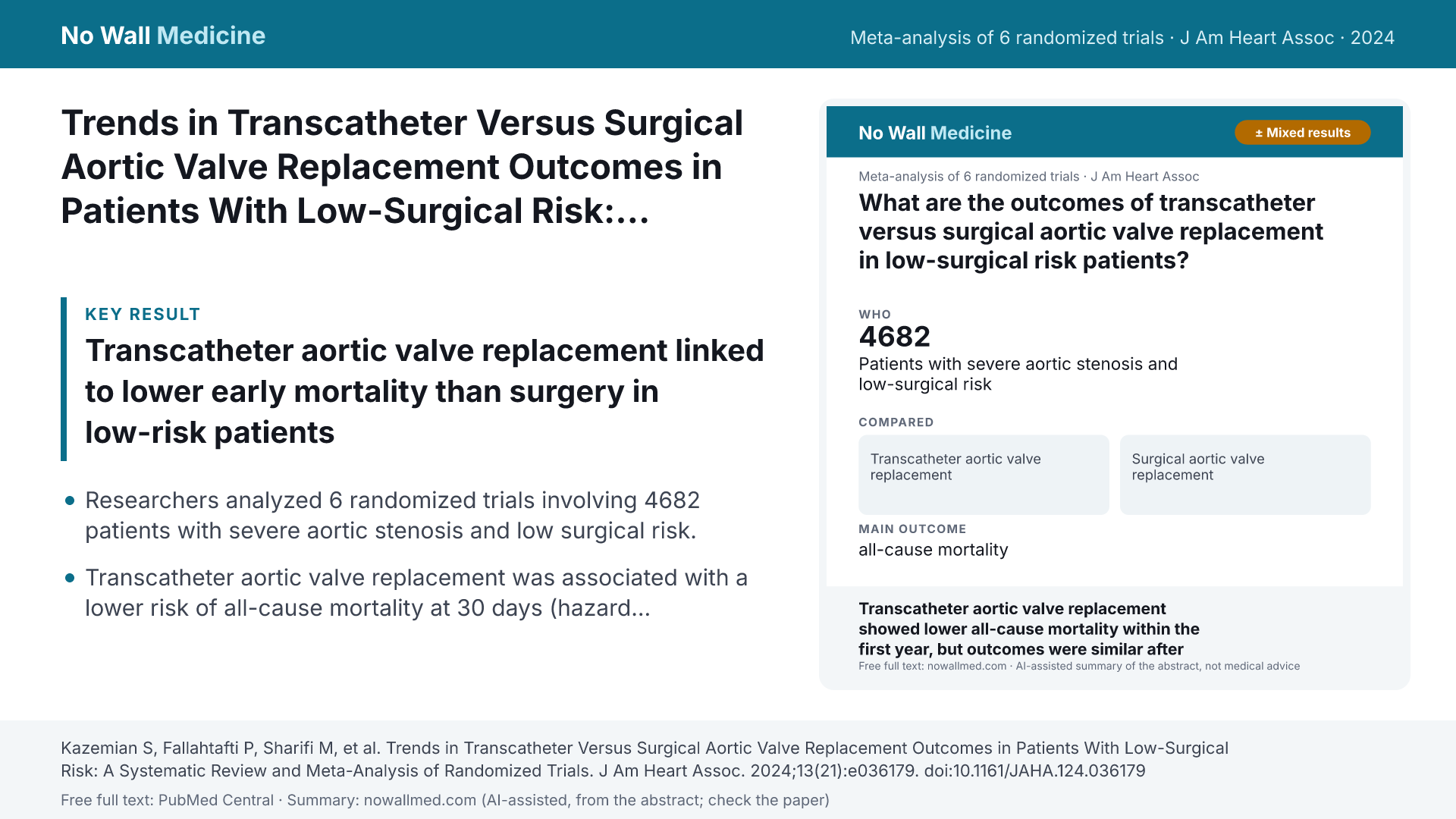
Transcatheter aortic valve replacement linked to lower early mortality than surgery in low-risk patients
Trends in Transcatheter Versus Surgical Aortic Valve Replacement Outcomes in Patients With Low-Surgical Risk: A Systematic Review and Meta-Analysis of Randomized Trials
Meta-analysis of 6 randomized trialsMixed results
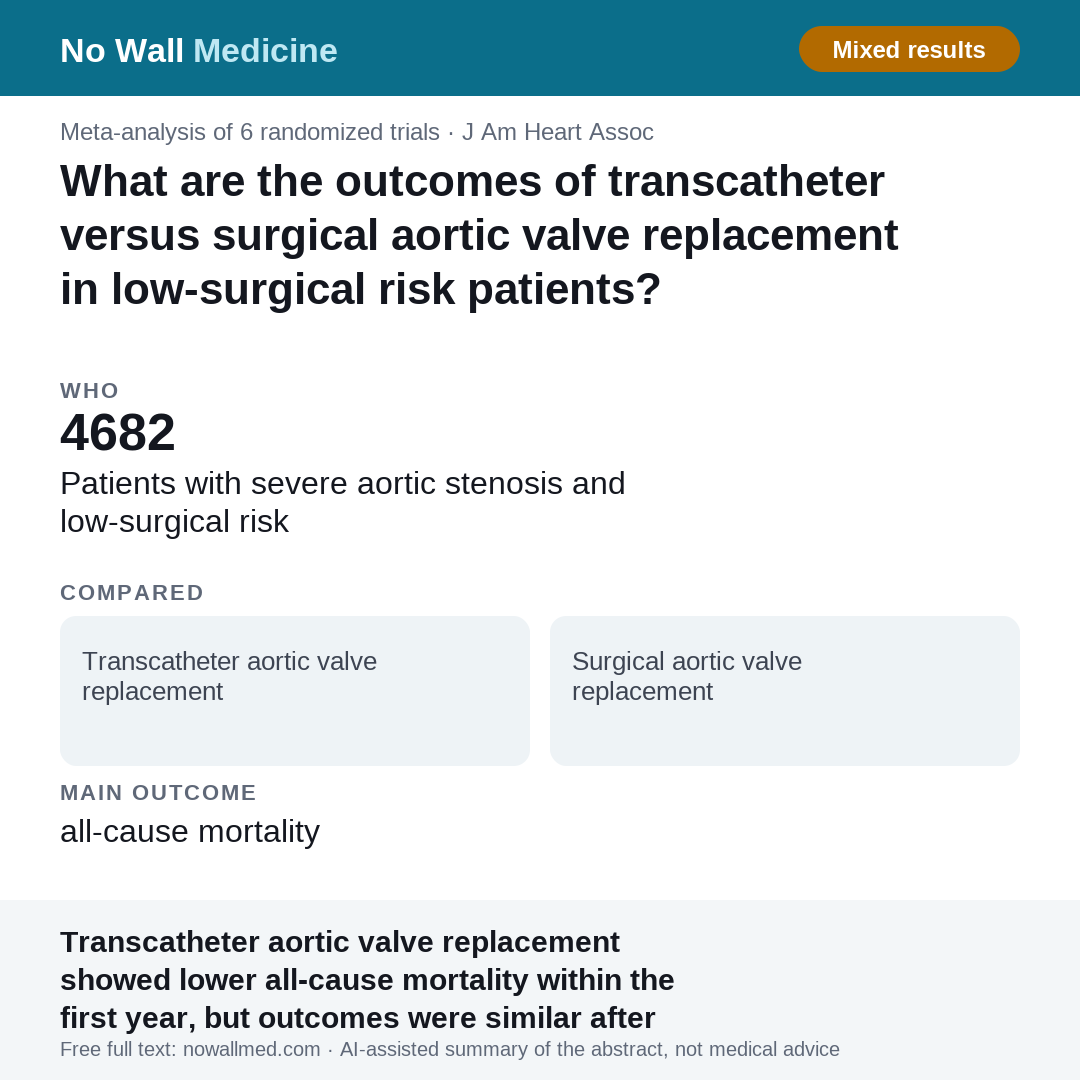
What are the outcomes of transcatheter versus surgical aortic valve replacement in low-surgical risk patients?
Who
4682
Patients with severe aortic stenosis and low-surgical risk
Compared
Transcatheter aortic valve replacement
Surgical aortic valve replacement
Main outcome
all-cause mortality
Result: hazard ratio 0.45 (95% CI 0.26-0.77) at 30-day follow-up
Bottom line: Transcatheter aortic valve replacement showed lower all-cause mortality within the first year, but outcomes were similar after one year.
J Am Heart Assoc · 2024-10-18Download image
Clinical question: What are the outcomes of transcatheter versus surgical aortic valve replacement in low-surgical risk patients?
Why it matters: Long-term outcomes for transcatheter aortic valve replacement compared to surgical aortic valve replacement in patients with low surgical risk were not well established.
Key points
- Researchers analyzed 6 randomized trials involving 4682 patients with severe aortic stenosis and low surgical risk.
- Transcatheter aortic valve replacement was associated with a lower risk of all-cause mortality at 30 days (hazard ratio 0.45) and up to 1 year (hazard ratio 0.55).
- At follow-ups longer than 1 year, the risk of all-cause mortality was similar between the two procedures.
Headline and key points written with AI from the paper’s abstract, with every number checked against it. Read the paper before relying on them.
Was this summary helpful?
Subject terms
Cite this article
Kazemian S, Fallahtafti P, Sharifi M, Mohammadi NSH, Soleimani H, Moghadam AS. Trends in Transcatheter Versus Surgical Aortic Valve Replacement Outcomes in Patients With Low-Surgical Risk: A Systematic Review and Meta-Analysis of Randomized Trials. J Am Heart Assoc. 2024. doi:10.1161/JAHA.124.036179
Spotted a mistake? Suggest a correction