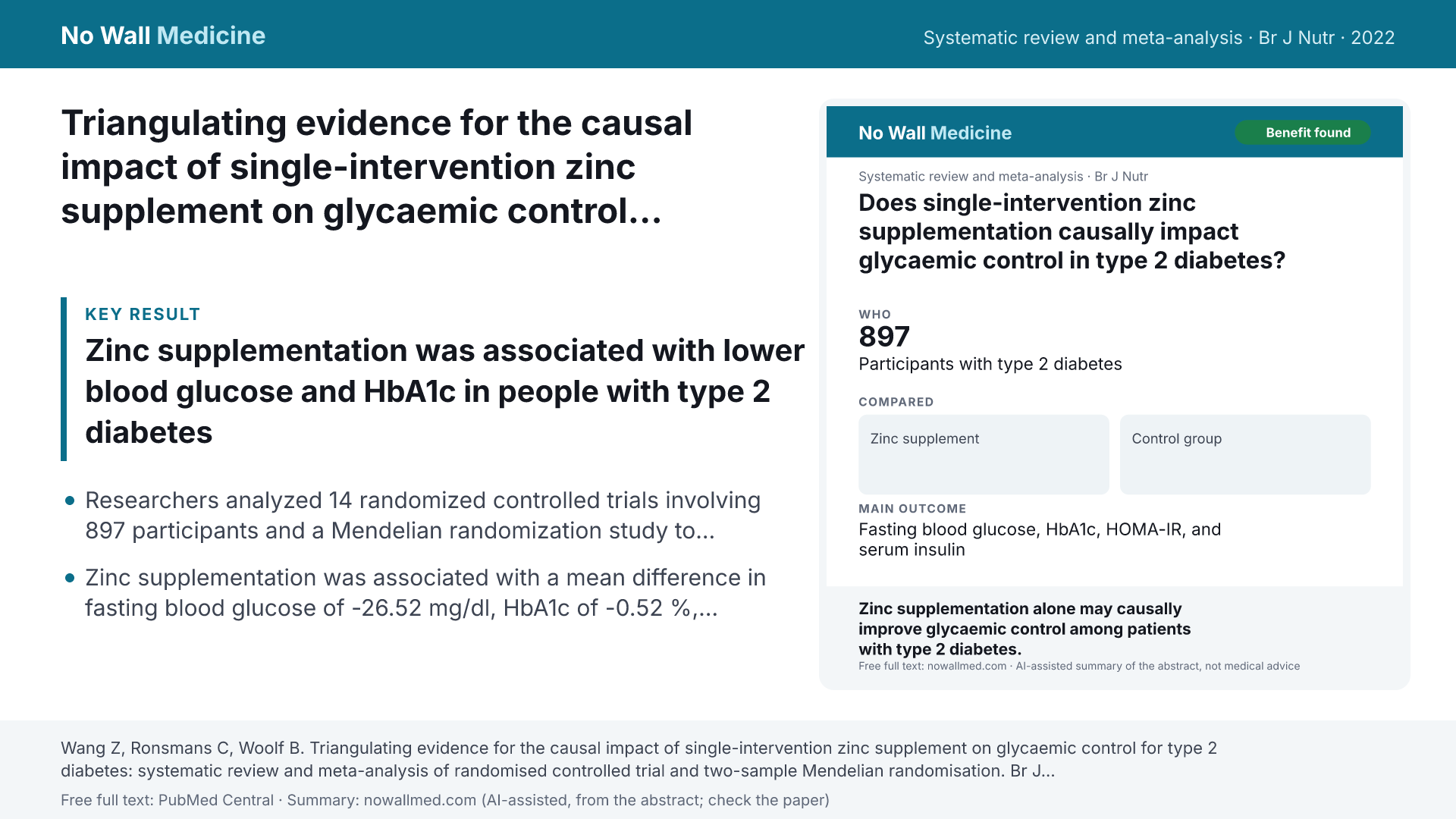
Zinc supplementation was associated with lower blood glucose and HbA1c in people with type 2 diabetes
Triangulating evidence for the causal impact of single-intervention zinc supplement on glycaemic control for type 2 diabetes: systematic review and meta-analysis of randomised controlled trial and two-sample Mendelian randomisation
Systematic review and meta-analysisBenefit found
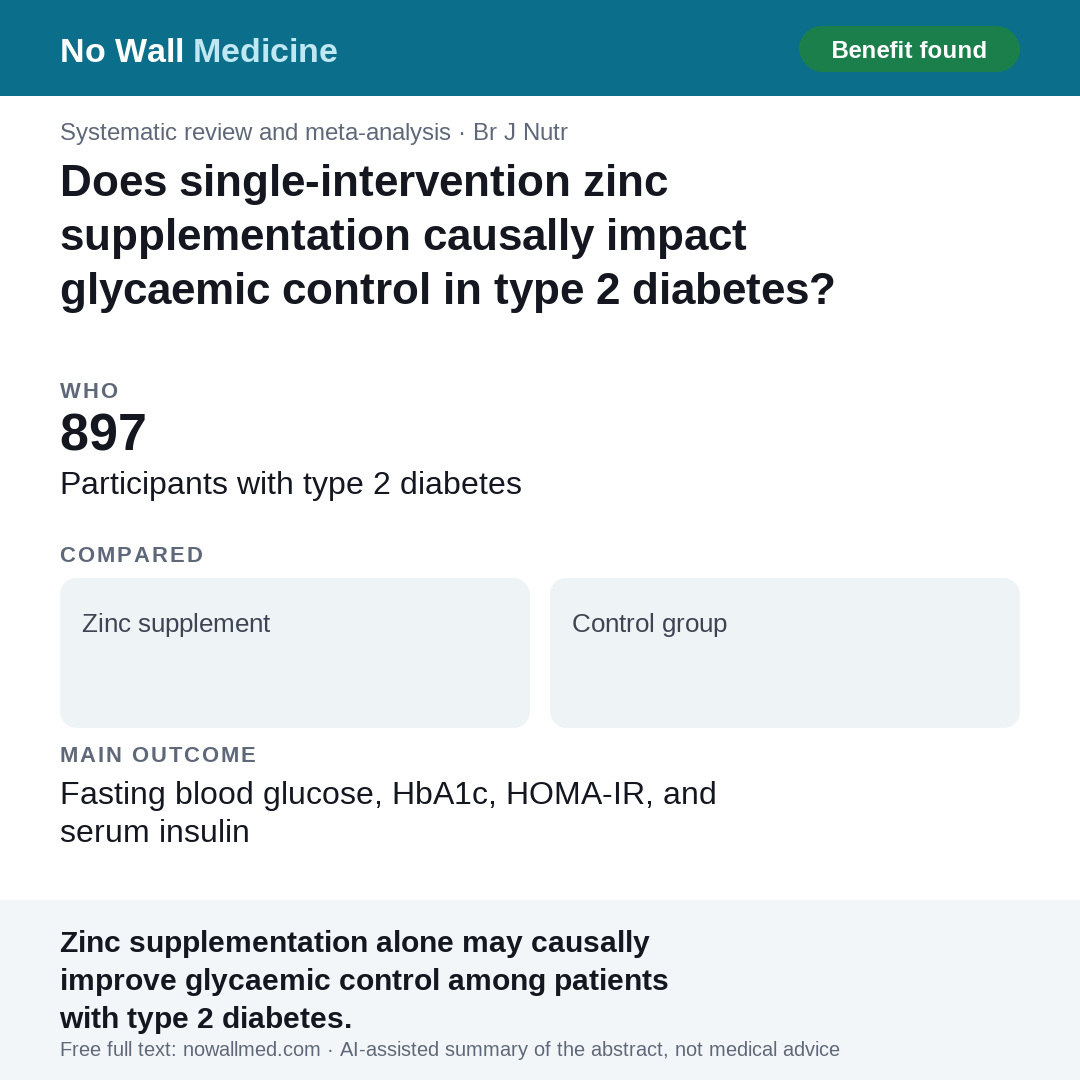
Does single-intervention zinc supplementation causally impact glycaemic control in type 2 diabetes?
Who
897
Participants with type 2 diabetes
Compared
Zinc supplement
Control group
Main outcome
Fasting blood glucose, HbA1c, HOMA-IR, and serum insulin
Result: mean difference -26·52 mg/dl (95 % CI -35·13, -17·91) for fasting blood glucose
Bottom line: Zinc supplementation alone may causally improve glycaemic control among patients with type 2 diabetes.
Limitation: Small number of studies and single-nucleotide polymorphisms included in the analysis.
Br J Nutr · 2022-08-10Download image
Clinical question: Does single-intervention zinc supplementation causally impact glycaemic control in type 2 diabetes?
Why it matters: The unitary causal effect of zinc as a single intervention on glycemic control for type 2 diabetes remains inconclusive.
Key points
- Researchers analyzed 14 randomized controlled trials involving 897 participants and a Mendelian randomization study to assess the effect of zinc alone on diabetes control.
- Zinc supplementation was associated with a mean difference in fasting blood glucose of -26.52 mg/dl, HbA1c of -0.52 %, and HOMA-IR (a measure of insulin resistance) of -1.65.
- In the Mendelian randomization analysis, zinc supplementation with two single-nucleotide polymorphisms was associated with a fasting glucose reduction of -2.04 mmol/l.
Limitation the authors note: The findings are limited by power from the small number of studies and single-nucleotide polymorphisms included in the analysis.
Headline and key points written with AI from the paper’s abstract, with every number checked against it. Read the paper before relying on them.
Was this summary helpful?
Subject terms
Cite this article
Wang Z, Ronsmans C, Woolf B. Triangulating evidence for the causal impact of single-intervention zinc supplement on glycaemic control for type 2 diabetes: systematic review and meta-analysis of randomised controlled trial and two-sample Mendelian randomisation. Br J Nutr. 2022. doi:10.1017/S0007114522002616
Spotted a mistake? Suggest a correction