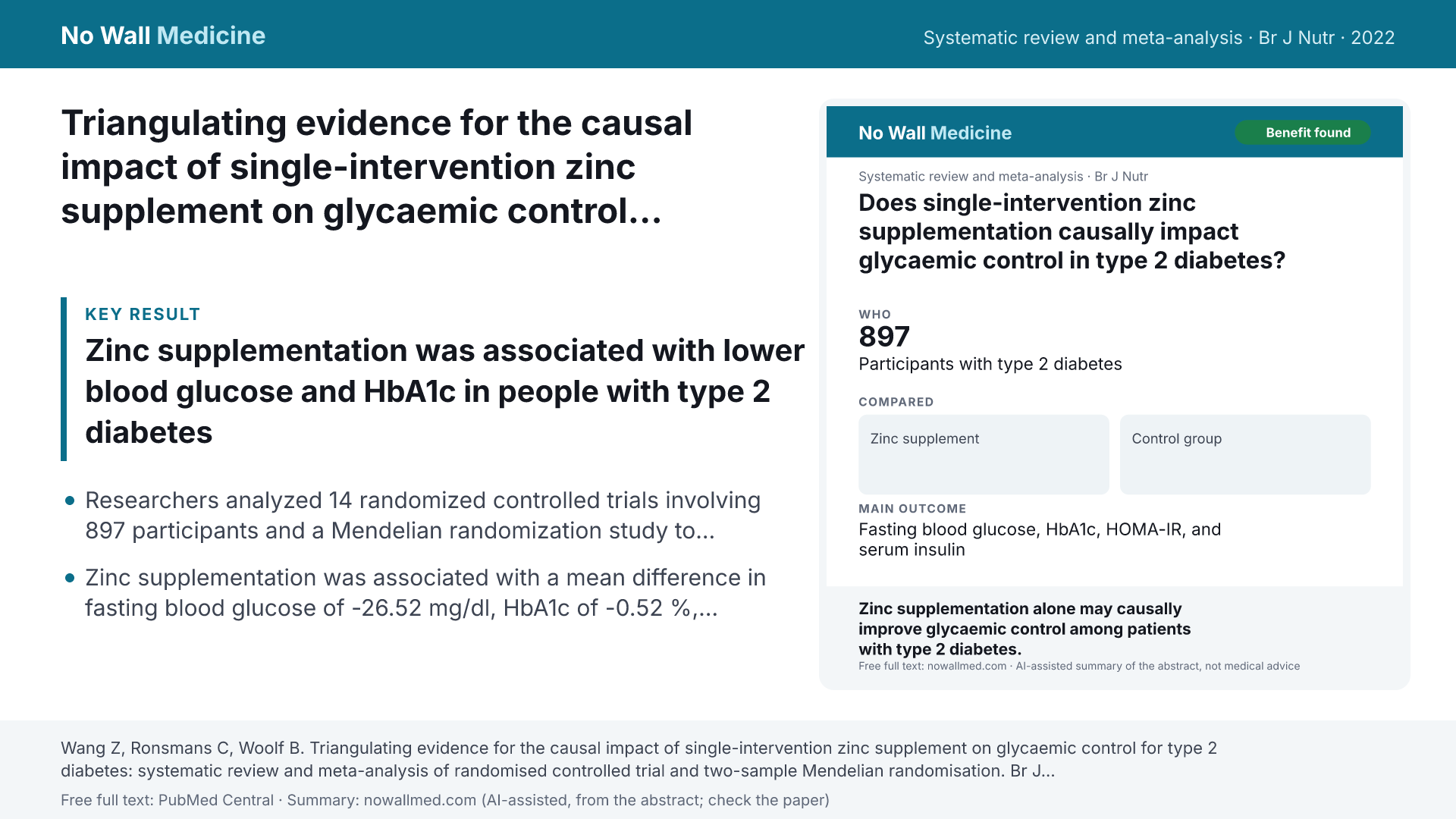
Triangulating evidence for the causal impact of single-intervention zinc supplement on glycaemic control for type 2 diabetes: systematic review and meta-analysis of randomised controlled trial and two-sample Mendelian randomisation
Key result: Zinc supplementation was associated with lower blood glucose and HbA1c in people with type 2 diabetes
Key points
- Researchers analyzed 14 randomized controlled trials involving 897 participants and a Mendelian randomization study to assess the effect of zinc alone on diabetes control.
- Zinc supplementation was associated with a mean difference in fasting blood glucose of -26.52 mg/dl, HbA1c of -0.52 %, and HOMA-IR (a measure of insulin resistance) of -1.65.
- In the Mendelian randomization analysis, zinc supplementation with two single-nucleotide polymorphisms was associated with a fasting glucose reduction of -2.04 mmol/l.
Why it matters: The unitary causal effect of zinc as a single intervention on glycemic control for type 2 diabetes remains inconclusive.
Limitation the authors note: The findings are limited by power from the small number of studies and single-nucleotide polymorphisms included in the analysis.
Discussion prompts
- Would these patients look like yours? Who was left out?
- Is the main outcome one that matters to patients?
- Is the difference large enough to change what you do?
Cite: Wang Z, Ronsmans C, Woolf B. Triangulating evidence for the causal impact of single-intervention zinc supplement on glycaemic control for type 2 diabetes: systematic review and meta-analysis of randomised controlled trial and two-sample Mendelian randomisation. Br J Nutr. 2023;129(11):1929-1944. doi:10.1017/S0007114522002616
Free full text: PubMed Central · Summary and visual abstract: nowallmed.com/a/triangulating-evidence-for-the-causal-impact-of-single-intervention-1z00wwi/ (AI-assisted from the abstract; check the paper before relying on it).