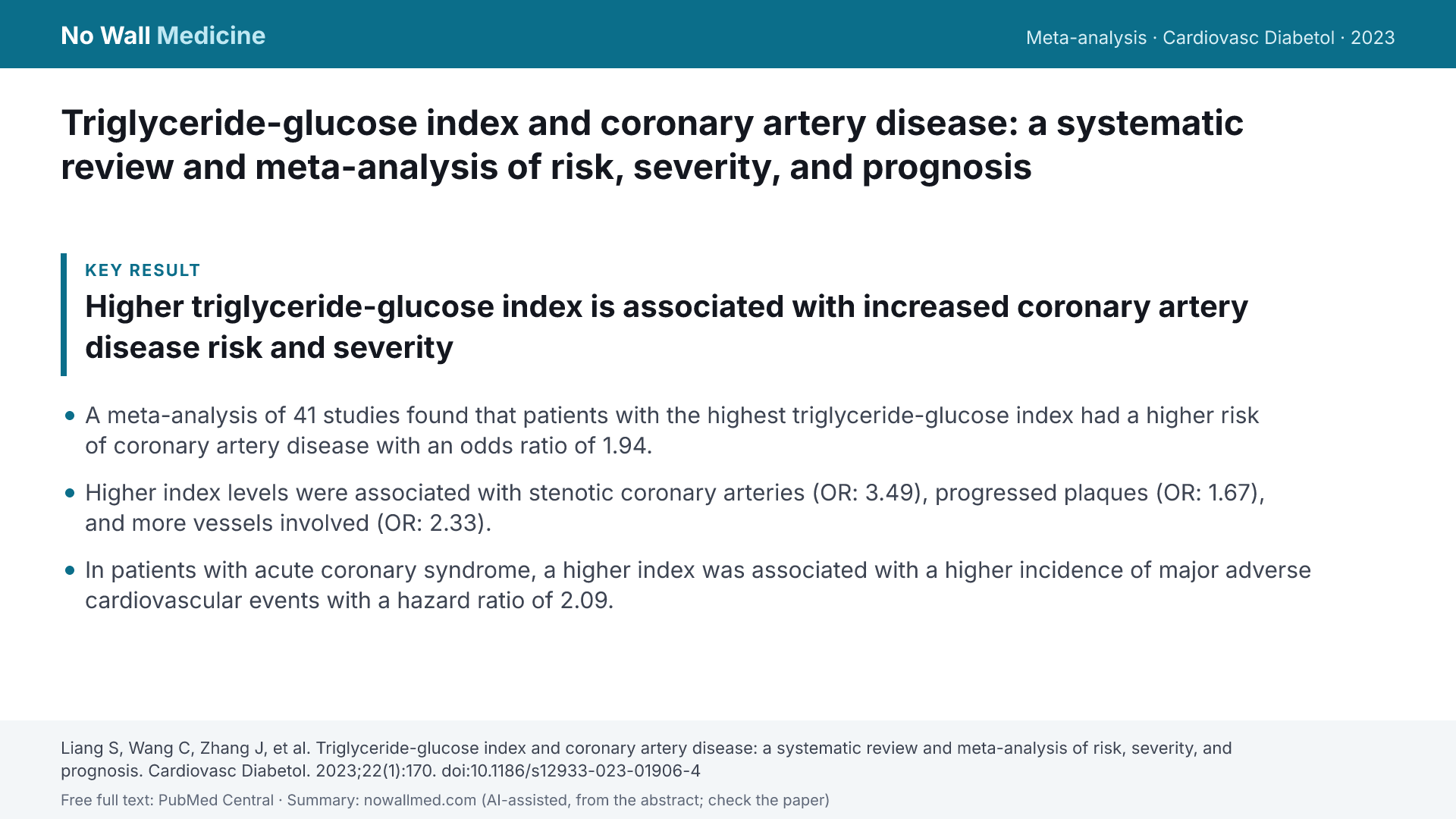
Higher triglyceride-glucose index is associated with increased coronary artery disease risk and severity
Triglyceride-glucose index and coronary artery disease: a systematic review and meta-analysis of risk, severity, and prognosis
Why it matters: The relationship between the triglyceride-glucose index, an indicator of insulin resistance, and the risk, severity, and prognosis of coronary artery disease was not fully summarized.
Key points
- A meta-analysis of 41 studies found that patients with the highest triglyceride-glucose index had a higher risk of coronary artery disease with an odds ratio of 1.94.
- Higher index levels were associated with stenotic coronary arteries (OR: 3.49), progressed plaques (OR: 1.67), and more vessels involved (OR: 2.33).
- In patients with acute coronary syndrome, a higher index was associated with a higher incidence of major adverse cardiovascular events with a hazard ratio of 2.09.
Headline and key points written with AI from the paper’s abstract, with every number checked against it. Read the paper before relying on them.
Was this summary helpful?
Subject terms
Cite this article
Liang S, Wang C, Zhang J, et al. Triglyceride-glucose index and coronary artery disease: a systematic review and meta-analysis of risk, severity, and prognosis. Cardiovasc Diabetol. 2023. doi:10.1186/s12933-023-01906-4
Spotted a mistake? Suggest a correction