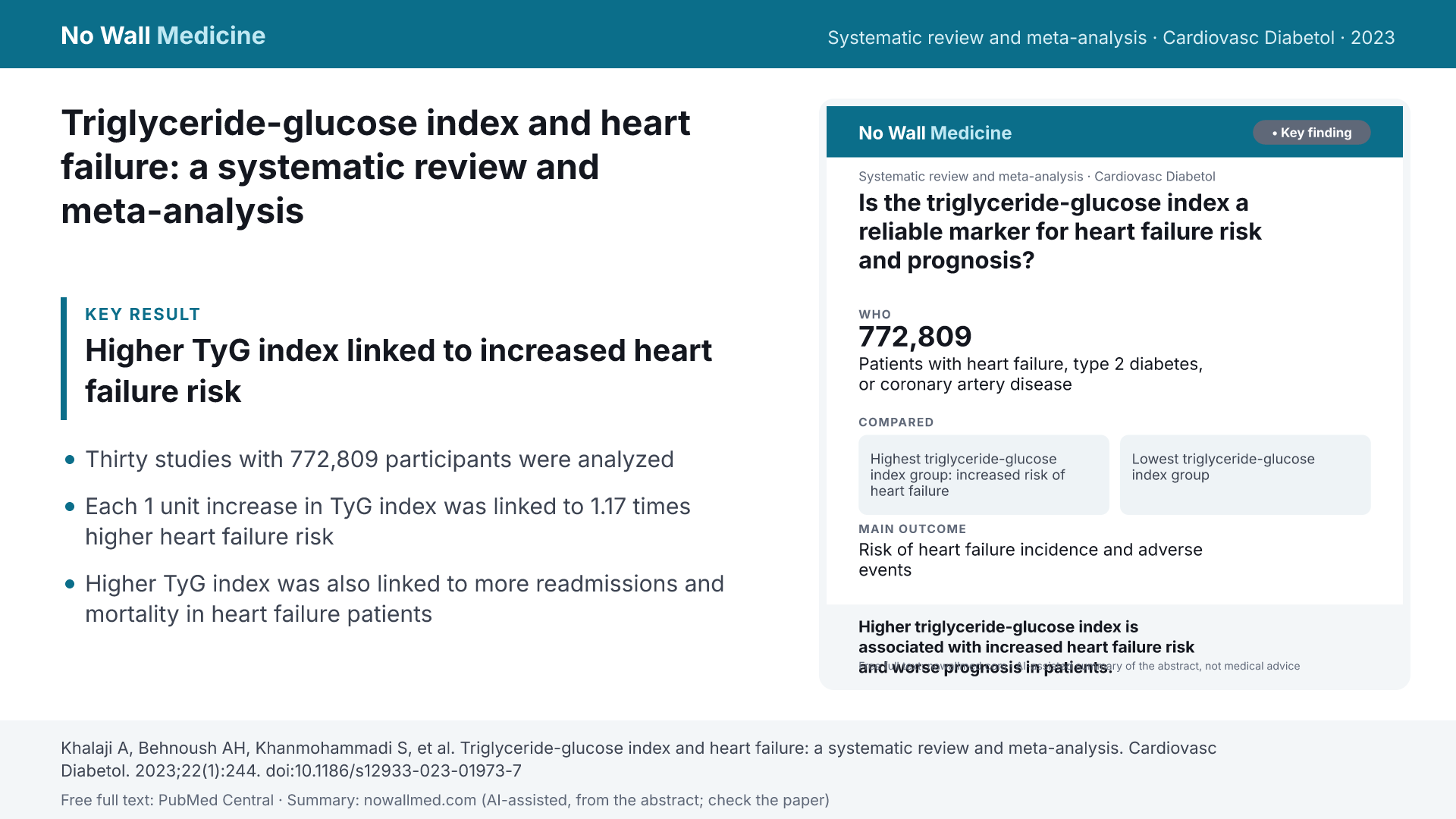
Triglyceride-glucose index and heart failure: a systematic review and meta-analysis
Key result: Higher TyG index linked to increased heart failure risk
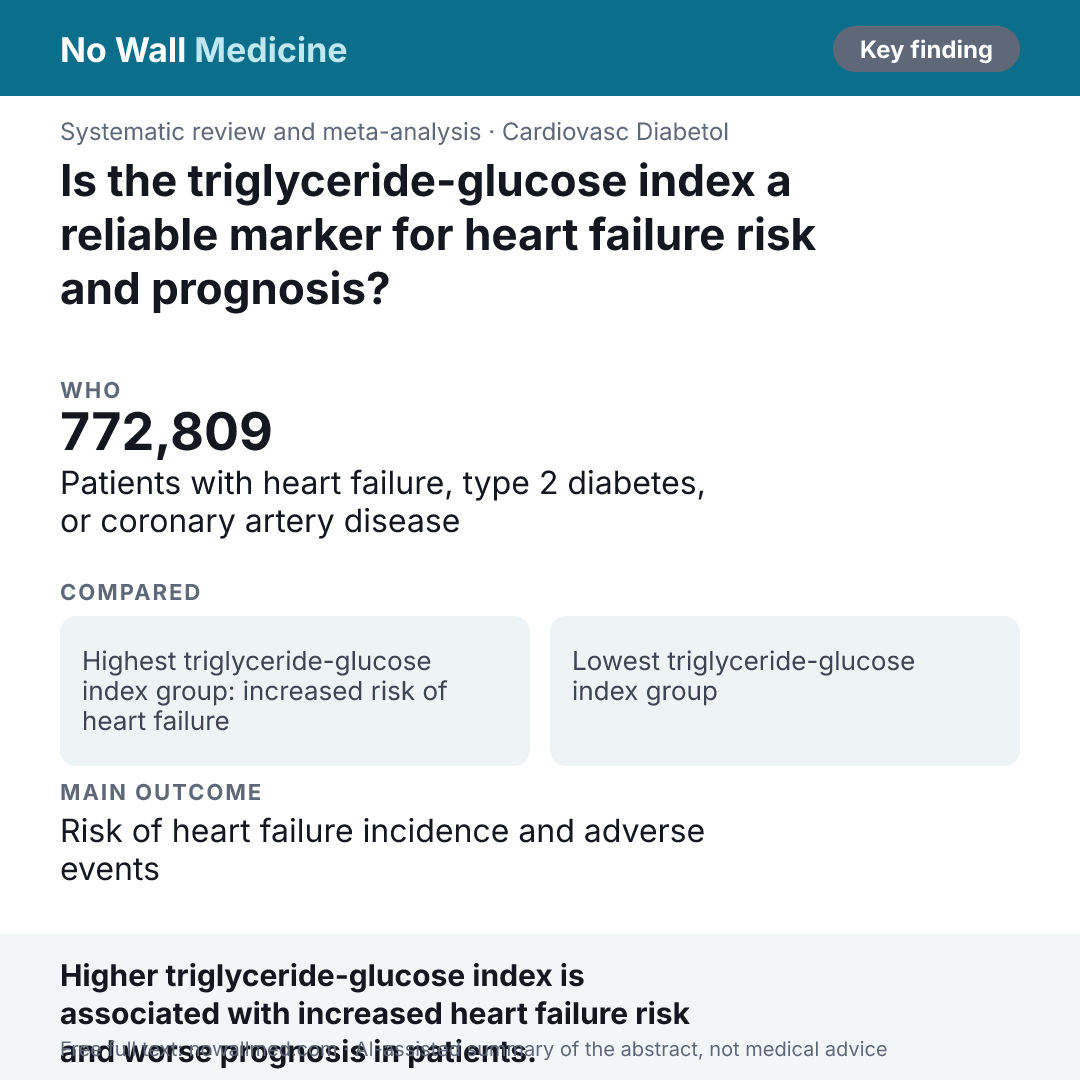
Systematic review and meta-analysisKey finding
Is the triglyceride-glucose index a reliable marker for heart failure risk and prognosis?
Who
772,809
Patients with heart failure, type 2 diabetes, or coronary artery disease
Compared
Highest triglyceride-glucose index group: increased risk of heart failure
Lowest triglyceride-glucose index group
Main outcome
Risk of heart failure incidence and adverse events
Result: hazard ratio 1.21 (95% CI 1.14 to 1.29)
Bottom line: Higher triglyceride-glucose index is associated with increased heart failure risk and worse prognosis in patients.
Cardiovasc Diabetol · 2023-09-07 · Save PNG
Key points
- Thirty studies with 772,809 participants were analyzed.
- Each 1 unit increase in TyG index was linked to 1.17 times higher heart failure risk.
- Higher TyG index was also linked to more readmissions and mortality in heart failure patients.
Discussion prompts
- Would these patients look like yours? Who was left out?
- Is the main outcome one that matters to patients?
- Is the difference large enough to change what you do?
Cite: Khalaji A, Behnoush AH, Khanmohammadi S, et al. Triglyceride-glucose index and heart failure: a systematic review and meta-analysis. Cardiovasc Diabetol. 2023;22(1):244. doi:10.1186/s12933-023-01973-7
Free full text: PubMed Central · Summary and visual abstract: nowallmed.com/a/triglyceride-glucose-index-and-heart-failure-a-systematic-review-and-325wmb/ (AI-assisted from the abstract; check the paper before relying on it).