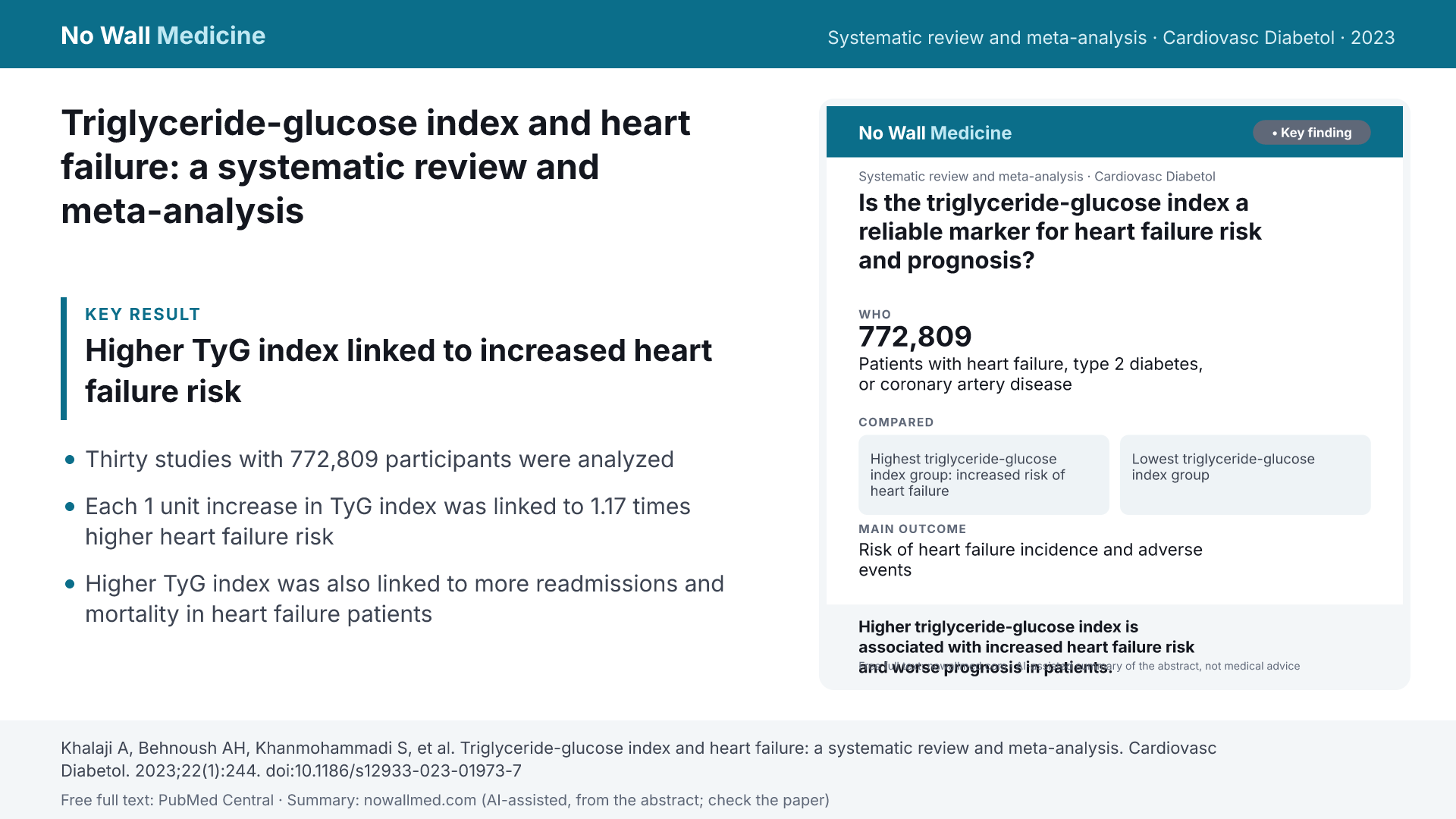
Higher TyG index linked to increased heart failure risk
Triglyceride-glucose index and heart failure: a systematic review and meta-analysis
Systematic review and meta-analysisBenefit found
Is the triglyceride-glucose index a reliable marker for heart failure risk and prognosis?
Who
772,809
Patients with heart failure, type 2 diabetes, or coronary artery disease
Compared
Highest triglyceride-glucose index group: increased risk of heart failure
Lowest triglyceride-glucose index group
Main outcome
Risk of heart failure incidence and adverse events
Result: hazard ratio 1.21 (95% CI 1.14 to 1.29)
Bottom line: Higher triglyceride-glucose index is associated with increased heart failure risk and worse prognosis in patients.
Cardiovasc Diabetol · 2023-09-07Download image
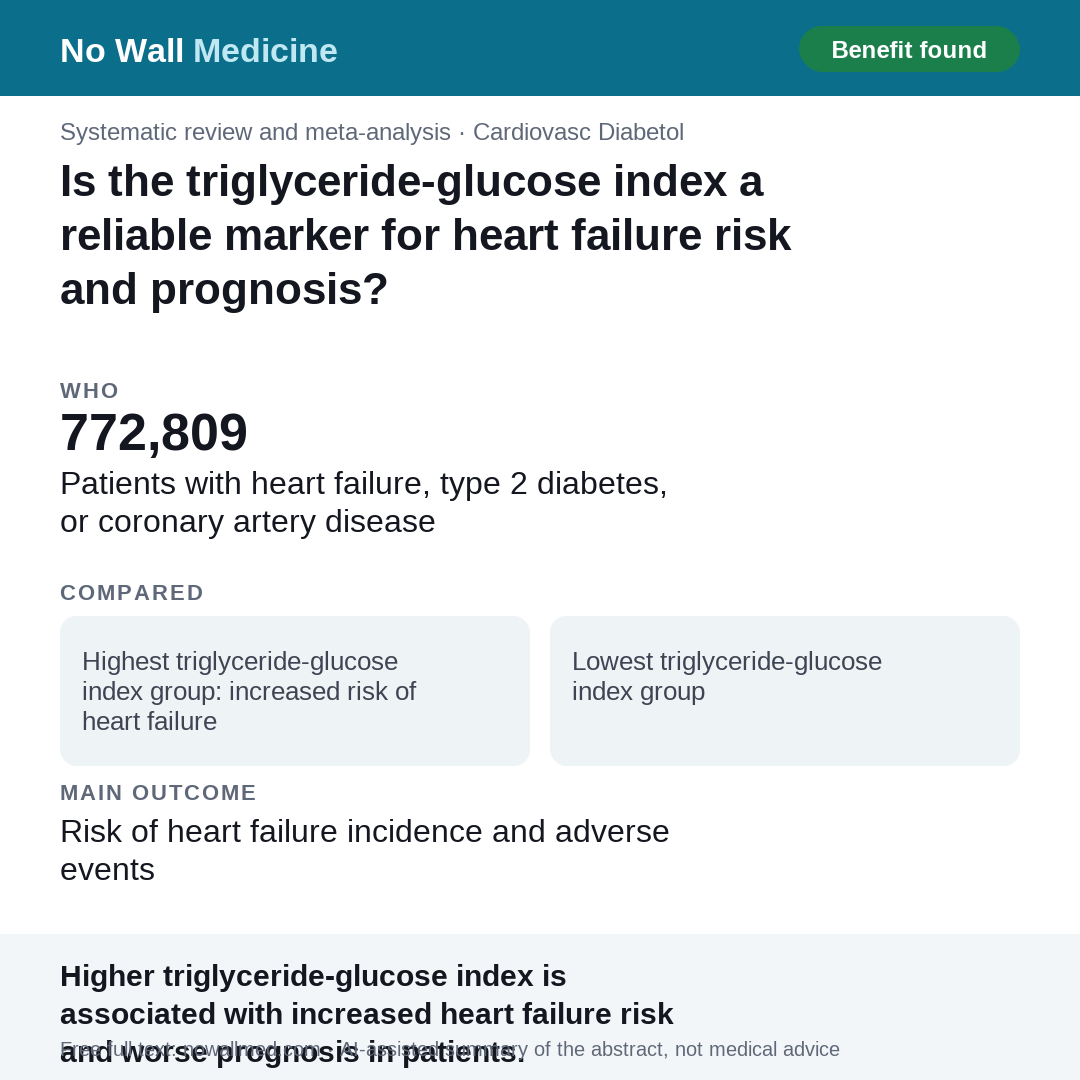
Clinical question: Is the triglyceride-glucose index a reliable marker for heart failure risk and prognosis?
Why it matters: Whether TyG index is a reliable marker for heart failure risk was still under debate
Key points
- Thirty studies with 772,809 participants were analyzed.
- Each 1 unit increase in TyG index was linked to 1.17 times higher heart failure risk.
- Higher TyG index was also linked to more readmissions and mortality in heart failure patients.
Headline and key points written with AI from the paper’s abstract, with every number checked against it. Read the paper before relying on them.
Was this summary helpful?
Subject terms
Cite this article
Khalaji A, Behnoush AH, Khanmohammadi S, et al. Triglyceride-glucose index and heart failure: a systematic review and meta-analysis. Cardiovasc Diabetol. 2023. doi:10.1186/s12933-023-01973-7
Spotted a mistake? Suggest a correction