Trimethoprim use was associated with high potassium levels in a systematic review and meta-analysis
Trimethoprim-associated hyperkalaemia: a systematic review and meta-analysis
Systematic review and meta-analysisHarm found
What is the prevalence and risk factors of trimethoprim-associated hyperkalaemia?
Who
Patients receiving trimethoprim treatment
Compared
22%Potassium >5.0 mmol/L
10%Potassium >5.5 mmol/L
0.2%Potassium >6.0 mmol/L or symptomatic
Main outcome
Prevalence of hyperkalaemia
Bottom line: Trimethoprim is associated with hyperkalaemia, especially with high doses, poor kidney function, or concurrent hyperkalaemic medications.
J Antimicrob Chemother · 2022-08-27Download image
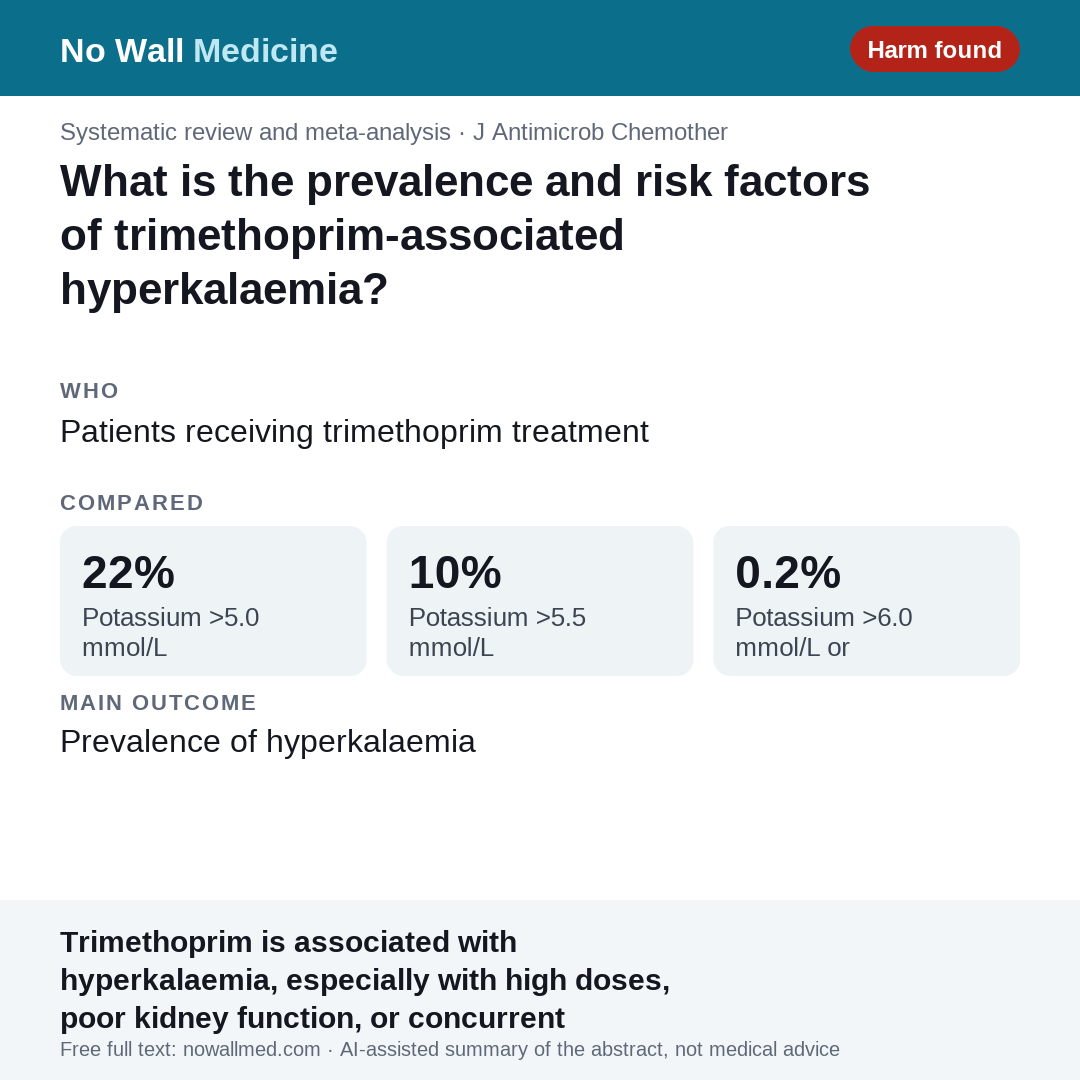
Clinical question: What is the prevalence and risk factors of trimethoprim-associated hyperkalaemia?
Why it matters: The prevalence and specific risk factors for trimethoprim-associated hyperkalaemia, or high blood potassium, have not been extensively addressed.
Key points
- Researchers analyzed 18 reports involving at least 10 subjects each to determine the prevalence of high blood potassium levels during trimethoprim treatment.
- The pooled prevalence of potassium levels above 5.0 mmol/L, 5.5 mmol/L, and 6.0 mmol/L or symptomatic cases was 22%, 10%, and 0.2% respectively.
- High potassium levels were associated with higher doses, poor kidney function, and use of drugs like beta-blockers or non-steroidal anti-inflammatory agents.
Headline and key points written with AI from the paper’s abstract, with every number checked against it. Read the paper before relying on them.
Was this summary helpful?
Subject terms
Cite this article
Faré PB, Memoli E, Treglia G, Bianchetti MG, Milani GP, Marchisio P. Trimethoprim-associated hyperkalaemia: a systematic review and meta-analysis. J Antimicrob Chemother. 2022. doi:10.1093/jac/dkac262
Spotted a mistake? Suggest a correction
Top studies every Monday
The week’s key trials and guidelines in your specialties, plus any topics you follow. By email, free.
Get the weekly digest