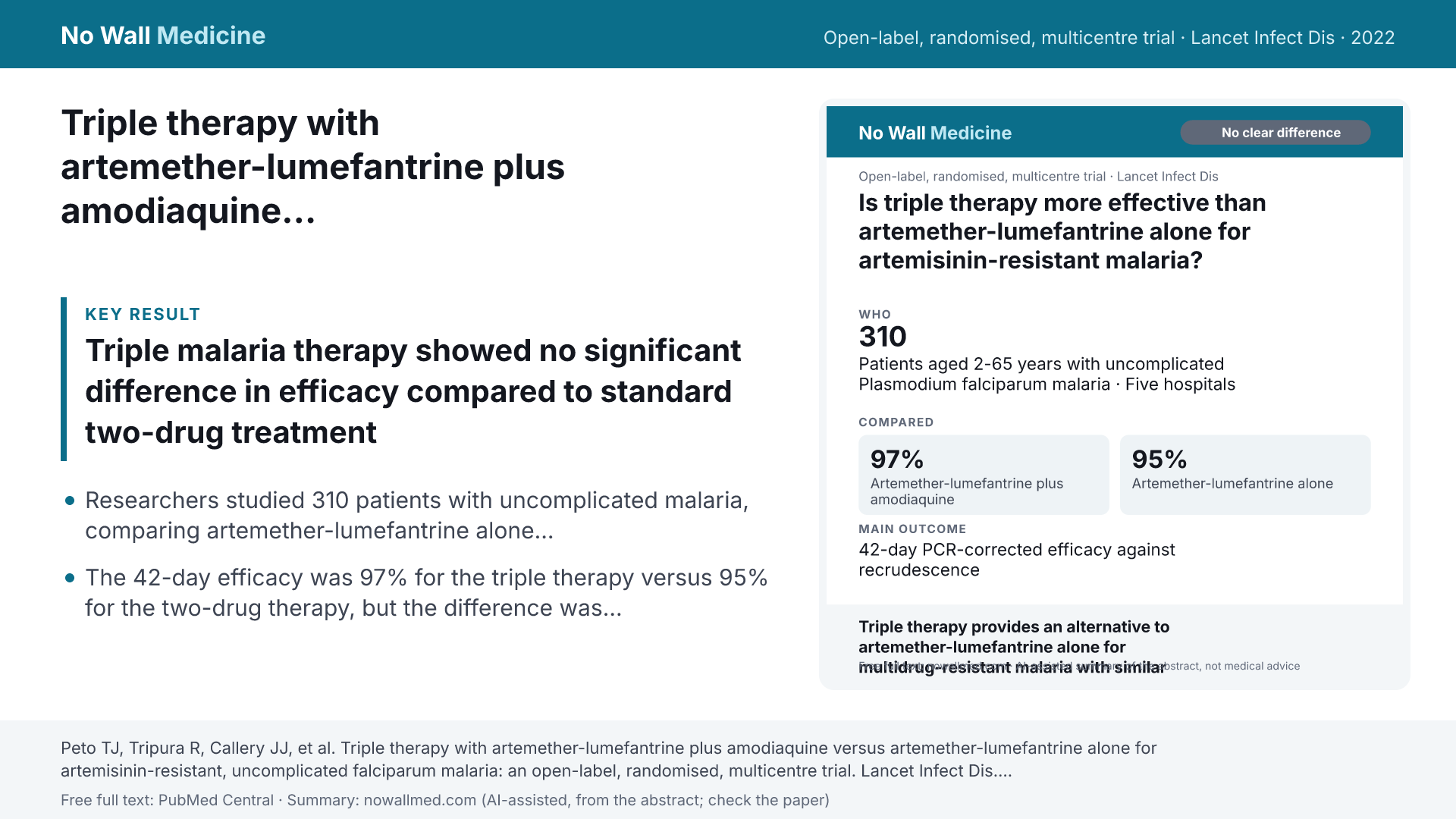
Triple therapy with artemether-lumefantrine plus amodiaquine versus artemether-lumefantrine alone for artemisinin-resistant, uncomplicated falciparum malaria: an open-label, randomised, multicentre trial
Key result: Triple malaria therapy showed no significant difference in efficacy compared to standard two-drug treatment
Key points
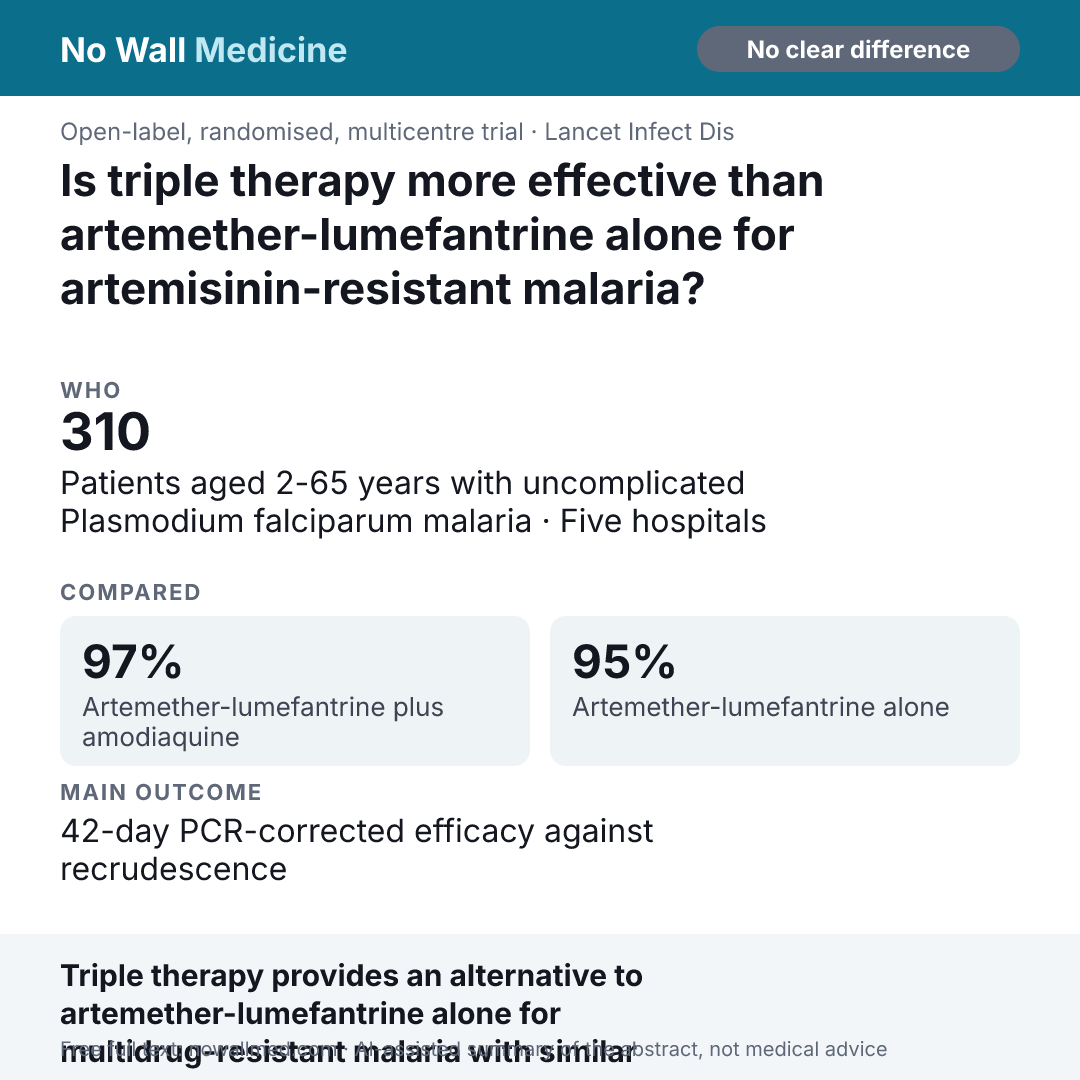
- Researchers studied 310 patients with uncomplicated malaria, comparing artemether-lumefantrine alone to artemether-lumefantrine plus amodiaquine.
- The 42-day efficacy was 97% for the triple therapy versus 95% for the two-drug therapy, but the difference was not statistically significant (p=0.38).
- The triple therapy group had more mild gastrointestinal side effects, including vomiting (8% versus 2%) and nausea (7% versus 2%).
Why it matters: Late treatment failures for malaria have increased in the Greater Mekong subregion due to rising resistance to standard artemisinin-based combination therapies.
Discussion prompts
- Would these patients look like yours? Who was left out?
- Is the main outcome one that matters to patients?
- Is the difference large enough to change what you do?
Cite: Peto TJ, Tripura R, Callery JJ, et al. Triple therapy with artemether-lumefantrine plus amodiaquine versus artemether-lumefantrine alone for artemisinin-resistant, uncomplicated falciparum malaria: an open-label, randomised, multicentre trial. Lancet Infect Dis. 2022;22(6):867-878. doi:10.1016/S1473-3099(21)00692-7
Free full text: PubMed Central · Summary and visual abstract: nowallmed.com/a/triple-therapy-with-artemether-lumefantrine-plus-amodiaquine-versus-1hh3nlq/ (AI-assisted from the abstract; check the paper before relying on it).