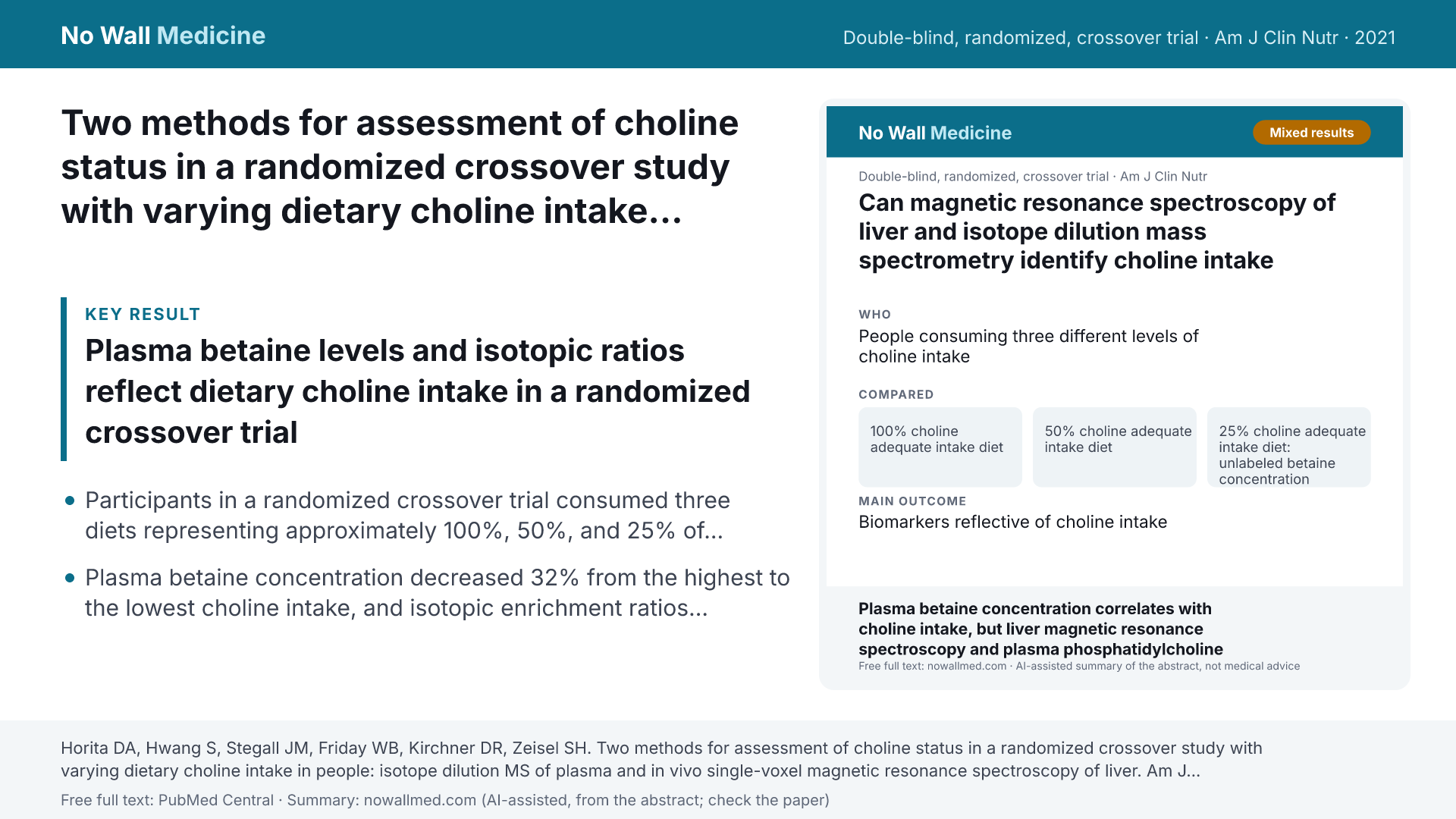
Two methods for assessment of choline status in a randomized crossover study with varying dietary choline intake in people: isotope dilution MS of plasma and in vivo single-voxel magnetic resonance spectroscopy of liver
Key result: Plasma betaine levels and isotopic ratios reflect dietary choline intake in a randomized crossover trial
Key points
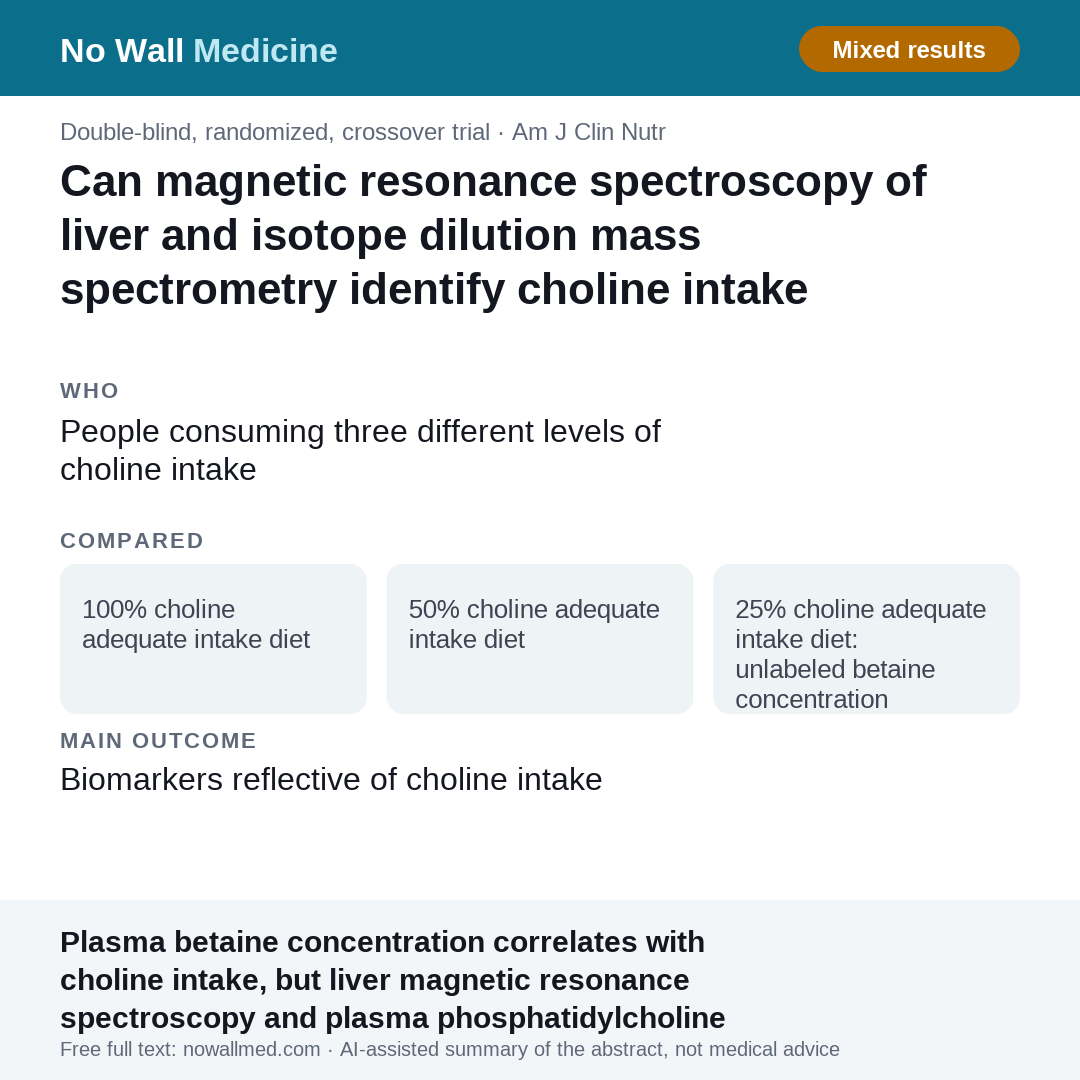
- Participants in a randomized crossover trial consumed three diets representing approximately 100%, 50%, and 25% of the recommended choline intake for 2-wk periods.
- Plasma betaine concentration decreased 32% from the highest to the lowest choline intake, and isotopic enrichment ratios of betaine showed significant between-diet effects (q < 0.0001).
- Liver choline concentrations measured by magnetic resonance spectroscopy and plasma phosphatidylcholine concentrations did not show statistically significant between-diet effects.
Why it matters: Clinical assessment of choline status is difficult because current methods to identify biomarkers reflective of choline intake are not well established.
Limitation the authors note: Variable spectral quality of magnetic resonance spectroscopy limited the interpretation of liver choline measurements.
Discussion prompts
- Would these patients look like yours? Who was left out?
- Is the main outcome one that matters to patients?
- Is the difference large enough to change what you do?
Cite: Horita DA, Hwang S, Stegall JM, Friday WB, Kirchner DR, Zeisel SH. Two methods for assessment of choline status in a randomized crossover study with varying dietary choline intake in people: isotope dilution MS of plasma and in vivo single-voxel magnetic resonance spectroscopy of liver. Am J Clin Nutr. 2021. doi:10.1093/ajcn/nqaa439
Free full text: PubMed Central · Summary and visual abstract: nowallmed.com/a/two-methods-for-assessment-of-choline-status-in-a-randomized-6rubw/ (AI-assisted from the abstract; check the paper before relying on it).