Golimumab treatment was associated with continued metabolic benefits after stopping therapy in young people with type 1 diabetes
Two-Year Follow-up From the T1GER Study: Continued Off-Therapy Metabolic Improvements in Children and Young Adults With New-Onset T1D Treated With Golimumab and Characterization of Responders
Phase 2, placebo-controlled, randomized trialBenefit found
Does golimumab provide continued metabolic improvements after treatment is stopped in new-onset type 1 diabetes?
Who
Children and young adults 6-21 years old with new-onset type 1 diabetes
Compared
golimumab: reductions of 0.31 and 0.41 nmol/L
placebo: reductions of 0.64 and 0.74 nmol/L
Main outcome
C-peptide area under the curve
Bottom line: Golimumab preserved endogenous beta-cell function and metabolic parameters in children and young adults after treatment was stopped.
Diabetes Care · 2022-12-29Download image
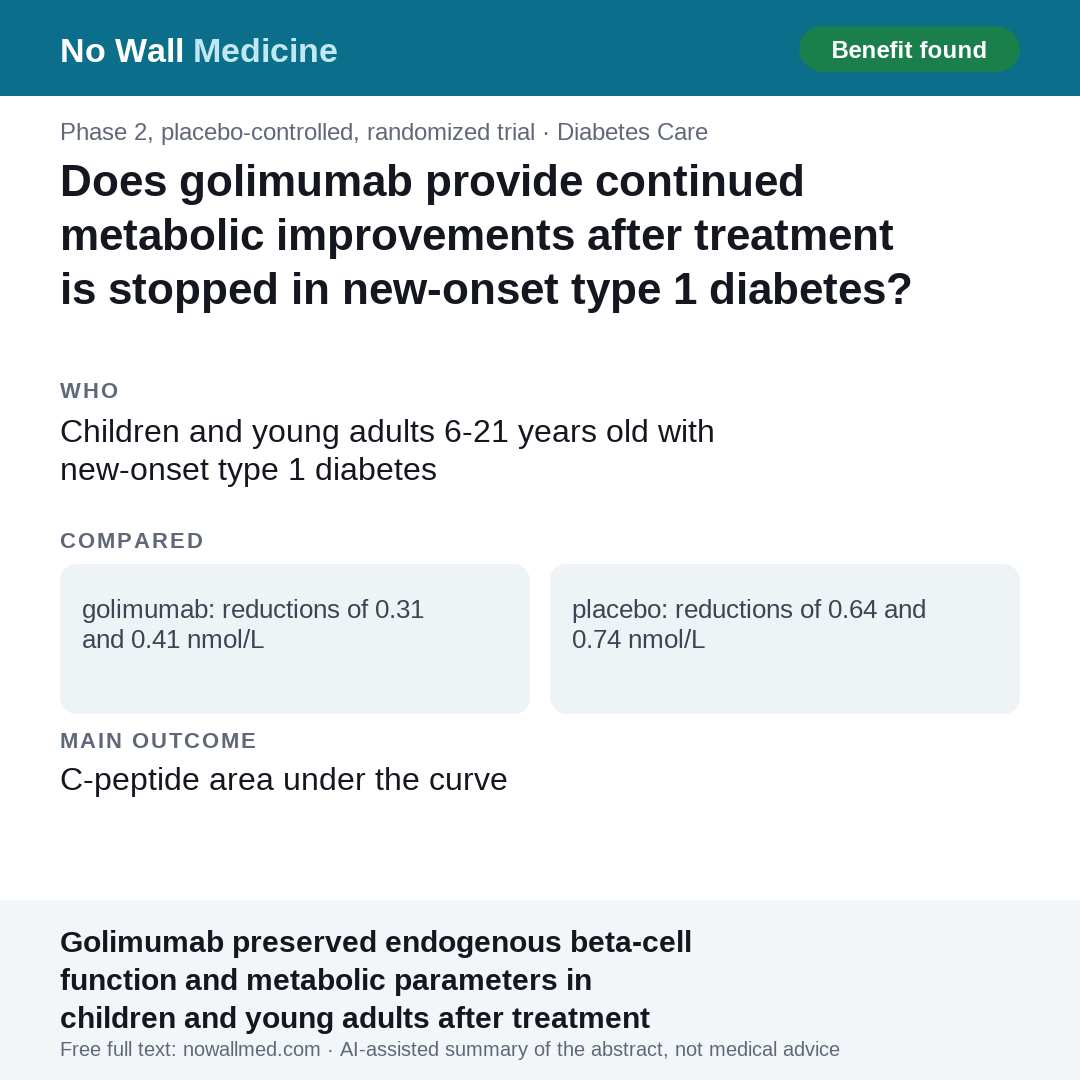
Clinical question: Does golimumab provide continued metabolic improvements after treatment is stopped in new-onset type 1 diabetes?
Why it matters: It was unknown if the metabolic benefits of golimumab, a tumor necrosis factor-alpha blocker, would continue after the medication was stopped.
Key points
- Researchers studied children and young adults aged 6-21 years with new-onset type 1 diabetes in a randomized trial comparing golimumab to a placebo.
- After stopping treatment, the golimumab group had lower reductions in 4-hour C-peptide area under the curve (a measure of insulin production) at 0.31 and 0.41 nmol/L compared to 0.64 and 0.74 nmol/L in the placebo group.
- Responders to the treatment showed greater metabolic improvements and less hypoglycemia, which is low blood sugar, during the off-therapy period.
Headline and key points written with AI from the paper’s abstract, with every number checked against it. Read the paper before relying on them.
Was this summary helpful?
Subject terms
Cite this article
Rigby MR, Hayes B, Li Y, Vercruysse F, Hedrick JA, Quattrin T. Two-Year Follow-up From the T1GER Study: Continued Off-Therapy Metabolic Improvements in Children and Young Adults With New-Onset T1D Treated With Golimumab and Characterization of Responders. Diabetes Care. 2022. doi:10.2337/dc22-0908
Spotted a mistake? Suggest a correction
Top studies every Monday
The week’s key trials and guidelines in your specialties, plus any topics you follow. By email, free.
Get the weekly digest