Molecular profiles in immune cells differ between children who respond to peanut oral immunotherapy and those who do not
Understanding the Variability of Peanut-Oral Immunotherapy Responses by Multi-Omics Profiling of Immune Cells
Placebo-controlled trial with multi-omics profilingMixed results
What molecular drivers determine responsiveness to peanut oral immunotherapy in allergic children?
Who
Peanut-allergic children undergoing oral immunotherapy
Compared
Complete responders: tolerating 4500 mg of peanut protein
Incomplete responders: tolerated ≤ 1000 mg of peanut protein
Main outcome
Peanut oral immunotherapy responsiveness and molecular profiles
Bottom line: Multi-omics profiling identifies gastrointestinal immune mechanisms and molecular biomarkers that differentiate peanut oral immunotherapy responders from non-responders.
Allergy · 2025-07-22Download image
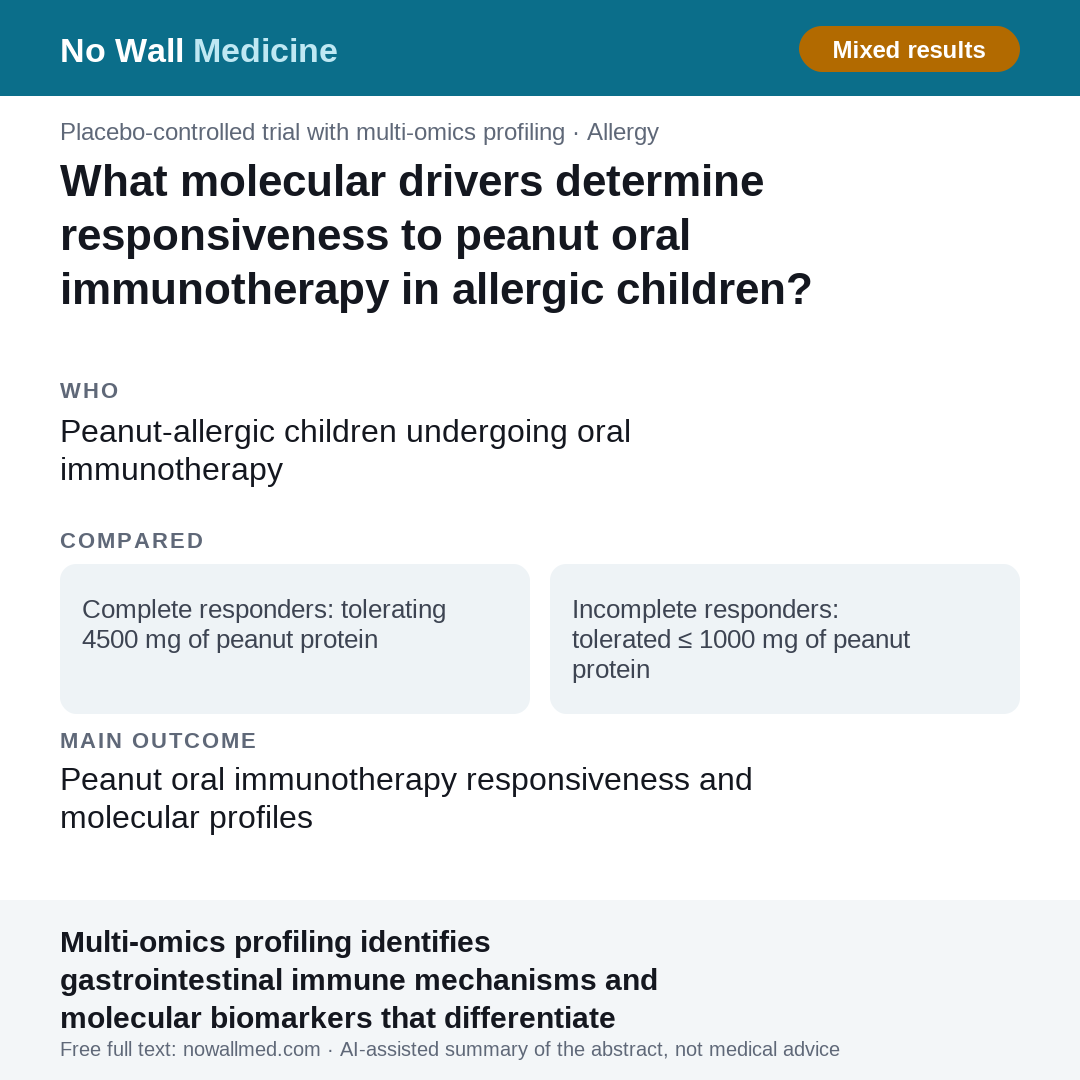
Clinical question: What molecular drivers determine responsiveness to peanut oral immunotherapy in allergic children?
Why it matters: Between 15% to 30% of patients do not respond to peanut oral immunotherapy, and the treatment carries a risk of severe allergic reactions.
Key points
- Researchers analyzed immune cells from children with peanut allergies undergoing oral immunotherapy, which is a treatment to build tolerance to peanut protein.
- Complete responders who tolerated 4500 mg of peanut protein had lower pre-treatment peanut-specific IgE (an allergy-related antibody) and lower IL-4 and IL-5 cytokine production than incomplete responders.
- The study identified 184 differentially expressed genes and 1001 differentially methylated genes associated with the variation in treatment response.
Headline and key points written with AI from the paper’s abstract, with every number checked against it. Read the paper before relying on them.
Was this summary helpful?
Subject terms
Cite this article
Arnau-Soler A, Ashley SE, Ghauri A, Jeanrenaud ACSN, Marenholz I, Blumchen K. Understanding the Variability of Peanut-Oral Immunotherapy Responses by Multi-Omics Profiling of Immune Cells. Allergy. 2025. doi:10.1111/all.16627
Spotted a mistake? Suggest a correction
Top studies every Monday
The week’s key trials and guidelines in your specialties, plus any topics you follow. By email, free.
Get the weekly digest