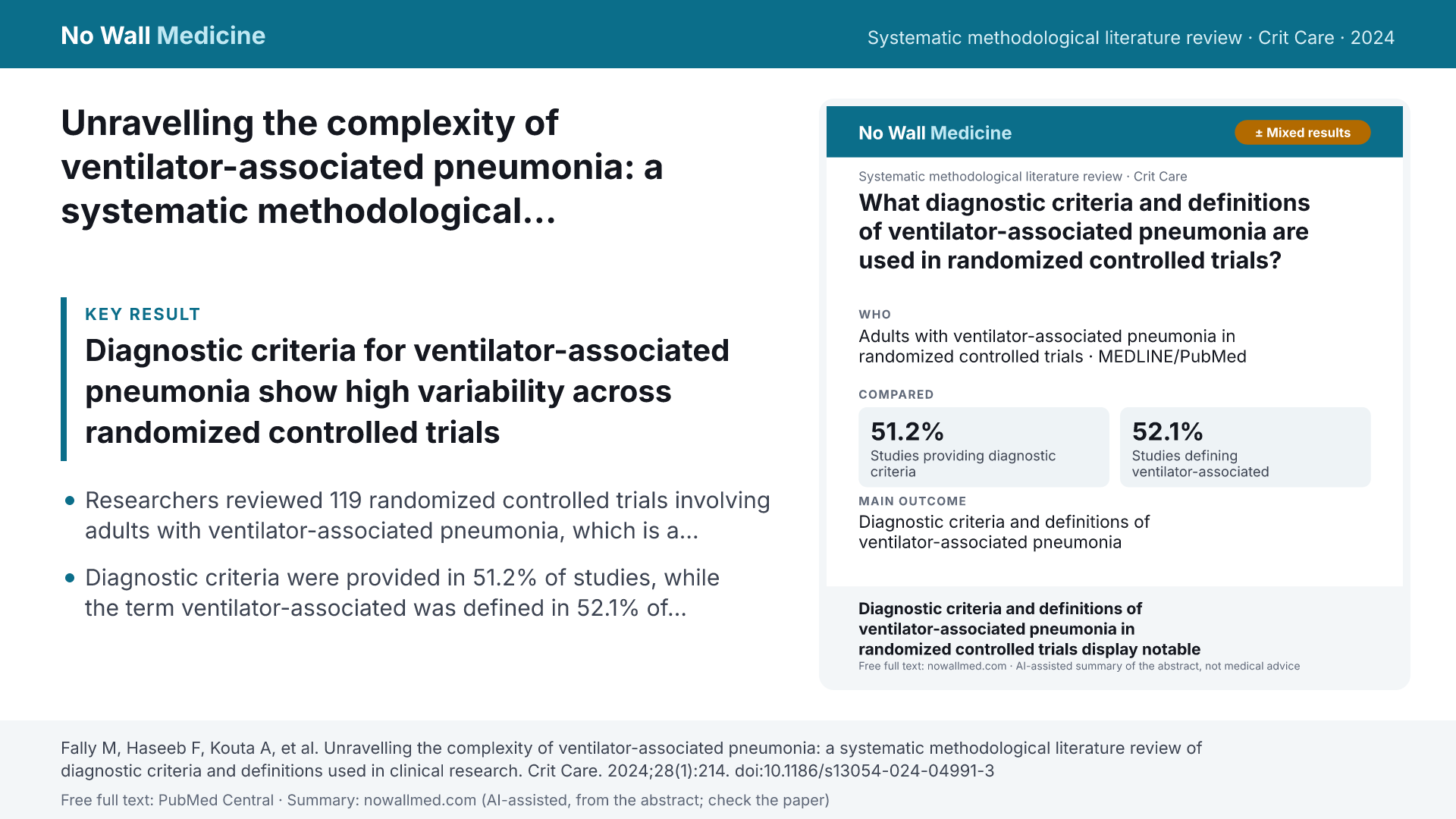
Diagnostic criteria for ventilator-associated pneumonia show high variability across randomized controlled trials
Unravelling the complexity of ventilator-associated pneumonia: a systematic methodological literature review of diagnostic criteria and definitions used in clinical research
Systematic methodological literature reviewMixed results
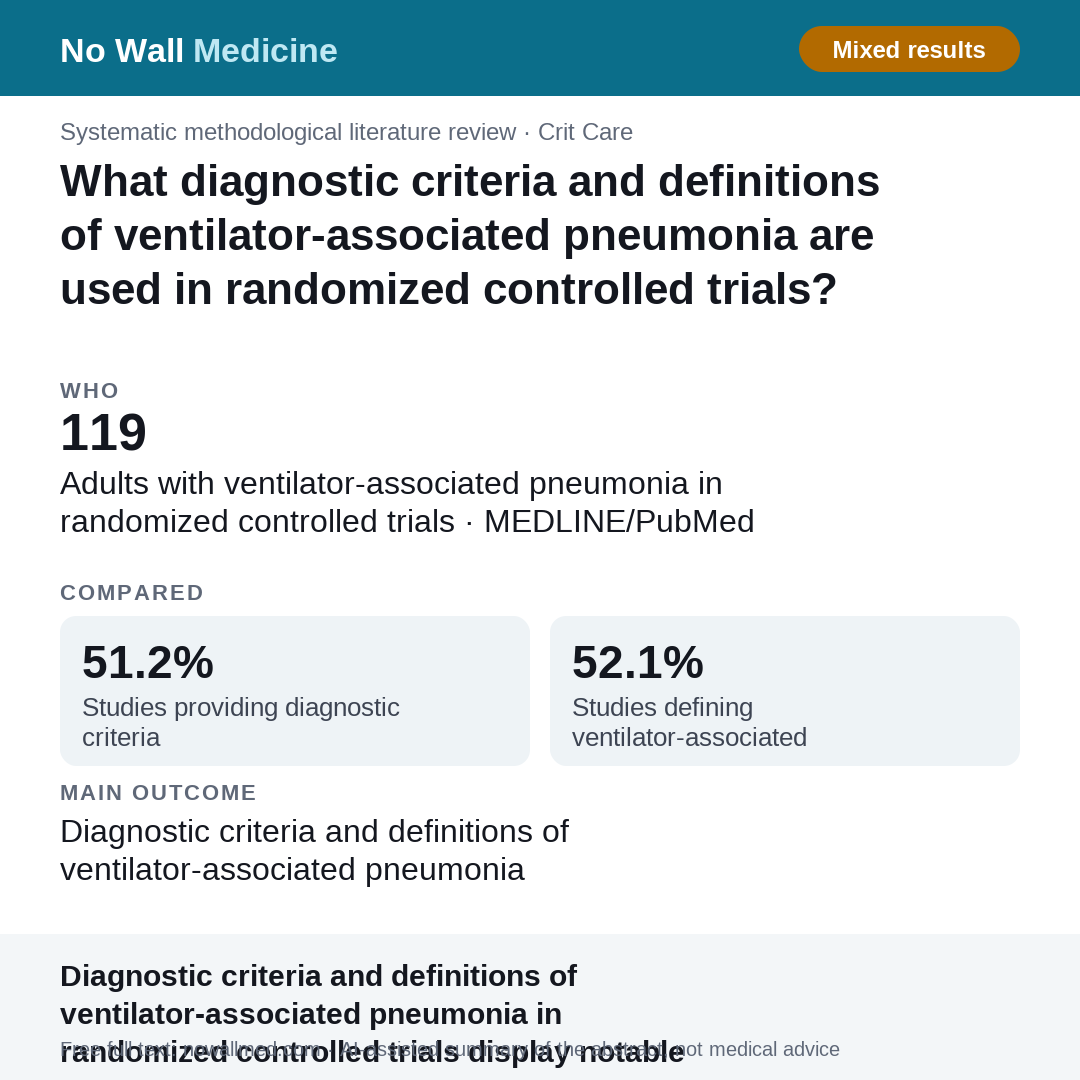
What diagnostic criteria and definitions of ventilator-associated pneumonia are used in randomized controlled trials?
Who
119
Adults with ventilator-associated pneumonia in randomized controlled trials · MEDLINE/PubMed and Cochrane CENTRAL
Compared
51.2%Studies providing diagnostic criteria
52.1%Studies defining ventilator-associated
Main outcome
Diagnostic criteria and definitions of ventilator-associated pneumonia
Bottom line: Diagnostic criteria and definitions of ventilator-associated pneumonia in randomized controlled trials display notable variability.
Crit Care · 2024-07-02Download image
Clinical question: What diagnostic criteria and definitions of ventilator-associated pneumonia are used in randomized controlled trials?
Why it matters: The lack of standardized diagnostic criteria and definitions for ventilator-associated pneumonia complicates research identification and management of the condition.
Key points
- Researchers reviewed 119 randomized controlled trials involving adults with ventilator-associated pneumonia, which is a lung infection occurring in patients using a breathing machine.
- Diagnostic criteria were provided in 51.2% of studies, while the term ventilator-associated was defined in 52.1% of the included trials.
- The most common criteria used were pulmonary infiltrates at 96.7%, fever at 86.9%, sputum at 70.5%, hypothermia at 49.1%, and hypoxia at 32.8%.
Headline and key points written with AI from the paper’s abstract, with every number checked against it. Read the paper before relying on them.
Was this summary helpful?
Subject terms
Cite this article
Fally M, Haseeb F, Kouta A, et al. Unravelling the complexity of ventilator-associated pneumonia: a systematic methodological literature review of diagnostic criteria and definitions used in clinical research. Crit Care. 2024. doi:10.1186/s13054-024-04991-3
Spotted a mistake? Suggest a correction