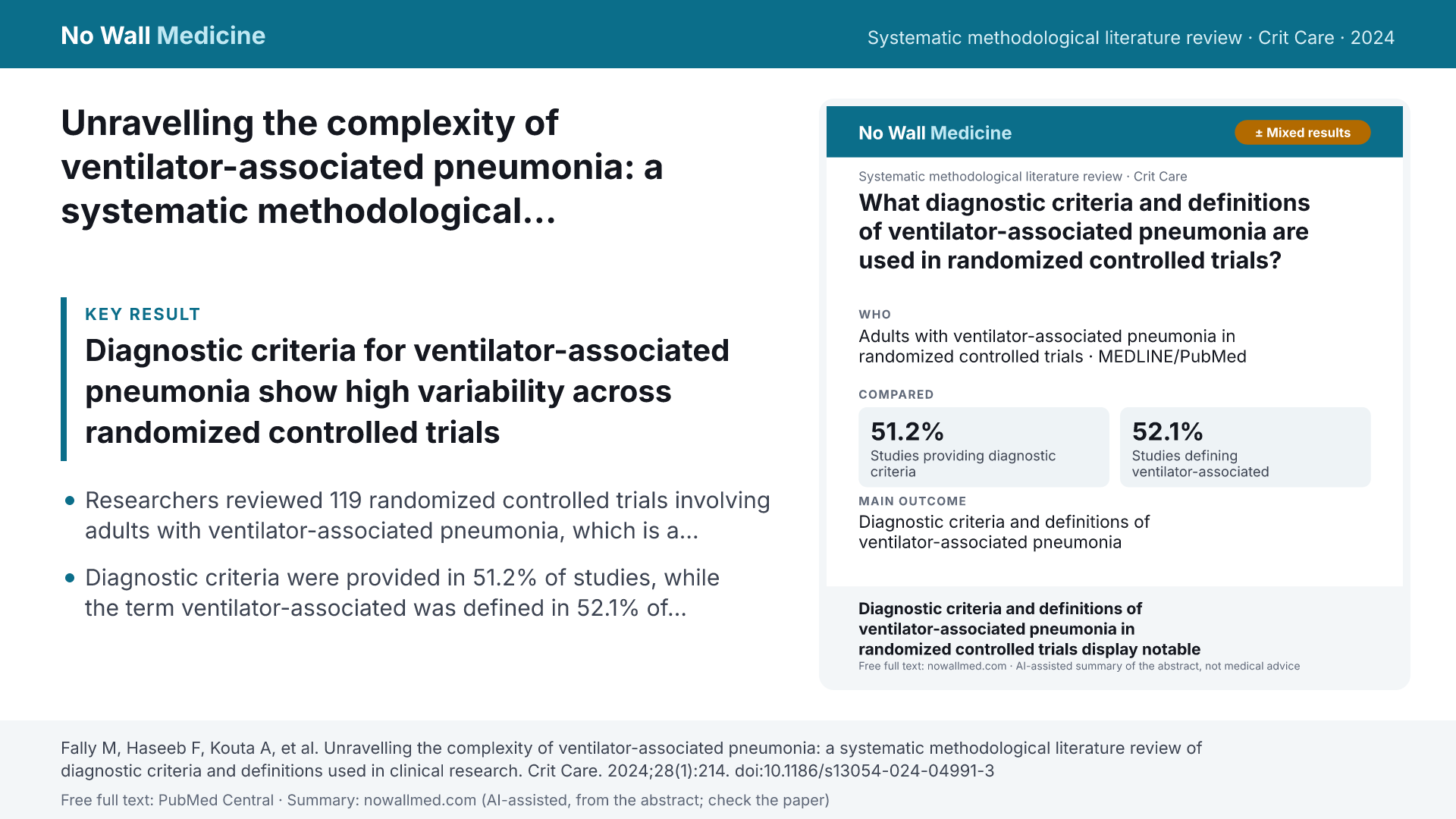
Unravelling the complexity of ventilator-associated pneumonia: a systematic methodological literature review of diagnostic criteria and definitions used in clinical research
Key result: Diagnostic criteria for ventilator-associated pneumonia show high variability across randomized controlled trials
Key points
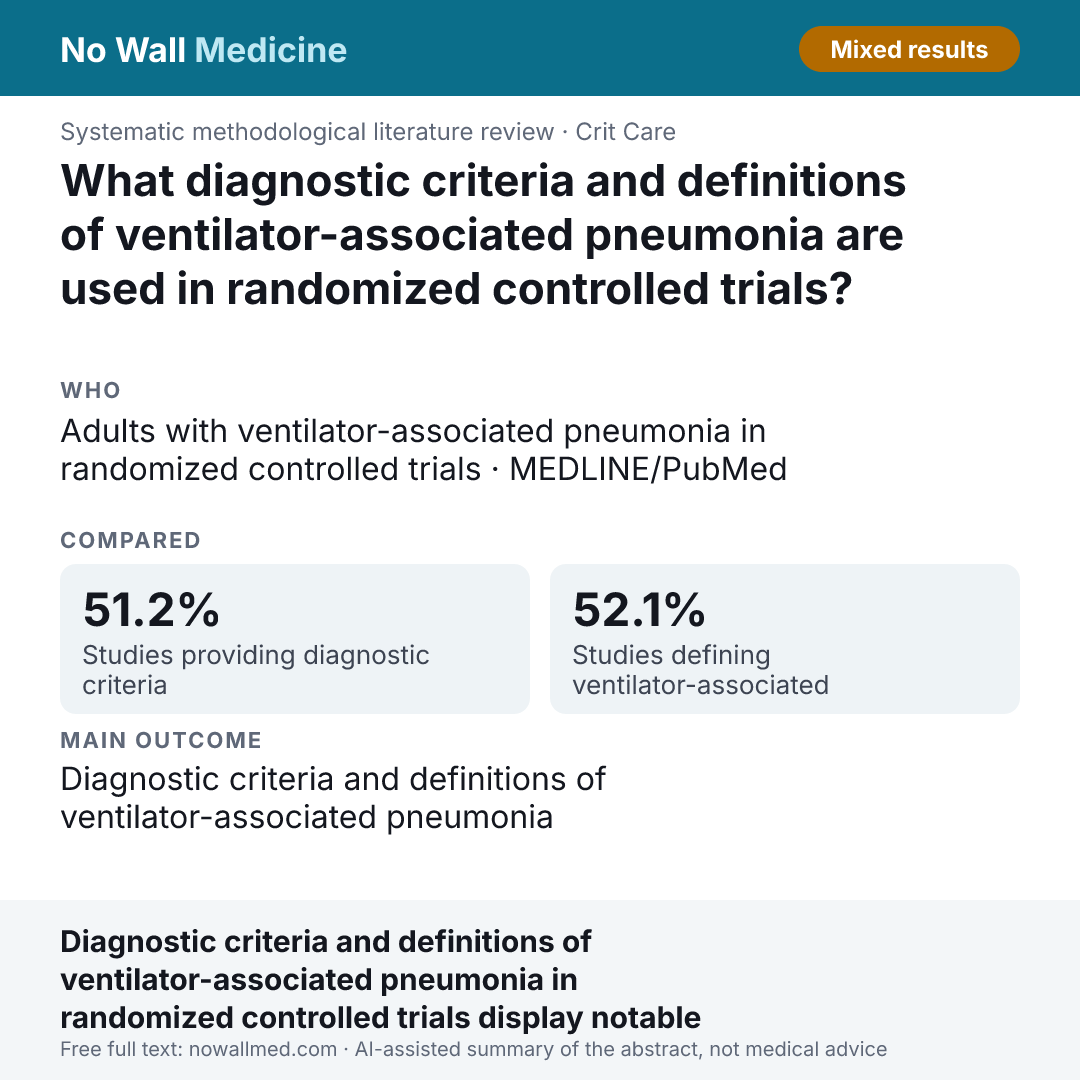
- Researchers reviewed 119 randomized controlled trials involving adults with ventilator-associated pneumonia, which is a lung infection occurring in patients using a breathing machine.
- Diagnostic criteria were provided in 51.2% of studies, while the term ventilator-associated was defined in 52.1% of the included trials.
- The most common criteria used were pulmonary infiltrates at 96.7%, fever at 86.9%, sputum at 70.5%, hypothermia at 49.1%, and hypoxia at 32.8%.
Why it matters: The lack of standardized diagnostic criteria and definitions for ventilator-associated pneumonia complicates research identification and management of the condition.
Discussion prompts
- Would these patients look like yours? Who was left out?
- Is the main outcome one that matters to patients?
- Is the difference large enough to change what you do?
Cite: Fally M, Haseeb F, Kouta A, et al. Unravelling the complexity of ventilator-associated pneumonia: a systematic methodological literature review of diagnostic criteria and definitions used in clinical research. Crit Care. 2024;28(1):214. doi:10.1186/s13054-024-04991-3
Free full text: PubMed Central · Summary and visual abstract: nowallmed.com/a/unravelling-the-complexity-of-ventilator-associated-pneumonia-a-prc5wu/ (AI-assisted from the abstract; check the paper before relying on it).