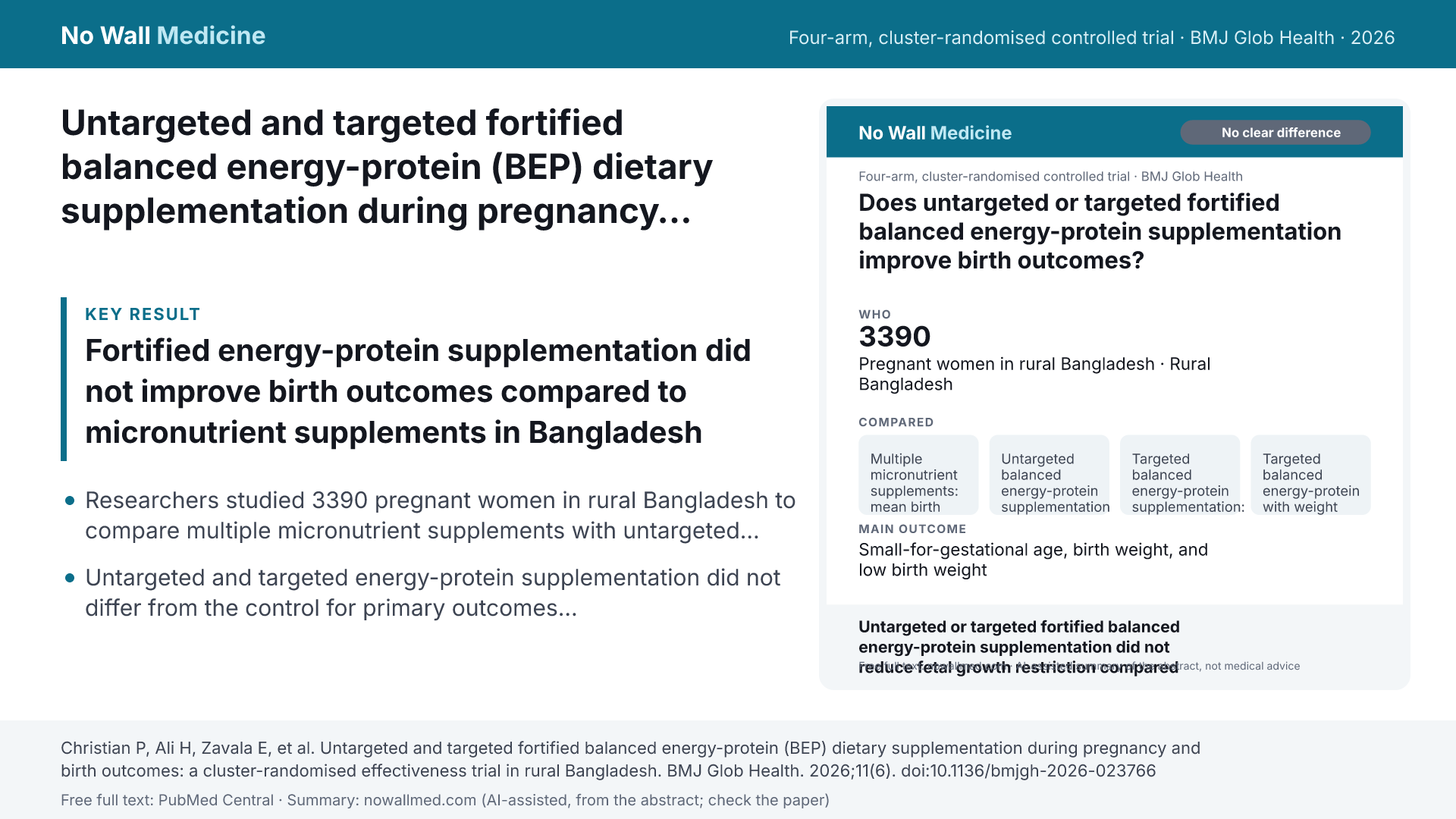
Fortified energy-protein supplementation did not improve birth outcomes compared to micronutrient supplements in Bangladesh
Untargeted and targeted fortified balanced energy-protein (BEP) dietary supplementation during pregnancy and birth outcomes: a cluster-randomised effectiveness trial in rural Bangladesh
Four-arm, cluster-randomised controlled trialNo clear difference
Does untargeted or targeted fortified balanced energy-protein supplementation improve birth outcomes?
Who
3390
Pregnant women in rural Bangladesh · Rural Bangladesh
Compared
Multiple micronutrient supplements: mean birth weight 2763 (383) g
Untargeted balanced energy-protein supplementation
Targeted balanced energy-protein supplementation: higher weight-for-gestational age centile (3.7%, 98.3% CI 0.6% to 6.7%)
Targeted balanced energy-protein with weight gain switch
Main outcome
Small-for-gestational age, birth weight, and low birth weight
Bottom line: Untargeted or targeted fortified balanced energy-protein supplementation did not reduce fetal growth restriction compared with multiple micronutrient supplements.
BMJ Glob Health · 2026-06-25Download image
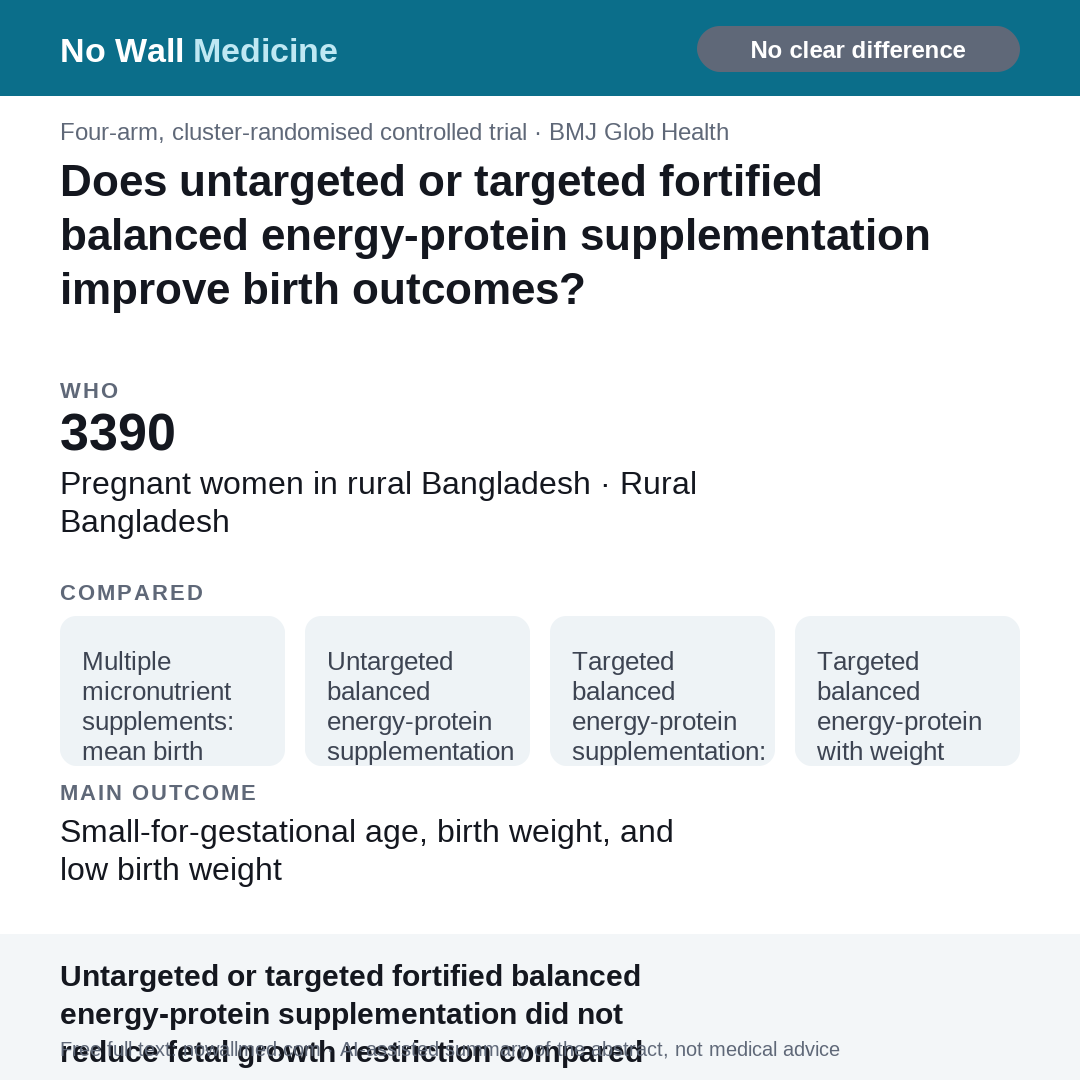
Clinical question: Does untargeted or targeted fortified balanced energy-protein supplementation improve birth outcomes?
Why it matters: Limited evidence exists on whether targeting specific individuals based on nutritional status improves outcomes when using fortified energy-protein supplementation during pregnancy.
Key points
- Researchers studied 3390 pregnant women in rural Bangladesh to compare multiple micronutrient supplements with untargeted or targeted fortified energy-protein supplementation.
- Untargeted and targeted energy-protein supplementation did not differ from the control for primary outcomes including small-for-gestational age, birth weight, and low birth weight.
- The group targeting low body mass index and inadequate gestational weight gain saw a higher weight-for-gestational age centile of 3.7% (98.3% CI 0.6% to 6.7%).
Headline and key points written with AI from the paper’s abstract, with every number checked against it. Read the paper before relying on them.
Was this summary helpful?
Abstract
Antenatal balanced energy-protein (BEP) dietary supplementation is a WHO recommendation in undernourished settings, but limited evidence exists on targeting individuals based on nutritional status. We assessed the impact of untargeted and targeted fortified BEP supplementation during pregnancy on birth outcomes, compared with multiple micronutrient supplements (MMS) as control.In a four-arm, cluster-randomised controlled trial pregnant women received daily: (1) MMS (control); (2) BEP; (3) BEP for those with prepregnancy body mass index (BMI) <18.5, MMS for others and (4) BEP for those with prepregnancy BMI <18.5, MMS for others, with a switch to BEP if inadequate gestational weight gain (IGWG) was identified. Primary outcomes were small-for-gestational age (SGA), birth weight and low birth weight (LBW, <2500 g) assessed within 72 hours of birth. Linear and log-binomial regression models estimated mean differences and relative risks and CIs adjusted for multiple comparisons and design effect.From October 2022 to November 2024, 3390 pregnant women were enrolled, supplemented and followed in the trial. 2950 women had 2976 live births with 2674 measured within 72 hours of birth. Baseline characteristics did not differ by arm and median adherence was 93%. In the control arm the mean (SD) birth weight was 2763 (383) g, and the incidence of SGA and LBW was 41.4% and 23.4%. Untargeted and targeted BEP supplementation did not differ from the control for primary and secondary outcomes. A higher weight-for-gestational age centile (3.7%, 98.3% CI 0.6% to 6.7%) was seen in the arm targeting low BMI and IGWG. Higher benefits were seen in BEP arms with lower than median adherence compared with the same stratum in the MMS arm and BEP reduced SGA and LBW among anaemic women.In this high burden Bangladeshi setting, antenatal supplementation with fortified BEP, untargeted or targeted, did not reduce fetal growth restriction and small size at birth when compared with MMS.
Abstract reproduced under the article’s CC BY licence.
Subject terms
Headline, design, result, key points, caveat and citation as plain text.
Cite this article
Christian P, Ali H, Zavala E, et al. Untargeted and targeted fortified balanced energy-protein (BEP) dietary supplementation during pregnancy and birth outcomes: a cluster-randomised effectiveness trial in rural Bangladesh. BMJ Glob Health. 2026;11(6). doi:10.1136/bmjgh-2026-023766
Spotted a mistake? Suggest a correction