Randomized trialJAMA Otolaryngology–Head & Neck Surgery · Jan 21, 2022

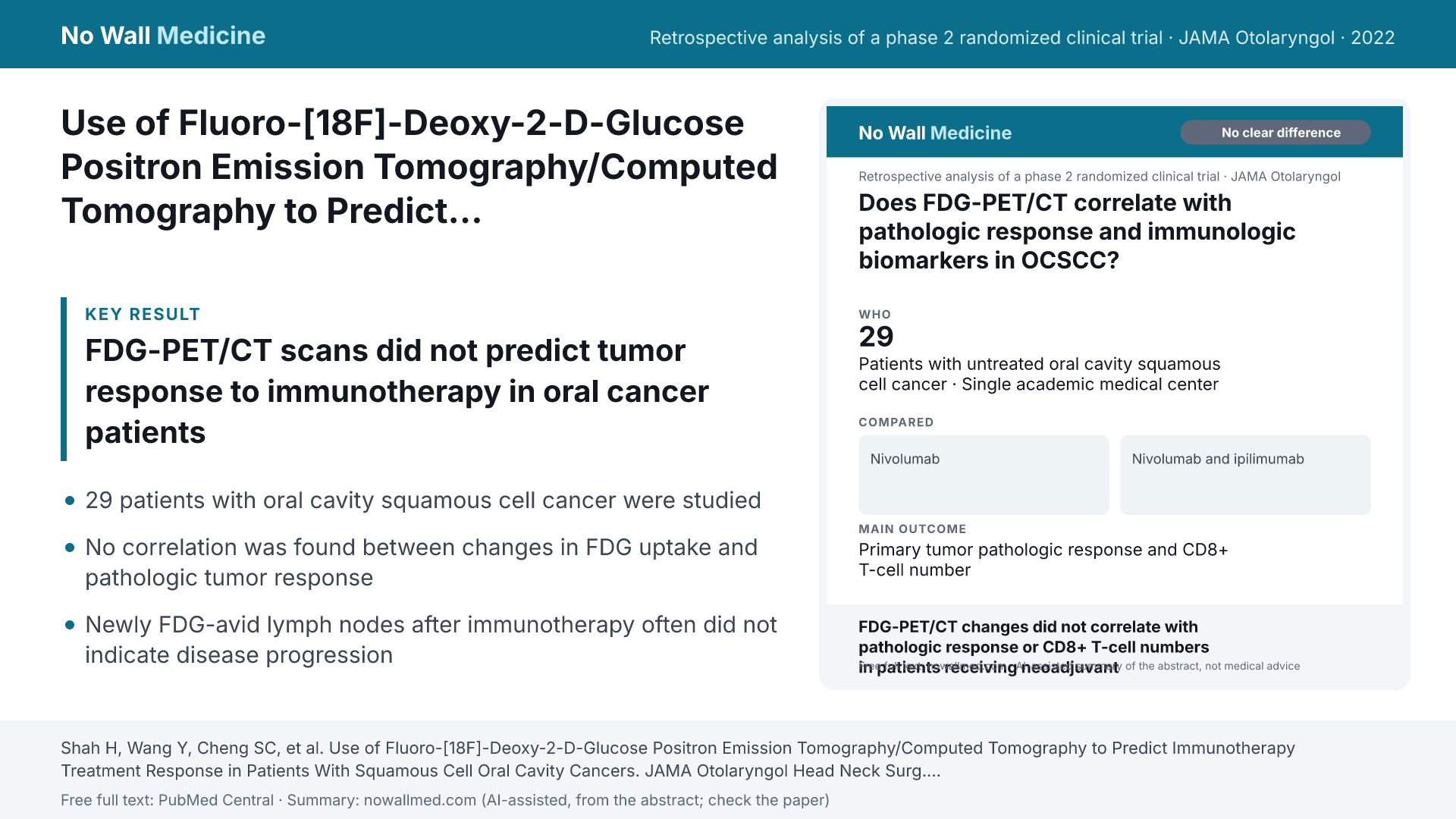
FDG-PET/CT scans did not predict tumor response to immunotherapy in oral cancer patients

Use of Fluoro-[18F]-Deoxy-2-D-Glucose Positron Emission Tomography/Computed Tomography to Predict Immunotherapy Treatment Response in Patients With Squamous Cell Oral Cavity Cancers

Shah H, Wang Y, Cheng SC, Gunasti L, Chen YH, Lako A, et al
ENT (Otolaryngology)OncologyRadiology & ImagingAdult
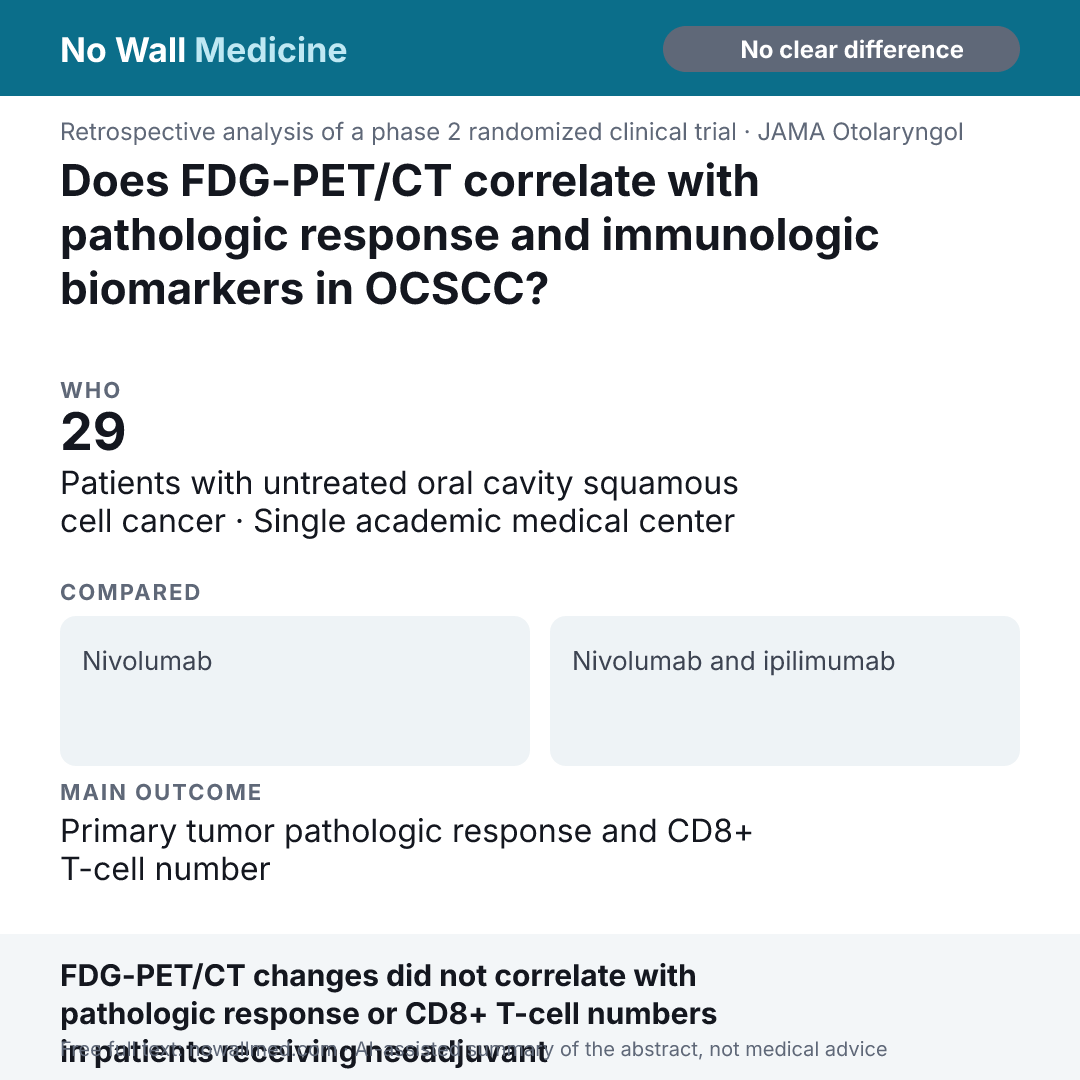
Retrospective analysis of a phase 2 randomized clinical trialNo clear difference
Does FDG-PET/CT correlate with pathologic response and immunologic biomarkers in OCSCC?
Who
29
Patients with untreated oral cavity squamous cell cancer · Single academic medical center
Compared
Nivolumab
Nivolumab and ipilimumab
Main outcome
Primary tumor pathologic response and CD8+ T-cell number
Bottom line: FDG-PET/CT changes did not correlate with pathologic response or CD8+ T-cell numbers in patients receiving neoadjuvant immunotherapy.
Limitation: Retrospective analysis of serial scans from a phase 2 trial.
JAMA Otolaryngol · 2022-01-21 · NCT02919683
Read the full paper free at PubMed Central ↗
Save PNG⬇ Slide🖨 Handout

Why it matters: A biomarker is needed to predict which patients will respond to immunotherapy for oral cavity cancer

Headline and visual abstract written with AI from the paper’s abstract, with every number checked against it. Read the paper before relying on them.

Was this summary helpful?

More on this topic

Cancer immunotherapy

Subject terms

Carcinoma, Squamous Cell; Epithelial Cells; Fluorodeoxyglucose F18; Glucose; Head and Neck Neoplasms; Humans; Immunotherapy; Mouth Neoplasms; Nivolumab; Positron Emission Tomography Computed Tomography; Positron-Emission Tomography; Radiopharmaceuticals

DOI: 10.1001/jamaoto.2021.4052 · PubMed: 35050348 · Registered: NCT02919683

Cite this article

Shah H, Wang Y, Cheng SC, et al. Use of Fluoro-[18F]-Deoxy-2-D-Glucose Positron Emission Tomography/Computed Tomography to Predict Immunotherapy Treatment Response in Patients With Squamous Cell Oral Cavity Cancers. JAMA Otolaryngol Head Neck Surg. 2022;148(3):268-276. doi:10.1001/jamaoto.2021.4052

RIS (EndNote, Zotero, Mendeley)BibTeX

Spotted a mistake? Suggest a correction

Top ENT (Otolaryngology) studies every Monday

The week’s key trials and guidelines, free to read, in one short email. No account; unsubscribe in one click.

Choose specialties and topics

Similar articles

Randomized trial n = 425 · JAMA Oncol · Apr 7, 2023 · Oncology, ENT (Otolaryngology)

Nivolumab plus ipilimumab did not show higher response rates than nivolumab alone in certain head and neck cancers

Randomized trial n = 52 · Clin Cancer Res · Oct 5, 2022 · Oncology, ENT (Otolaryngology)

Everolimus did not significantly improve progression-free survival in patients with advanced head and neck cancer

Randomized trial n = 240 · ESMO Open · Sep 2, 2021 · Oncology, ENT (Otolaryngology)

Tomuzotuximab showed no difference in survival compared to cetuximab for head and neck cancer

Randomized trial n = 34 · Clin Cancer Res · Oct 26, 2021 · Oncology

Early changes in tumor DNA levels and imaging markers predict response in throat cancer

Randomized trial n = 252 · JAMA Oncol · Jul 16, 2021 · Oncology, Pulmonology

Adding ipilimumab to nivolumab did not improve survival in advanced squamous lung cancer