Use of Machine Learning to Estimate the Per-Protocol Effect of Low-Dose Aspirin on Pregnancy Outcomes: A Secondary Analysis of a Randomized Clinical Trial
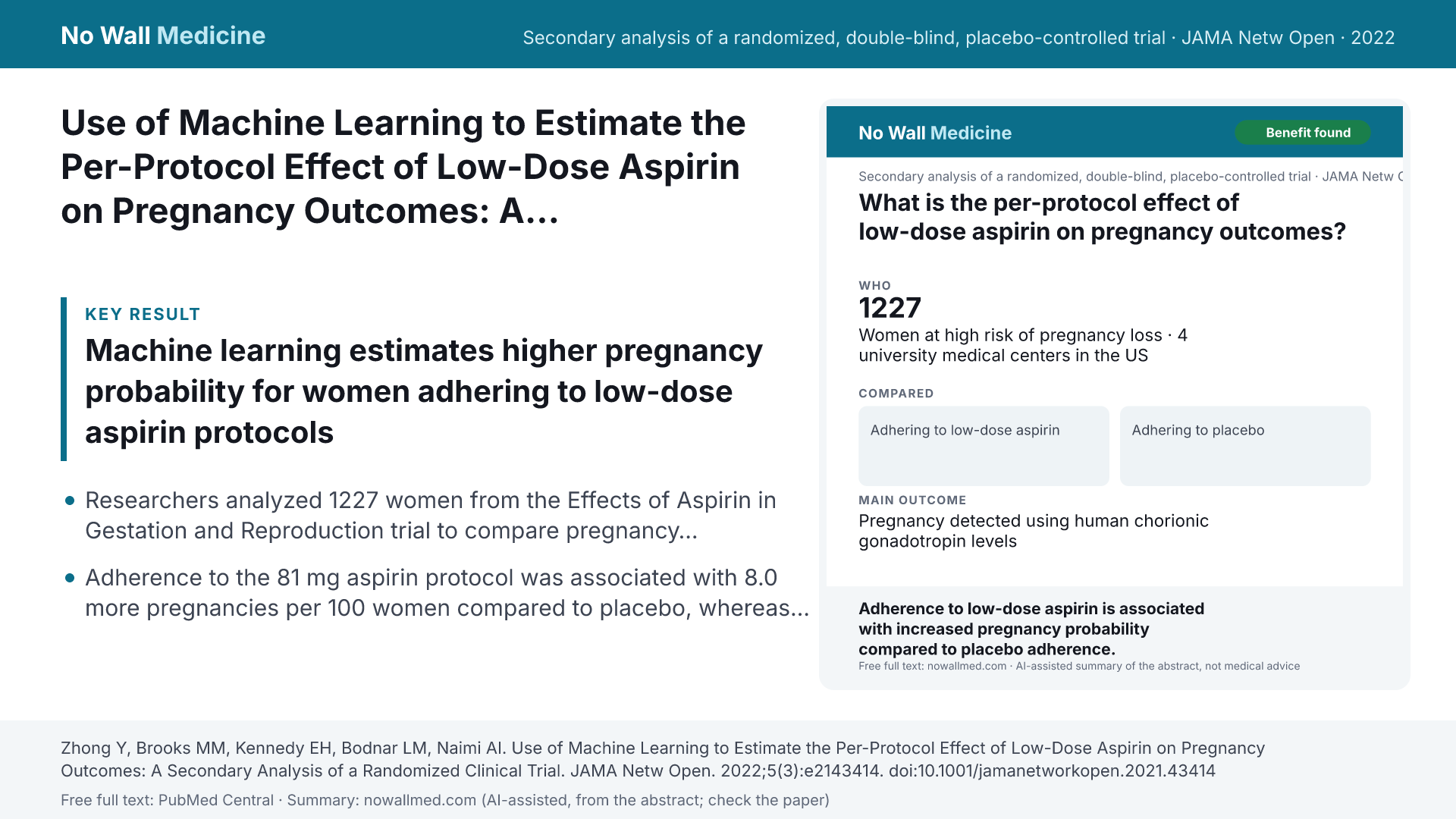
Key result: Machine learning estimates higher pregnancy probability for women adhering to low-dose aspirin protocols
Key points
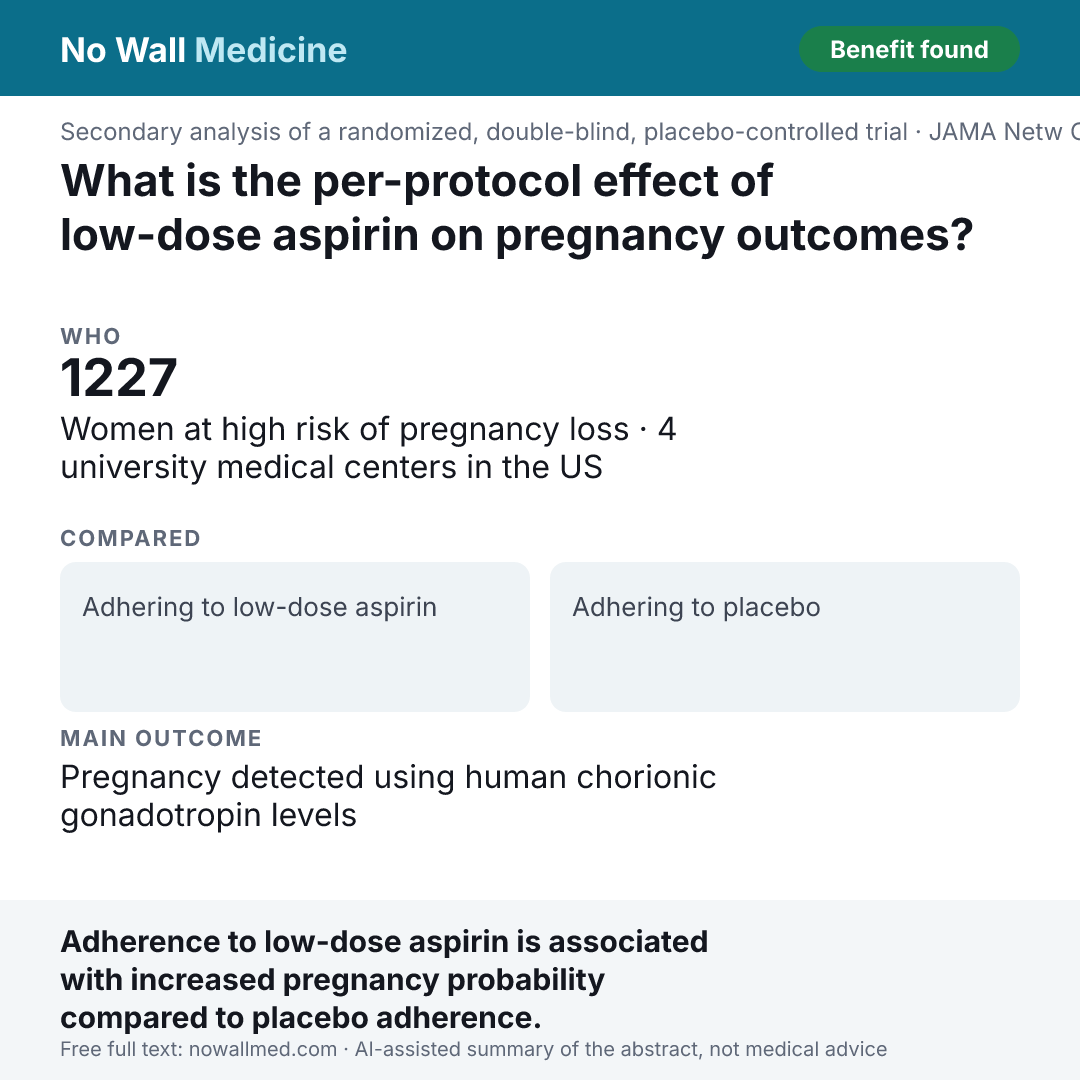
- Researchers analyzed 1227 women from the Effects of Aspirin in Gestation and Reproduction trial to compare pregnancy outcomes between those adhering to aspirin and those taking a placebo.
- Adherence to the 81 mg aspirin protocol was associated with 8.0 more pregnancies per 100 women compared to placebo, whereas the intention-to-treat estimate was 4.3 more pregnancies per 100 women.
- Of the 1227 women studied, 858 (69.9%) adhered to the protocol of taking aspirin at least 5 of 7 days per week.
Why it matters: Standard methods for estimating treatment effects in the presence of nonadherence may suffer from model misspecification due to strong parametric assumptions.
Discussion prompts
- Would these patients look like yours? Who was left out?
- Is the main outcome one that matters to patients?
- Is the difference large enough to change what you do?
Cite: Zhong Y, Brooks MM, Kennedy EH, Bodnar LM, Naimi AI. Use of Machine Learning to Estimate the Per-Protocol Effect of Low-Dose Aspirin on Pregnancy Outcomes: A Secondary Analysis of a Randomized Clinical Trial. JAMA Netw Open. 2022;5(3):e2143414. doi:10.1001/jamanetworkopen.2021.43414
Free full text: PubMed Central · Summary and visual abstract: nowallmed.com/a/use-of-machine-learning-to-estimate-the-per-protocol-effect-of-low-iz7kot/ (AI-assisted from the abstract; check the paper before relying on it).